Our Human Trek and the Eternal Questions
This much we know for certain: We live on a planet and in a universe that are unsafe for human habitation. The universe is, after all, God’s creation, not ours. And He apparently likes to challenge us. We, on the other hand, arrive without credentials, without merit, and without battle scars, so we must earn our way through the maze of obstacles that He has set up for us. He challenges us at every turn—physically, morally, and intellectually. Among His many obstacles we find a wide assortment of deadly adversaries lurking—from tiny microbes that can invade our bodies to forbidding black holes that can suck us into eternity; from tyrants who love to smash and behead friends and foes alike; to random celestial events that can pulverize or vaporize everything in their paths.
There is no escaping the dangers. Wars kill our bravest men and women; earthquakes destroy our cities; tsunamis devastate everything in their paths; and hunger ravages the bodies of innocent babies. Wealth, titles, and affiliations cannot protect us. Rich and poor alike can be caught up in and brought down by the perils. Even our advances in science and technology cannot save us. Those that sometimes shield us are offset by others that can crush us. Each achievement in medicine is inevitably met by a new disease with potentially deadly consequences. On land, under the sea, or in outer space, we seem to be always on the verge of a new discovery that is accompanied by an emerging new disaster.
Our own laws and decisions, whether made foolishly or with care, often bring with them a lot of pain and misery. Even our financial institutions can crumble along with our savings and our carefully laid plans for our future security from such murky and insidious sources as market “bubbles” or human greed.
But in spite of it all, we plan for a better day, and we trudge onward while trying to make sense of who we are, why we are here, and what it all means. In rare moments when our spirits are unexpectedly high, we seem to understand that somewhere down the road there awaits a better day, a more enlightened day, when we will be able to see farther and with greater clarity. And while answers to the eternal mysteries will likely remain beyond our reach for a very long time, it still seems worthwhile to ask: “Are we gaining or losing ground in our quest for moral, intellectual, and spiritual enlightenment?”
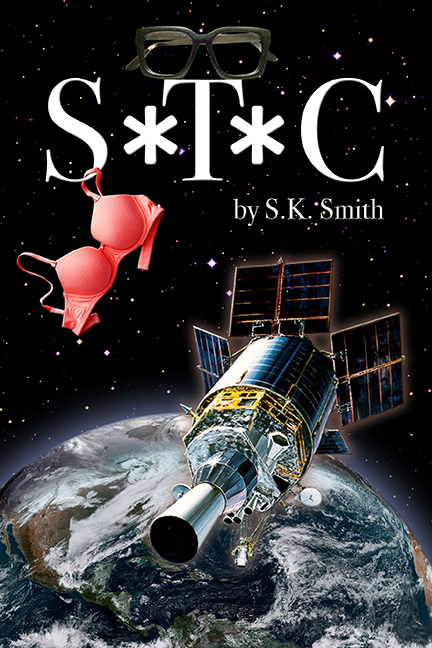
This book is a summary of where we stand in our trek toward enlightenment, and a critique of our efforts to achieve it. The title suggests many other things, but it has a focus. Ultimately, it is a search for moral principles that make sense. It draws from history, from science, and from the thoughts of many men and women from our past while exploring the grand subjects of space, time, energy, heaven, politics, and other things large and small. These qualifications are offered to anyone who may be looking for answers to the timeless questions posed by millions of others who have lived on planet Earth since time immemorial. You will find responses to questions such as “Why am I here?”, and “What is the purpose of my life?”, and even “Is time travel possible?”
This book does indeed deal with those questions and many others. But to ask whether any of these issues is answered or even dealt with satisfactorily is to miss the point. Anyone can object to all such questions or their answers knowing that our understanding of the universe is much too limited to be able to articulate the fundamental questions adequately, or even to ask the best questions. To offer tentative approximations in response to such issues in an interesting way is enough. It keeps the conversation alive.