Chapter One
‘ Gee whiz, you’re in where?........ Ullapool!’
Mark’s Gospel Chapter 6 vs 14-29
Time passed and John the Baptist still lay in chains in a dark dungeon. Soon after it was Herod’s birthday and he decided to have a party. Now when Herod had a party it was a big occasion. Many important people were invited and the food was plenty and delicious.
After the guests had eaten and drunk all they could, they lay back and were ready to be entertained.
Salome, Herod’s beautiful daughter came into the hall and offered to dance for the king and all his guests, by way of an evening’s amusement.
The audience was entranced by her performance and when at last the music died down, and Salome sank gracefully at the king’s feet, wild clapping and shouts broke out. Now Herod, had been absolutely delighted with his daughter and, well, was also full of wine and excitement.
‘Well done, your must have a reward for your dancing! Chose anything on earth that you want, and I swear to give it to you.’
Without a word, Salome slipped out of the room to speak to her mother, Herodias.
‘What should I ask for Mum?’ she asked.
‘Ask for the head of John the Baptist,’ she ordered with a wicked grin and a nodding of her head.’
Salome rushed back into the crowded party.
‘Please give me the head of John the Baptist on a dish – now, I want it now!’
Herod was horrified. He was afraid to kill such a good man. But he would feel a fool if he went back on his word when all his guests had heard him promise Salome for absolutely anything she wished.
Regretfully, he sent a soldier to John’s dungeon with the terrible order to behead him.
Herodias was satisfied now. She had succeeded in silencing the man who had spoiled her happiness by telling her of her wrongdoing.
John’s friends were very sad. Gently they took the body of John the Baptist to give it a reverential burial. Jesus was sad too. He had loved John dearly.
Commentary
1 Don’t agree to anything you can’t afford.
2 If you make even a Big Mistake, say sorry and promise never to do it again.
3 Don’t take revenge on someone you don’t like.
4 Note that too much drink impairs your judgement.
Jim’s Tale
One of the perks of a Minister’s job is that he or she can take a month’s holiday in the summer, two weeks longer than many families. But of course there is a catch. First they must offer their manse in exchange for someone to live there while they are in another manse. And of course, they have to take four Sunday Services! Yes, you got it right, they take four old sermons with them so they can enjoy their holidays.
On one particular summer from the State of Texas, USA, came a Presbyterian minister to Shawlands’ Old Parish Church. The minister of Austin’s First Presbyterian Church, the Reverend Eugene Markham III and his wife Analise flew into Glasgow on a Wednesday afternoon. Waiting at the airport was their pre-booked limousine. It was one of those wide, and wide winged, petrol guzzling American Cadillacs.
The manse in Newlands had never seen such a vehicle and it was barely able to get through the gates and up the narrow drive. But there it was parked when the Session Clerk, Ronald Scott, came to welcome them. After showing Eugene and his wife the ropes, as it were, Ronald suggested to get used to driving on the left side of the road, that they might like to see a bit of Scotland. He suggested a trip to Loch Lomond. There they could sail on the loch and see the start of the beautiful highlands.
‘Is it far?’ asked Eugene.
‘ Oh no’, reassured Ronald. ‘You can get there in just over the hour.’
‘Then a day around here to settle in and then, our trip on Friday. How does that sound, Honey?’
‘Can hardly wait,’ said Analise.
On Saturday morning, they set off to Loch Lomond. The roads were not nearly as busy as the Texan freeways but the roads were not so wide either. Eugene soon got the hang of driving in Scotland.
Now readers may well be thinking Jim took his family to Texas when the manse had been vacated. However with a grandmother in Fairlie on the Ayrshire coast, our summer month was spent there.
Austin Texas was not exactly lush. The greenness of the land around Loch Lomond thrilled our two Americans. They loved the views and the people they met.
‘Gee is Scotland like this in the north?’ asked Analise
‘Aw no, it’s fu’ o’ different views. It’s rugged in the far north and gye hilly aroon’ the whisky trail,’ replied a family man with his family by the water side.
It seems that Eugene understood the bit about the whisky trail and Analise the rugged far north. So armed with these two insights, they headed north.
Being summer, the nights were short but the days long, unlike a summer in Texas. North they travelled and Analise looked at her map.
‘ Gee Eugene, we’re half way up Scotland already!’
‘ I wonder how many Scotlands you can fit into Texas, honey.’
‘ My guess would be...let me think...about twenty?’ suggested Analise.
‘ At least I’d say. Let’s get to the north and come down the other way back to Glasgow,’ said Eugene.
‘ Sounds a good idea to me. I think we should do it with a few hours to spare,’ said Analise.
One thing which it was not, was a good idea. After visiting the Whisky valley at Turriff, and purchasing a bottle of the real Mackay, they had High Tea, for them a quaint and filling late afternoon meal in Inverness. Then they set off to Thurso. Every now and then their progress was slowed by a flock of obliviously meandering sheep. At first this was seen as a mild and interesting diversion.
As they approached Thurso, they stopped and gazed at Orkney’s mist covered island in the distance.
‘Have we time to visit Orkney Honey?’
‘Make that next week,’ said Eugene.’
So far the road had been quite void of traffic and the scenery breathtaking. But the salt air in their Texan lungs was relished. There was more of it as the car hugged the extreme north road. A narrower road lay ahead and that meant a slower road. Then it came to a halt. It progressed slowly and again had to halt.
‘I guess there are more sheep in Scotland than people,’ said Eugene.
Their progress was laboured but made enjoyable by crossing The Kyle of Tongue and the inspirational Loch Hope cheered them no end. But their progress remained in doubt and began to concern the two.
‘How far to Glasgow now?’ asked Eugene.
Analise looked at the map.
‘Not too far, but I reckon it will be dark when we get to the manse.’
Laxford Bridge seemed shoogly causing them to slow down to walking pace. Kylestrome Ferry on the other hand, was another delay. It was on the far away beach when they arrived. It crossed back in only thirty minutes time, but they needed every minute.
Then Eugene had a brainwave.
‘Ullapool looks a fair sized town. Why don’t we spend the night there and get up early and set off to Glasgow?’
‘But you are preaching tomorrow morning, Eugene!’
‘I know, but the service is not till 11am.’
They enjoyed a hearty meal of rabbit stew, mashed potato, turnip and carrots followed by a plate of rhubarb and custard. That forced them to have an evening stroll around Ullapool before an early bed at 9pm. The air was fresh with the tang of the sea, the locals were intrigued by the Cadillac and our two Americans were thrilled with Loch Broom at its majestic best.
They slept like fallen firs until their alarm bell rang at 6.30am.
‘It’s an early breakfast you are wanting, especially for a Sunday? Did you think on the Sabbath we might be closed for everything?’ asked the Hotel Manager.
‘No, we’re working for the Lord. We’ve got a service to give this morning so we’d better get off to a good start,’ said Eugene.
‘That will be the church in Glencruitten Road, Oban, I suspect. There’s a vacancy there at the moment,’ said the Manager. ‘’
‘No, not Oban. Shawlands Old Parish Church in Glasgow is where we’re heading,’ said Rev Eugene Markham III.
‘Oh, no you are not. I’m afraid you’ll never get to Glasscoow by 11am especially in that motor mobile car of yours.’
‘But we thought Scotland was so small a country. We thought we could get there in time! Oh dear, Analise, what do you think I should do?’
‘Eugene, I think you should telephone the Session Clerk,’ said an anxious Analise.
‘Excellent idea, honey. I’d better do it now.’
‘Have you a telephone I could use, Bud?’
‘Aye, over here. There’s a bowl for a contribution.’
‘He may be sleeping, of course,’ suggested Analise.
Eugene hesitated for a moment as he fumbled for some small change. He realised the consequences would be significant for the Session Clerk. He rang. There was no answer for a full twenty seconds.
‘Hello, ....Ronald Scott speaking.’
‘Hi Bud. It’s Eugene Markham here.’
‘Oh yes, we’re all looking forward to your sermon this morning,’ he said.
‘Well that’s the problem.’ Then Eugene told Ronald where he was.
‘My goodness me. You are where?...Ullapool!’
Chapter Two
‘ It’s a’ richt. Yer only a wee doat!’
Zephaniah Chapter 3 vs 14 -18
Sing and shout for Joy, people of Israel! Rejoice with all your heart Jerusalem! The Lord has ended your punishment; he has removed all your enemies.
The Lord, the king of Israel, is with you; there is no reason now to be afraid. The time is coming when they will say to Jerusalem:
“Do not be afraid, city of Zion! Do not let your hands hang limp! The Lord God is with you; His power has given you victory. The Lord will take delight in you, and in his love he will give you new life. He will sing and be joyful over you, as joyful as people at a festival.”
The Lord says,
“I have ended the threat of doom and taken away your disgrace.”
Commentary
You will find the book of Zephaniah short, near the end of the Old Testament and coming after the schoolboy’s favourite Biblical joke: Which book is like a dead bee? Yes of course, Nahum.
This book is almost a harbinger of good tidings. It is about to turn the Old Testament into the Gospels of the New Testament. After all the breast beating, warnings and threats of dire consequences of previous
Old Testament prophets, the prophet Zephaniah talks of a time when Jerusalem will be restored, with a humble and righteous people living there.
Restoration implies something is not quite right. An improvement is required. In Jim’s life there were a few things he could not get right no matter how hard he tried. In life we have many pitfalls. That is normal.
Jim’s Tale
Jim was the eldest of five boys. His parents were both in the medical fields. Jemimah was the Matron of the Glasgow Western Infirmary and her husband John, a medical practitioner in Larkhall. Jim’s first sighting of his father was an unusual encounter.
At some point in 1915 from the Western Front, Jim’s father Dr John M H Caldwell came home. He was then trained in horsemanship on the sands at Blackpool and earned some home leave. We know this for certain as Jim was born the following May. But it was not until January 1919 that John returned to the family home at Uddingston in Lanarkshire, in his long heavy military coat. He was met at the front door by a precocious two year old. The youngster managed to open the front door on hearing a knock and found a uniformed man standing before him. Not recognising his father, he closed the front door and instructed him to go away!
Four other brothers soon followed in quick succession. They had to, as their mother’s first child was born when she was forty. And with the arrangement of chairs and tables, Jim acted as a minister. Brother’s Ian was the Beedle, David the church mouth organist, and Norman and Stanley was the congregation.
Little is remembered over the next few years but one matter singled Jim out from his class mates. He was corrie-fisted. The expression comes from the Gaelic cearr meaning left or wrong hand. He was a lefty and the Education authorities of the day wished to thrash such perversion out of each pupil! I still await a formal apology from the Department of Education to all corrie-fisted pupils at the mercy of the Lochgelly tawse. And there were many.
Jim saw his brothers serve in the fields of battle at Dunkirk, in India and on the sea. While he resumed his divinity studies he was charged with caring for his mother. She was a widow.
That day she became a widow, Jim recorded the events in his own words as follows:
“Then came the signs. First the pain, then the x-ray, then the result – it was negative. Joyfully my father announced ‘it’s a fraud’ and threw himself even more forcefully into the fray. Then the pain returned more acutely. There was a further x-ray. Then the diagnosis. A certain tumour. Terminal illness. He took it calmly, told my mother she would have to take control alone and be able to ‘lay her hands on everything’.
‘When the band begins to play’, he said, ‘we’ve all got to dance to the music.’ He secured a locum; a lady, Dr Kerr. She got his lists of calls at the bedside. She administered the pain-killing drug. What it must mean to a doctor to know the end is approaching and to recognise every advance of his fatal disease!
My mother used to send me up to read to him, sometimes from the Bible. Wanly he smiled at my earnest elocution. We children, however, were kept unaware of the critical situation, though we could see our father fading. It was so strange to see the one who was ever active now unable to leave his bedroom. When would things return to normal?
To us the end was sudden. Jessie, the maid, who had been so long with us and was a second mother, took me into the room and removed the cover from the face. This was not my vital father. He had gone to another place.”
“The funeral was private and modern. Most funerals brought out the black horses with the black plumes and polished carriages. Ours was going to the family burial-ground in Glasgow and so made concessions to modernity. We had a motor hearse and a motor car following. Opposite the house a huddled group of women stood weeping. They had come to say farewell to the doctor though the funeral was private. We noticed the group as we entered the car, Dr McCallum, lum hat on knees, in front, the three oldest boys behind with two uncles and the family lawyer. Slowly we moved off, gathering speed at the outskirts of the village. Soon we were in Glasgow at the Southern Necropolis. Then a brief service took place. Earth to earth, dust to dust. David, the youngest of us there, broke down. He was only eight. Ian and I kept stiff upper lips. It was all so stupefying. There seemed to be a dulling of the senses. And so we moved away, and as we did so I noticed the inscription at the foot of the tombstone,
‘Precious in the sight of the Lord is the death of His Saints’. The Psalmist, as always, said it perfectly.”
“There wasn’t much daylight left when we returned from the funeral. I slipped off to bed and sobbed myself to sleep. My mother found me there in the darkness and called me for tea.”
So at the age of eleven Jim became the man of the house with all the premature responsibilities which that brought.
At Hamilton Academy, Jim had a fair turn of pace and the games master noticed. That led to Jim being introduced to a game he loved in later life, Rugby Union. So to the wing he was ordered with the instruction to run like the wind down the touchline. After crossing the try line, head for the nearest point between the posts without chancing a late tackle. The instructions were clear. In several games Jim’s devotion to line-hugging tries brought some unwanted attention. The High School of Glasgow had spies and before they encountered one another they assessed the Hamilton Academical team. Clearly Jim was a threat and therefore he had to be eliminated early with a crunching tackle before he set off to the try line.
Accordingly Jim lasted exactly three minutes of the encounter. A rather large wing set off like a train engine and saw Jim as the buffers. The resultant collision broke his left arm. Now as a leftie, this was particularly bad luck. But as prophesised by the Prophet Ecclesiastics, the smooth comes with the rough.
In sport, Jim was quite unique. His arm never really recovered its natural swing but with his lefty golf clubs, he always enjoyed the extra shots he required between tee and hole. Frustrating though this might have been with his crack golfing brother Norman, Jim very rarely lost a ball. He often claimed he found more than he lost! But one activity was completely beyond his capabilities. It was an anathema which constantly came to haunt him.
Jim feared water. No not a complete aversion to the liquid, after all if that was the case he could never have taken a baptismal service!
The time came to take his paternal responsibilities with enthusiasm. On holiday at Farlie on the Ayrshire coast, the family holiday at his mother-in-law’s home for most of the Fifties, there was a jetty. Tied to that jetty were several golden varnished rowing boats and the water was calm. It was time to take his two children out on the water with Jim at the oars. We enjoyed that experience and in truth Jim did too, until the boat came back to the jetty. Jim stood up and leant over to tie the rope round the wooden capstan. It was the same knot he employed as the one which he used to tie his shoes. Now he was often seen with one foot on a wall re-tying his shoe laces and it was said, not unkindly, the clerical collar saved him from the daily chore of tying his neck tie. But I digress.
Jim had one foot in the boat and the other on the jetty. Unperceivable at first, like a snake in the grass approaching its prey, the knot began to slip. His legs began to part. His balance was now being tested. He decided to reach out to the jetty and hopefully clamber aboard and pull the boat to safety. The plan was good. The execution was disastrous. Jim fell into the clear water, a depth of twelve feet, more than enough to drown a non swimmer. Cries of ‘I can’t swim,’ were heard around the beach. In truth on such a calm day, the plea was probably heard in Millport if not Kilchattan Bay too.
Meanwhile my sister and I drifted away from the jetty in what we were to learn in later life was a perfect example of Newton’s Third Law of a force equal and opposite. At that point my sister, almost three years, no..... two and a half years older, as children are very good about age fractions, understood the seriousness of the situation. As I sat serenely at the stern of the rowing boat, Joan opened her lungs in terror. Thus alerting a youth to swim to our aid and bring us back to the sandy terra firma. Fortunately a second youthful friend dived into the sea and performed the more difficult task in rescuing a drowning non-swimming man. Jim who by this time was laid out on the jetty exhausted gave thanks for his deliverance. Yet still the sea had a hold on him.
Some fifty years ago, before the era of the ubiquitous holiday jet flight, in the early sixties, we spent our family summer holiday at Port Stewart, on the Antrim coast. With miles of bright clean sand and many dunes bordered by long sharp grass, it is one of Britain's best beaches. It was on that beach one Saturday afternoon when disaster struck.
It was a warm sunny day. We had enjoyed a picnic at our dune which sheltered us from a mild breeze and gave us soporific warmth. After a suitable post lunch rest, we stripped into our bathing costumes and ran as fast as we could into the cold sea. We jumped, shouted and screamed until we had ducked into the sea and begun to swim. A summer holiday was never a total success without a swim and my sister and brother swam safely and happily with me on that carefree afternoon.
Jim, as if I need to remind you, could not swim. Nor would he want to swim. But he saw his children enjoying themselves so much and he wanted to join in, as any parent would wish. His
preparation for the sea was much more cautious than ours however.
He sat on the sand and removed first his shoes, and then his socks, then he took off his wedding ring. To keep it safe, he carefully placed the ring inside his sock. Then the sock was tucked into the toe of his shoe. It was most surely safe there.
He ventured towards us as far as he could go. Carefully he felt his way forward and soon found the water, waist high. He knew that was deep enough for him. We gave him instructions as to how to swim but he knew, as we knew, he
would never be able to swim. Our instructions were not irrelevant however. What we were saying was 'Dad, this is how to do it'. And every child knows that special day when they can confidently tell their parents how to do
something. It happened then as it would once more when my sister outran Jim, for the first time on that very beach.
The fun in the water gradually came to an end. We returned to the dune and were given orange juice and a biscuit. Our chittery bite, as ever, was a most welcome snack. Our teeth chattered, we dried ourselves and drank
our juice. A flask of hot tea awaited our parents.
Jim dried himself with a multicoloured beach towel. He sat down on the beach to put his socks on. He lifted one sock and as he did so, a gleaming ring spun into the air and after a moment of parabolic flight, it settled on the sand nearby. In his anxiety to retrieve it instantly, Jim's hand disturbed the sand and the ring vanished from sight. Magically, it had disappeared from view, never to reappear. He announced the disaster. We all took turns searching for the wedding ring. Surely it could not be lost. The sand was sifted, the area was expanded, scooped, grabbed and harvested but there was never any further sight of the ring.
Jim returned after an evening meal and searched for a further three hours on his own until the sun had set. A few evening walkers joined in for a while after they had learned about his plight. But as the sun disappeared, Jim
returned home disappointed and crest fallen. He could not sleep. The ring which Mum had placed on his finger, almost thirteen years previously was gone but he still could not accept that a ring could vanish so easily.
Its disappearance had defied reason as well as a thorough search. The following morning was Sunday morning. At 6a.m, before anyone had risen, Jim returned to the beach. Despite
numerous identical dunes weaving along the beautiful coastline, he knew exactly which one we had been on that previous day. He had marked it by tying a knot of grass. It was another sunny morning with the sun already sharing its morning heat- and its light. For, as he
approached the dune, Jim saw to his surprise his bright gold ring sitting proudly where he had once sat. He approached it slowly. He bent down and placed his hand over the ring. He grabbed a handful of sand beneath the ring and sat down. As he sifted the sand through his fingers, sheer joy replaced his depression as he felt the ring in his palm. The prodigal ring was placed securely on his finger once more.
A smiling Jim appeared for breakfast. He proudly displayed his left hand bearing the errant wedding ring. We could not explain why the ring had evaded so many hands and eyes the
previous afternoon and evening. Its disappearance had mystified the family. Yet there must have been a reason for its constant inconspicuousness. We concluded that somewhere, a leprechaun knew more than it would tell.
And that really accounts for Jim’s association with water. He did enjoy boats though. Sailings and voyages he was fond of providing he was fully clothed and could walk along the deck.
It was a little surprising therefore that at the age of seventy, while still the Glenfarg minister, Jim heard of the renovation of the swimming pool at Green’s hotel at Kinross. He made his enquiries and learned that he could have a swimming instruction at 10am on a Monday morning. As ministers know, Monday is frequently their day off and not a day of leisure for others, so it would be a relatively stress free and private learning experience and once swimming, a proud achievement it would be to share with the family. Suitably attired, and I mean swimming shorts and two blown up plastic wings, he reported to the young female instructor. She lost no time in getting Jim into the water. But Jim’s nose protruded like a submarine’s periscope. Surfacing for a moment, Jim noticed a gathering of people at the far end of the pool. At first he thought it would be the Trading Standards officials or Health and Safety officers making sure the renovations met with standards suitable for the hotel’s clientele.
One man however seemed to have separated from the gathering and was walking half way down the pool towards Jim and his teacher. A camera hung from his neck. Jim asked her what they were doing. He was advised just to ignore them. They were here to take a photo of the pool to advertise its new opening to the public. Like headlights in a rabbit’s eyes, Jim thought about his decorum. The last thing he wanted his congregation to see was him in his water wings learning to swim. ‘I’ll just get out now,’ he said to the teacher.
‘No, no you stay in the water having your lesson,’ said the photographer. The teacher saw the desperation in Jim’s eyes as did the photographer. Reassuringly, as the camera was poised at his eye, the photographer said:
‘They winnae recognise ye, Jim. It’s a’ richt. Yer only a wee doat!’


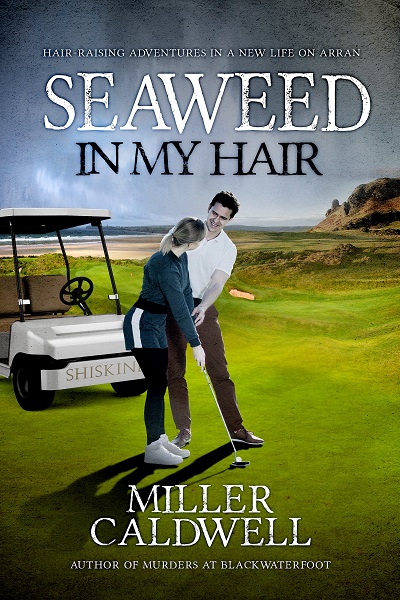
 Set in a Bible text and Commentary for each chapter Jim's Retiring Collection are the funny stories of a Scottish Church Minister. Hilarious chapters every one.