So, if we look around, what is America saying about America?
Updated: 4/5/14 Why Do Some Women Fall In Love With Vampires?
Updated: 1/12/14 Is Christie an example of the analysis made in this blog? See what you think.
Updated: 1/8/14 The Effects of Immersion in Violence: The Mongol and Roman Empire Example- My preliminary conclusions and remedies.
Updated: 1/6/14 What were the effects of immersion in violence-the ancient Rome example.
Updated: 12/28/13 to 1/4/14 Immersion in Violent Environments-What Are The Effects?
Updated: 1/3/14 Body Counts, Fame and Money
Updated: 12/30/13 The American Preoccupation With Death: Symptom or Cause?
Updated: 12/30/13 Death Scenes And American TV
Updated: 12/28/13 Violence in America: The Psychopathic Analysis
The issue here is what is America saying about America in terms of everyday life?
What do our preferences, our tastes, our entertainments, our diversions, our literature, our religion, our politics say about us in the 21st century teens?
What are our hopes, our dreams, our fears, our inner most desires, our hatreds tell us about us?
Who we are hides, I argue, in plain sight.
This blog will look at the evidence as to who we are in terms of a "hiding in a plain sight analysis" over the next several weeks.
Necessarily, this large view will be impressionistic, but we have prepared the ground with several other blogs on this site.
This blog will take off from those beginnings and ask the larger question as to so what are the unconscious facts which emerge about us?
I know. This is a bit vague. But permit me to unravel this "in plain sight" story in my own way.
Thus, if we look at American preoccupations what do we see and what do these preoccupations tell us about ourselves?
In short: who are us Americans underneath, and, what are our deep-seated unconscious concerns and fears?
Not for the squeamish.
First, what kinds of movies do we pay our money for, willing to pay hard-earned treasure for, and what do those selections tells us about ourselves?
Most profitable movies:
(Click on any movie title below and you will get a synopsis, genre and other information about the movie.)
Most Profitable Movies, Based on Return on Investment
We see a preponderance of movies which can be described as horror movies, movies of demonic possession, and movies about murder, mutilation and terror.
A second type is the escape movie, fantasy, and comedies, all of the latter a distinct minority of the whole.
So, we first ask why the preponderance of horror movies, dealing with death, terror and slashing or demonic possession of humans?
So here we make our first point: The American Unconscious is preoccupied with death, terror and blood; with the murderer and the murdered. Violence and the threat of violence dominate the entertainment culture.
Blood, in short, is a theme.
Similarly, the news, especially local news is dominated by the screed: "If It Bleeds It leads" the other motto is "Sex Sells" preferably with an admixture of violence.
Over all sensationalism dominates all in an unearthly brew of sex and violence, especially against women.
See on this site a blog on blood as a preoccupation historically, beyond the American example. In fact, murder and blood is a human preoccupation as seen throughout history, in many, if not most cultures.
We ask why should this be so and what are the drivers?
But first lets us continue with the theme that mayhem, murder, war, and blood-letting are not only a part of the American preoccupation, but also enlarge the analysis and posit that such preoccupations have been an integral part of history and civilization itself.
As a species, it seems we love killing; always have.
Now at this point, before we dive into the details of the American example, lets us ask how wide-spread in societies is this, asking does it extend to everyone in a given society or to just elites, or to just the middle class or working classes or is it random?
We also want to know if this blood-thirstiness is carried on from generation to generation and whether or it is genetic in the species--or is it something which is taught and learned from generation to generation, embe dded in institutions.
Who are the progenitors of violence and who are its victims, both historically and in the American example? We want to know how do populations react to these perceived threats of violence real or imagined, and importantly, who are the victims and who are the users of violence?
One view is that civilization itself, with its hierarchies, breeds psychopaths, which in the theory, have dominated civilization since its inception, and do today as well in most countries, and they are the progenitors and purveyors of the blood and the violence ethic which permeated so many cultures in the past and currently as well.
Freud understood an aspect of this in "Civilization and Its Discontents" but concluded that this state of affairs was a fair trade off against social chaos which uninhibited unconscious urges would bring. He advised that "sublimation" of these unconscious discontents and threats and urges that their restraint was necessary to civilization and order.
The alternative in Freud's view was social chaos and mayhem.
The question is whether suppression of these urges requires violence and political and social suppression. A tautological argument here?
My view adds in an additional observation: violent suppression of the discontents by extension of this view occurs not only against discontents but against conquered peoples as well. The Roman Pax was brutal and since then we have numerous examples of the same pattern.
The state, in this view, we see in history, from local warlord to empire, is the story of groups and institutions which seize, or is given, a monopoly over the means of violence, exercised against both foreign and domestic discontents and rebels. This is the very definition of a nation.
But who are the ones who wield this power and what is their nature currently and historically?
After please come on back and we will continue this analysis delving into the American example in more detail.
12/30/13
Before going to the detail as promised above let’s have a look at what Americans are watching on television and see if the trends we have identified are similar to the ones observed in American movie-watching patterns.
Of the twenty five shows on the TV list 14 center on violence or its threat, whether in crime or in sport shows. Three of the twenty-five are comedies.The remaining eight shows deal with music, dancing or news (1).
The violence and sex themes are also evident here as well involving millions of people on a routine, daily basis. We see themes involving zombies, vampires, detailed death scenes, dismemberment, demonic possessions, brutal sex, women murdered, apocalyptic stories, and escapist stories.
Even the Christian religious shows center around a Christ figure murdered by the Romans, and promise an apocalyptic war at the End of Times.
Did I mention the airwaves are also filled with death themes of our actual wars in Iraq, Afghanistan, and elsewhere?
Ours is a death-centered culture, fed to us daily.
Why should this be so?
That next time.
Meantime here is a sample of "Death TV" in America and, once again, the TV list.
7. DANCING WITH THE STARS (Monday) ABC 15.0 million
8. AMERICAN IDOL (Thursday) Fox 14.8 million
9. THE VOICE (Monday) NBC 14.4 million*
10. THE WALKING DEAD AMC 14.3 million
11. DANCING WITH THE STARS (Tuesday) ABC 14.0 million
12. TWO AND A HALF MEN CBS 13.9 million
13. THE VOICE (Tuesday) NBC 13.5 million
14. BLUE BLOODS CBS 13.3 million
15. ELEMENTARY CBS 13.0 million
16. MONDAY NIGHT FOOTBALL ESPN 12.9 million
17. MODERN FAMILY ABC 12.7 million
18. CRIMINAL MINDS CBS 12.6 million
19. THE OT Fox 12.5 million
20. CASTLE ABC 12.5 million
21 DUCK DYNASTY A&E 12.4 million
60 MINUTES CBS 12.4 million
23. VEGAS CBS 12.0 million
24. THE FOLLOWING Fox 11.9 million
t. SURVIVOR: PHILIPPINES CBS 11.9 million
t. CSI CBS 11.9 million
12/29/13
Here are academic studies of the above topics.
"Many people have expressed tremendous concern about
the amount of violent death featured on U.S. television.
According to the National Institute of Mental Health, by
the time the average American reaches age 16, he or she
has seen 18,000 murders on television (Kearl 1995). It has
been estimated that violent death “befalls five percent of
all prime time characters each week” (Gerbner 1980:66).
Violent death is not limited to prime-time programming,
however. The cartoons that are featured on Saturday mornings
contain an average of 20 to 25 violent acts per hour,
and many of these acts result in the apparent deaths of characters (Wass 1995)."
DEATH, DYING, AND THE
DEAD IN POPULAR CULTURE
KEITH F. DURKIN
43
01-I-Vol-I-Bryant.qxd 8/14/03 5:56 PM Page 43
"Slasher movies feature plenty of sex and large teenage
body counts (Strinati 2000). Examples include Halloween,
Friday the 13th, Nightmare on Elm Street, Slumber Party
Massacre, and Motel Hell. In 1981, 25 slasher movies
were ranked among the 50 top-grossing films of that year
(Strinati 2000)."
"Historically, thanatological themes have been present in
nearly all musical styles. For instance, folk songs about
serial killers date back well into the 19th century (Schecter
and Everitt 1997). Death-related themes are also present in
many operas and classical musical pieces. These motifs
have played a major role in the recording industry."
If we look at video games the picture is similar if not worse.
"But new research suggests that teenagers who play violent video games are more likely to cheat, experience increased aggression and have reduced self-control."
Video games, first person shooters, sterotype mercilessly, slaughter, complete with blood splatters, violent combat, virtual war motifs are the same as the movies and the TV and, worse expose the young to all this a very early ages.
Here an author compares Grand Thief Auto 5 with violence depicted in the movie "Zero Dark Thirty" making the point that the violence depicted is similar-missing the point that both the game and the movie are violent.
"The entire scene is playable. You decide what item to inflict pain with: clamp a car battery to his nipples and electrocute him, attack him with a heavy wrench, forcefully yank a tooth out with pliers or kick his chair over and waterboard him. It's the player's choice.
But here's the thing: it's not that different from Kathryn Bigelow's five-time Oscar nominated Zero Dark Thirty. Her film revolves around Osama Bin Laden's assassination and the torture used in the quest to find him. The opening scene, one of several torture sequences, shows waterboarding. It is unsettling. We see the detainee coughing, spluttering and struggling as the Americans continue pouring water into his rag covered mouth. It's a scene not dissimilar in style or content to the one found in GTA 5."
Questions from the above loom: who or what are Americans terrified of?
Are these unconscious nightmares, divorced from reality, haunting a population which is among the wealthiest in the world?
Do Americans believe they are under threat, being feasted upon by demons, vampires and the half dead?
Is all of this a mere sensationalism addiction and nothing more?
What sense can we make of this. Are these entertainments and death preoccupations symptoms or causes?
1/3/14
More detail to look at:
In addition to the above we are given daily "box scores" in three main areas:
1. How much money is being lost or gained from wall street, from lotteries, from governments--everywhere. Inference:-we are a money centered culture and we seek a score everyday on how money is doing. We know more about what corporations, governments and the powerful are doing with money than we know about our next door neighbors.
People came to America to get rich and, most if not all, still pursue that dream. Yet we know getting rich will apply only to a small minority of the population at any given time.
Yet the dream persists and is placed before us each and every day; scenes of luxury, wealth, lavish homes, big cars, women, handsome men and power--all this we can have if we get the money to buy the products which will make all of that possible-if we are willing to do whatever it takes to get to the top.
(I remember, as a teenager, dreaming almost evey night that I had gotten, somehow, millions of dollars and awoke bitterly disappointed that it was all just a dream.)
Rats and cheese.
2. The Daily Body Count: Morbidly, each day we given the body count for accidents, for the wars in Iraq, in Afganistan, in drone strikes, in local news, in national news, and more, where there might be body counts in fires, storms, kidnappings, you name it. We seem to be fed, or hunger for, the body count, the bodily injury, the blood, the death.
Why is this being placed before us each and every day? What is this body count mania?
3. Fame, and Youth Addiction. We are addicted to fame for fame's sake.
We will take fame for being a serial killer, for being a mass murderer, from being famous for being famous, from being beautiful or handsome, for having done something worth-while or not. The heights, for many, ends up being seen on televison.
Even our comedies center on death sometimes. (Woody Allen movies are mostly about one man's preoccupation with death- and that make us laugh because many of us share that same preoccupation.)
Trying to look and/or stay young forever is also easy to stipulate. We fear and dislike old people because for many of us they represent death and decay, one day this to visit each and every one of us.
Now we want to summarize and then move on to causes and effects.
What, we ask, is the effect on a population of this daily immersion in death scenes, violence, and mayhem?
Did I mention mass shooting in the United States: well toss that phenomenon into this analysis as well.
Also, we will ask what is the impact on surviving populations of having seen millions murdered in Stalin's Russia, in China, in our wars abroad, (we can now see all of this on television) in millions murdered by Hitler, in the starving millions dying from economic holocausts, in the homeless, the starving children on our screens each night. We are a inundated with all of this 24/7 and apparently this invades our dreams as well.
It is clear there are mental health reverberations to all of this--we are a nation hooked on drugs, presumbably related to the themes we have outlined above.
What are the impacts of the "Death Society" upon those who live within it each and every day?
1/4/14
Here now we ask what are the effects of all this violence on the viewer and/ or participants as we ask, also, the ever present question why is this stuff so ever present, and who benefits?
But first the effects:
Immersion in Violence, which is what we have currently, and in history as well, creates an inurement, and indiffence to it, a numbing effect such that the young grow up thinking it is normal.
It becomes part of the cultural social fabric where the family watches it, we play video games with friends doing murder symbolically; we see it glorified in the movies, on television, in actual wars, in newspapers; being enunciated by people we like and respect. We send our kids off to war to willingly participate in it and soon we cannot not see it any more, cannot react to it anymore, cannot see others pain, become indifferent to the death of others, indeed come to see the death of others just another part of the body count in a grand video game.
And it is not just life which is being destroyed here, we also become inured to destruction. Even the so-called non-violent video cames and movies involve blowing things up, the more the merrier. Destruction of things and destruction of life, indeed the whole planet in movies and video games, is now considered a possible reality and gains a back-handed acceptance.
The line between fantasy and reality is blurred, and even virtually eliminated.
Neurotics imagine castles in the air, psychotics imagine castles in the air and move in-paraphrasing.
More effects next time.
Meantime hear a brilliant 10 hours of audio on the effects of immersion in violence on Ancient Rome.
1/6/14
Rome as a prime example of the psychopatic state and of the Blood Simple society.
Hear Dan Carlin's excellent podcast on the Decline of the Roman Empire. The best I audio I have heard on this and over 10 hours long but worth it.
Riveting throughout and told in an incredibly accessible style. You come away understanding the Roman Empire and the Psychopatic State.
Now we are in a position to begin to answer the questions above.
The ability of human beings to be completely innured to the suffering of others after prolonged immersion in violence seems to have been with the human race from the beginning.
Psychopathic leaders and their crimes have been with us a long, long time.
The users of violence do not, after a fashion, see others as human and treat them as animals-no worse than animals. We generally don't lop of the heads of animals for sport and as a terror tactic.
Sad to say that now several preliminary observations are possible.
This behavior in our history fits precisely the description of the psychopathic dynamic and more, gives us an answer as to how such leaders get followers to treat others inhumanely, make them also capable of pschopathic behavior as well.
Psychopatic leaders and the institutions and groups they head or influence, create psychopatic followers by treating them brutally, promising them money, wealth, women and power. The brutality of this existence with its carrots and sticks allow the followers to take out the terrors of this existence on others which they willingly do.
Those that don't do it are killed.
The remaining followers adapt by becoming psychopaths themselves, or here in modern times, participate vicariously.
Some blind themselves and retreat inward, indulging in private pleasures, distractions or put blinders on, preferring not to see their actual situation in life and in the society.
Preferring not to see how their governments or their leaders are treating other peoples.
After a while all of this becomes embe dded in culture of the society, in its laws, customs and philsophy.
We note that such a dynamic is also passed down within families; down the generations.
But note, a ray of hope is that the cultural component can, and often is, broken by changes in cultural norms.
That is, such behavior can be reduced, if not eliminated, by education, wealth-sharing, and exposure to other ways of being and other ideas and cultures.
It happened with the Mongols and the Romans.
Note, too, that terror as a way of life carries within it the seeds of its own eventual destruction.
Mongol will, and did turn on Mongol; Roman, will and did turn on Roman.
Terror toward others eventually leads to terror against each other and civil war.
Note, too, that victims exposed to this behavior:
1. Can come to identify with the power and ruthlessness of their oppressors and can aspire to become one of the that group.
2. Can become paralyzed in the face of the terror tactics of the pyschopathic group utilizes to control them.
3. Can fantasize about having secret super powers and fight back, in that fantasy world.
4. Can revolt but often do not have the same ruthlessness of the psychopatic group and often lose the battle, or, even if winning, have to then look to battle other psychopathic groups coming down the line.
5. Can with thousands of years of exposure to this kind of psychopathic environment, come to have it all lodged in the unconscious mind to haunt them in their fears, in patterns of anxiety, and wide-spread depression and feelings of hopelessness coupled with suppressed anger.
It is clear, at least to me, that the American society fits the description of these aspects and they sit there in plain sight.
But what to do? What are the counters to the psychopathic society?
Meantime see article below which encapsulates many of the themes under discussion here.
1/12/14
Is Christie a perfect example of our analylsis. See what you think?
Interesting article and idea. One that needs examination.
My overall analysis is that we are generally depressed and seek escapism. We spend a lot of money on trivial pursuits and escapism, fantasy like football being a metaphor for war between cities and paranormal activity as some of our darkest fears coming true. There is one entry I did like… Chernobyl Diaries… The only entry except perhaps, Grease with any reality in it. People just aren't into reality, it's either too tragic or too boring.
But people are into fame… And instant riches… Especially at a time of economic downturn (They Shoot Horses Don't They) and seek the old numbers game now called the lottery or try to make it on a talent contest, reaching for the golden ring and a chance.
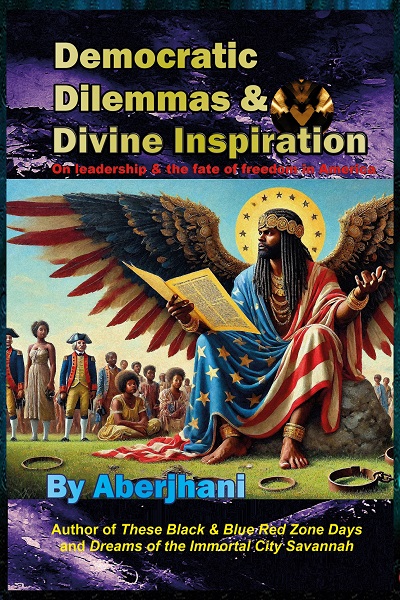
Democratic Dilemmas and Divine Inspiration examines the significance or relevance of the idea that the U.S. Constitution was, as many believe, divinely inspired. How much did that belief matter to founders of the nation and how much does it matter no
Democratic Dilemmas and Divine Inspiration examines the significance or relevance of the idea that the U.S. Constitution was, as many believe, divinely inspired. How much did that belief matter to founders of the nation and how much does it matter no
Democratic Dilemmas and Divine Inspiration examines the significance or relevance of the idea that the U.S. Constitution was, as many believe, divinely inspired. How much did that belief matter to founders of the nation and how much does it matter no