How shall we preserve the glory of our past when we are preoccupied with the commotion of our present?
We are a distracted people – and by distracted, I don’t merely mean that we are momentarily preoccupied, rather we are incapable of focus. A recent study from Microsoft measures the modern human attention span at a mere 8 seconds … less than that of a goldfish and more akin to a bee or a fruit fly.
Our ability to concentrate has deteriorated in proportion to our obsession with digital devices and applications which have had a pronounced effect on the human brain. Modern attempts at coherent thought are regularly disrupted by texts, emails, social media alerts, or some other restless and twitchy digital distraction.
This sets forth the question of our time … how shall we preserve the glory of our past when we are preoccupied with the commotion of our present?
Consider those fundamental things that required more than 8 seconds of coherent thought … The American Revolution, the US Constitution, the Declaration of Independence, the Emancipation Proclamation, the Women’s Suffrage Movement, the Civil Rights Movement, Space Travel, and The Internet. And then there are the great works of literature that are neither character-limited nor condensed: The Scarlet Letter, The Great Gatsby, The Red Badge of Courage, Middlemarch, Wuthering Heights, Anna Karenina, The Fountainhead, Brave New World, The Catcher in the Rye, etc.
These enduring masterworks capture the conversations of their time, but what about our time? In what section of what library will they house our collections? In what galleries will they display our still-lifes and landscapes? In what halls will they play our sonatas and concertos?
Our moment in time is fraught with disruption, detachment and the transmission of so much information that we have lost our words, masked our canvas, and silenced our symphonies. We have forfeited precious, human relationships for vapid, digital connections and snubbed a mortal embrace for the cold tap of a soulless automaton. While we walk in the shadow of the inspired minds of Shakespeare, Tolstoy, Bronte, Dickens, Nabokov, Woolf and Eliot - our progress has come at the price of creative expression.
The poetry of our time has been deadened by touchpads and dumbed down by smartphones as our metaphors and allegories have slipped somewhere beneath the protective film of our iPad Air and the haptic engine of our Apple Watch.
Every generation seeks to escape the limitations of the human condition by crafting a unique story. There are no short-cuts … not even for us. Siri is not going to chronicle our times. We cannot Roomba through the halls of modern consciousness or Uber our heart back home. We will not find our “mind’s eye” shared on Instagram or our heart’s desire booked into a $99/per night spare bedroom on Airbnb.
At some point, we have to address the meaning of life and the emotion of existence as so many societies, generations and civilizations have before us … or our very short stint on planet earth and our very small moment on the human stage may very well be deemed inconsequential.
Your article certainly touches on concerns, some of which are fads and will pass with time. I often refer to Socrates who was quoted as saying that the younger generation was going to hell or something to that affect.
Wikipedia and Google are rapidly making the need for libraries and reference books, encyclopedias and dictionaries obsolete. I can now find accurate information in less than five minutes that would take me hours going to a library. On the Internet we can have access to master teachers like our own AD piano teacher Shirley Kirsten. The classics that you mention can be read anywhere and anytime without having to have them in your library or go get them at the library.
We are now connected to a global village. Where long-distance calling used to be prohibitive, we can now conference with friends, business associates, and family in real-time the world over. We have access to data like never before and powerful calculating tools that required whole books of tables. Sure, there are distractions and problems, but they pale in the shadow of progress.
The older generation always has difficulty with change. Each new generation accepts new technology with ease.
I wholeheartedly agree with the points you make. May the written word bound in books--paper or digital, still persevere. Attention span may have dwindled, but the need to connect with something that resonates is still there: romance, fantasy, etc.
Complete Troubleshooting & Repairing guide to hot air furnaces * Complete operation, maintenance, and repair * Covers gas, oil, and electric forced air systems * Includes flowcharts and highlighted tips and solutions to common furnace problems
Complete Troubleshooting & Repairing guide to hot air furnaces * Complete operation, maintenance, and repair * Covers gas, oil, and electric forced air systems * Includes flowcharts and highlighted tips and solutions to common furnace problems

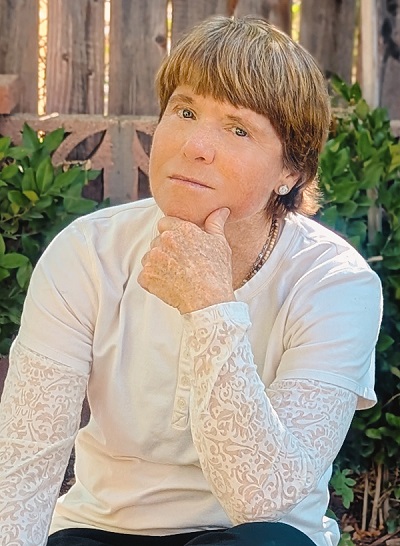

 We are a distracted people – and by distracted, I don’t merely mean that we are momentarily preoccupied, rather we are incapable of focus. A recent study from Microsoft measures the modern human attention span at a mere 8 seconds … less than that of a goldfish and more akin to a bee or a fruit fly.