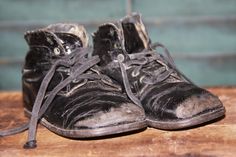
I chose to study economics not because I was attracted to it, but because nearly all of my peers were avoiding it. Why? It was not an easy subject to understand and to assimilate; therefore it was not a candidate for an easy grade among the brethren. My rationale became “If it’s too tough for them, then it’s just right for me.” Well, I soon discovered it was tough, and boring, and it wore me down like an old man who is too tired to move. I also realized that those adjectives also described most economics professors. They had found their niche in the muck and the mire, and by god they were going to drag their students down there also. But I understood why the label “the dismal science” became attached to it. Still, I stuck with it. I wanted to know why bankers wore the best clothes, drove or were chauffeured in the best vehicles, lived in the best part of town, in the most expensive homes, and their kids looked much like them, although they were dumb as dirt. I wanted to know why they had so much while I had so little. I wanted to understand where money came from, how it got spread around, and why none of it came my way. I wanted to know why I could not afford to go see the ear doctor about my ears that were oozing smelly stuff. I wanted to know why I was always hungry and others were not. I wanted to know what a refrigerator looked like on the inside. I wanted to learn how to play a musical instrument that I could not afford. I wanted enough money to be able to afford to eat in the school cafeteria. I needed to have my only pair of shoes repaired. I needed a winter coat and maybe a pair of gloves. I wondered what it was like to live in a place that was clean enough to invite others into; where I could sleep in a bed; where I could wash in warm water; a place with a bathroom, a kitchen, a washing machine, and heat in the winter. I wanted to know how to find my way out of this world of constant hunger, and grime, and hopelessness, and into the world where all of my friends lived. I was willing to pay for these things if I only had a job and an income, but nobody was willing to hire me at any wage to do anything. I finally landed one job for a short while one summer cutting grass at two apartment buildings. I lost it when I arrived too hungry and too weak to push the lawn mower long enough to finish the job. I lied about my age and my experience at every place that offered the slightest hope for employment. I finally found one. I was overjoyed—for nearly a week. It was in a factory where the noise level was so high I had to learn how to read lips. It was a place where my hands and face became impregnated with tiny slivers of fiber glass. They soon were too painful for me to touch anything. I counted the minutes until quitting time only to learn that my replacement had failed to show up, and I had to remain for a second shift or lose my job. I worked over a vat of chemicals that were so toxic I was certain they would kill me in less than a month. I quit in order to survive long enough to make a new beginning that offered the prospect that I might live to see age 21, or 18, or 16.
That was my list of reasons. I had only a few options. Later on when I taught economics, I refused to join the society of boring professors, so I tossed the chosen text books aside and imparted most of the relevant knowledge about this subject that I had learned from experience. I pulled together 3 or 4 pages of websites that contained more relevant information than all the texts I had ever seen. One site had about 100 different calculators that could be used online at no cost. Another had a “living” yield curve that showed how interest rates rose and fell over time before the economy did the same. Cost of living calculators between cities was a popular site, as well as dollar equivalency values at different points in time. I even found a source from the Library of Congress that featured Joseph Schumpeter in an oration from a hundred years ago. He was not only a gifted theorist, he was also an excellent speaker. Most texts also had a discussion page at the end of every chapter with the title “Issues for critical analysis.” Not one of them had a single word that explained the term critical analysis, what its constituent parts were, or how to apply them. I devoted several days to this issue alone, along with multi media presentations and other reference sources. I also changed the definition of economics from “how a society allocates its scarce resources among competing needs” to “how a society creates wealth and distributes it unequally among its population thus causing both excessive wealth and extreme poverty.”
My innovations were well received by students, but not by the institutional hierarchy. And since teaching came late in my career, I realized that by not following the rules I had failed in government positions, in corporate positions, and in educational positions. Fortunately for me, the last failure came at the end when nearly all the damage that could be heaped upon me had occurred when I was too old to care. And so I was relegated to the ranks of the retired with very little income from which to improve upon my real passion in life—golf.
I'm glad to see this. My sentiments exactly. People think we have it so rough today, but you clearly show what poverty really was like trying to come out of the depression. And, economics? You nailed it. Although I did have a very boring economics professor in a too small fat-stuffed suit that rode a Harley (now that's a strange combination) to class. The other professor was less boring, but constantly preached that the stock market was going to crash like 1929 again. He was 40 years too early.
While my beginnings weren't humble, I know what it's like to work the factories. Mine was summer employment and I knew I could quit anytime if I felt like it--but stuck it out. My worst and last job was at H&H Screw Products, aptly named for how management stuck it to us. I credit those jobs for making me a better human being.
I believe you became a better teacher for all the hard knocks, as I became a better teacher for assimilating with all kinds of folks.
While you may have retired with little income, I know you've improved your stature on the golf course. I can't vouch for your game ...
A tale of woe that matches my own, at least when I got my start in life, working in an ice cream factory washing bottles. It wasn't toxic, but they made the hot fudge in the room where I stood all day at the sink. What we had to do in those days. I went on to become a teacher early in life (at 22); but because I was teaching English (and writing until today), I wasn't that much constrained by the bureaucracy. Thanks for this and I look forward to "to be continued". . . John
After a long awaited weekend visitation caused by false allegations of sexual abuse, Glen got to see his children for the first time in over two months. He promised them that they would never be apart again and then they disappeared.
Asa D Seeley, a young Afro American man, shares his struggle to leave his past behind as he reaches for his future. In his one-of-a-kind style, he searches for answers...from the visible & invisible. A Memoir in Poetical/Prose form.
For a time, I perched myself on a flat rock, comparing my life with the Guyandotte River. Just as its tributaries replenish it daily, changing it in some small—sometimes great—degree, so have the day-to-day occurrences of life changed me. Like the ri