 Outrage from an untoward remark sparked the following elaboration of my maternal grandparents’ immigration to the USA in conjunction with Independence Day.
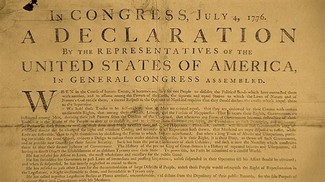
With the Fourth soon forthcoming, Americans will celebrate Independence Day commemorating the adoption of the Declaration of Independence on July 4, 1776 by the Continental Congress.
Proud to have been born in the USA, I am ever grateful to members of the armed forces who’ve dedicated their lives, made family sacrifices, and put themselves in harm’s way so Americans on US soil can celebrate our freedom from tyranny with fireworks, parades, barbecues, picnics, and the like.
A second-generation American, I wish to convey heartfelt thanks to my maternal grandfather who emigrated from Italy to this country and fought for it during WWI. Attaining citizenship, he paved the way for his wife—my grandmother, and his two young children—my aunts Evelyn and Angie, to make their pilgrimage to Rhode Island. Eventually, my mother, the second youngest of their six children was born, and automatically became a US citizen by virtue of “jus soli” or right of birthplace.
* This is the gist of a Blog I’d written and published at Authors Den on July 1, 2016—“Eva’s Byte #62: Fourth Coming (Celebrating the American Dream).
http://tinyurl.com/yba7fh2y
Rounding the bend to our 241st Independence Day anniversary, cerebral fireworks detonated when my mother informed me that one of the residents at the assisted living facility called her a WOP! This untoward remark amounted to a disrespectful, contemptuous, stereotypical, bigoted and erroneous ethnic slur. The acronym, WOP, stands for “Without Papers,” referring to those Italian immigrants who entered America without official documents. Clearly, that was not part and parcel of my family’s Italian-American heritage!
Our mutual outrage sparked the following elaboration of my maternal grandparents’ immigration to the United States of America by incorporating the sketchy details brought up from time to time while breaking bread during family gatherings.
A wealthy landowner, my grandfather sold portions of his family’s olive plantation in Italy to finance several trans-Atlantic journeys over the years. After the war, holding down a job, he arranged for my grandmother and their two young daughters to make their way to America by steamship. Traveling, either first or second-class, they avoided processing on Ellis Island. However, during the ocean voyage, the ship took on water. My grandmother—expecting twins—whether or not she knew it back then, and my two aunts, evacuated in one of the lifeboats.
By the time my grandparents had six children, they bought their own home—a two-decker, which is still family property. Embodying the spirit of Americans, they graciously allowed a young Mexican couple to stay in the attic apartment until they could make it on their own. I have fond childhood memories of Lupe.
After the Great Depression, no group was hit harder than African-Americans, whereby in some of the Northern cities, whites called for blacks to be fired from any jobs as long as there were whites out of work. That mentioned, my Aunt Viola befriended an African-American girl in her classroom. My grandparents welcomed her in their home with open arms by inviting her to dinner quite often.
My grandparents exemplified American citizens who uphold the ideals set forth in the statement on human rights found in the second sentence of the Declaration of Independence:
We hold these truths to be self-evident, that all men are created equal, that they are endowed by their Creator with certain unalienable Rights, that among these are Life, Liberty and the pursuit of Happiness.
|




lovely tribute, isn't it rewarding to find what it was that made our ancestors tick!
m
Thank you for the colorful accounting of your maternal family's passage to America. People don't know history and therefore think that the situation today is new. It seemed like when financial or political problems occur in the world, a new invasion of immigrants… Including our founding fathers, to the promise of freedom in the United States.
Fortunately like you, I grew up in a permissive family that allowed tolerance of all kinds of people even though we were often surrounded by prejudice and bigotry. We participated in the Polish jokes (and on the misnomered "stupid Scandinavian" jokes) but shared them freely with our Scandinavian and Polish relatives.
Ron