|
|
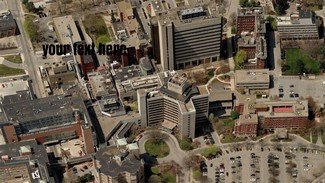 A sea of tranquility forged by human bondage...
Carrying out my role as caregiver for my elderly mother, I’ve spent a great deal of time in the “zone”—the medical metropolis of Rhode Island Hospital—my state’s largest hospital, and its only Level I trauma center and verified burn center. As part of an academic medical center, this facility offers the highest levels of expertise in neuroscience, cancer, and cardiology, among many other specialties. My mother availed herself of the hospital’s cardiology specialty.
Bordered by the state of Rhode Island’s seamier residue of down-and-outers and hardworking blue-collar workers, are its piers. While my mother recovered from surgery in the CCU inside the Bridge Building, I had a ringside view of the bay through the wide latitude afforded by a wall of windows.
With many more upcoming visits to the zone, which include putting myself in one of the dreaded parking garages, and hiking to any of the designated medical buildings, I’ve developed an affinity for this twilight zone of humanitarianism. I believe the commonality of visiting patients in various stages of life or near-death breeds compassion and empathy amongst those of us milling around in the area on foot or by car.
On two occasions, when through no fault of mine, I had trouble with my parking-garage ticket on the way out of the lot, drivers got out of their vehicles to assist rather than honking the horn or shouting. I’ve experienced folks squeezing themselves within the confines of an elevator to make room for two more—my mom and me. Without fail, drivers have stopped to let me cross from one sidewalk to another. These small, yet grandiose humanitarian gestures, have rubbed off on me in and outside the zone.
Despite the hustle and bustle on the campus of Rhode Island Hospital, the zone is a sea of tranquility by the bay forged by human bondage.
|
|
|
|






We have a huge Medical Center here in Houston. So, I have experienced, usually students and staff, going and coming hurriedly without any sense of helping anyone. The entry to where I go for rehabilitation was always difficult because I couldn't reach to take the ticket or push the button for assistance when I was driving alone. People would either ignore or glare at me when I honked my horn for assistance. The problem was solved when they put in a system that, if a motor was running, and no one responding, an operator would ask on the speaker, "May I help you?" That worked nicely. Many times I've had to have strangers help me get out of those turnstile lots.
Just last week, as I wheelchaired up to the reception desk for a clinic appointment, my wheelchair failed. My caregiver disengaged the motors but could barely push my heavy chair and me. When I came out of my appointment, I saw two young black men coming to the elevator. I called out to them, and one pushed me all the way to my van and then into the van with the help of a security guard. We talked as he pushed me and I wanted to give him a book of mine that I usually have with me. I felt bad that I didn't have one to give him. The problem turned out to be an unplugged ribbon wire in my joystick control box. A five-minute fix without parts with the right tools.
Ron
So refreshing, Eva. Thank you for sharing. Love and best wishes to you,
Regis