|
|
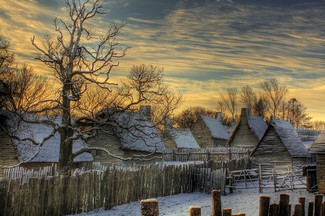 Regurgitating a moment in history..
Grateful for yet another memory wafting from the third-grade trenches of Northern Lincoln Elementary, I’m composing this fine how-do-you-do with all of my fine-feathered friends in mind. A turkey-leg drumroll for my students—too numerous to name, and the teachers who comprised our team during the memorable field trip I’m about to share. Cheers to Eileen and Cathy.
“History never looks like history when you are living through it.” (John W. Gardner)
Backwards in time…
In our social studies curriculum, we addressed the Pilgrims with vigor, leading up to America’s traditional Thanksgiving Day celebration. Leaving no stone unturned, except for Plymouth Rock, we broached the subjects of: hardships along The ''Mayflower'' voyage; principles and implications of the ''Mayflower Compact''; dependency on the Native Americans for survival; the First Thanksgiving.
We “lived” the curriculum, thoroughly tapping into our students’ imaginations to make history come alive. One of the books which helped to put us in touch —…''If You Sailed on the Mayflower in 1620'' by Ann McGovern. For one thing, “The sailors made fun of the Pilgrims who got seasick. They called them "glib-gabbety puke stockings".”
As for the First Thanksgiving feast: After successfully harvesting their first crops in autumn of 1621, at least 140 people—Pilgrims and Wampanoags, gathered to eat and partake in games over the course of three days in October.
Venison, not turkey, headlined the meal. Purportedly, Chief Massasoit of the Wampanoags contributed five deer to the feast. According to ''Pilgrim Hall Museum,'' there was a healthy selection of fowl and fish. The banquet also included wild turkeys, ducks, and geese to feast upon.
Once our students virtually “settled” at Plimoth Plantation, and discovered all of the hardships they would have endured leading up to the commemorative feast, they were instructed to keep a journal based on their typical, imaginary day incorporating some of the facts they’d learned. To authenticate the experience, we tea-stained composition paper to look like parchment.
In May, we shook a tail feather by embarking on our annual expedition to Plimoth Plantation via two school buses accommodating the likes of 75 students, 3 teachers, and several chaperones. Our pilgrimage consisted of three separate guided tours. Two by land: 17th-century English village and Wampanoag home site. One at sea, giving rise to a day which will live in infamy, more so for one of the teachers waiting to board ''Mayflower II,'' the replica ship.
While a manageable number of students toured the cabin area below, the rest of our group waited on deck, taking in the sights and sounds around us. In the midst of waving at our kindred pilgrims from Northern Lincoln Elementary across the dock, who leaned against the upper and lower rails, Cathy’s shrill teacher voice sliced through the air. Peering upward in search of the culprit(s), she admonished, “Whoever is sprinkling water on us, stop right now!”
From the vantage point of the ''Mayflower’s'' upper deck, we espied one of the youngsters from her homeroom vomiting over the railing. Long story short, Cathy took the boy under her wing, assuring him everything was all right. Convinced her student felt better for having heaved, she and the others who bore the brunt, cleaned up at a comfort station.
History may not have looked like history while living through it. Adding to the raucous laughter during the bus ride home away from fowl territory, the one who fouled up proclaimed himself “glib-gabbety puke stockings”.
|
|
|
|



My brother's wife is a fourth-grade teacher in Phoenix schools. Every year she takes the students to the Grand Canyon where they get a view of geology and, perhaps go to the canyon floor and learn about the Indians lived there long before Europeans came.
Ron