Charlie Hagglund was sick and tired of rowing. He needed a real boat. He needed Comet's boat.
“Comet’s Boat”
A Short Story
By
Alan E. (Al) Strunk
Charlie Hagglund was sick and tired of rowing. Since his eleventh birthday, he had stroked his skiff C-Weed across Morro Bay’s harbor to get to the sand spit, the ubiquitous peninsula keeping the harbor a haven from the ravages of the Pacific. He grew to his current thirteen years trained as a safe sailor, always wearing a hat for shade, aviator sunglasses for glare and an oil-stained but serviceable World War Two gray kapok life jacket which bore, in mourning black, the service number of an unknown navy man. This he wore to save his life.
Morro Bay was a small fishing village and artist colony. Fishermen and painters, poets and shopkeepers delighted in gossip but also kept a protective eye on their young, related by proximity if not by blood. If spotted doing anything stupid, like boating without a personal floatation device, word would soon reach the ample ears of his Auntie Lillian. Corporal punishment was not a threat. Losing movie privileges at the Bay Theatre was.
The concept of the shortest distance between two points is thrown out of geometrics’ window when it comes to wind and tide. On a strong ebb, Charlie crossed to the spit fighting his way towards the back bay of Baywood to avoid being swept out the harbor’s mouth. He was not allowed to take C-Weed beyond the number seven buoy anchored perpendicular to the centerline of Morro Rock. On the flood, he fought for escape from the back bay’s snagging mud flats waiting in ambush for skiff, canoe or oyster scow.
Once landed at a spot determined by nature’s whim Charlie pulled C-Weed a safe distance above the high water mark. Depending on where he beached, the distance over the dunes to Pacific’s roar varied in height and distance. He never found a dune too hard to climb. Nor could he resist rolling down its opposite side filling ears and pockets with sand. He supposed he would grow out of such child’s play, but, hey, there were no witnesses.
Some kids crossed the spit to surf fish for perch or “flatties” a local term for halibut. Some dared the ocean with tire iron in hand to loosen precious abalone from their homes on the rocky outcroppings beneath the waves. “Dungies” the delicious crabs sought in the depths of Estero Bay, also lurked within crack and crevice, with clicking claws ready for attack.
Charlie had been barred from bringing such trophies home since the time he failed to carry the remains of a crab to the outdoor garbage can. It took a few days to rid his aunt’s kitchen of the stink of decaying shell.
He stripped off life jacket and shirt, enjoying the twin sensations brought to skin by sun’s ray and surf’s spray, and daydreamed of boats with motors. Heck, even a little two-stroke Evinrude would propel C-Weed through wind and tide with ease if her transom were strong enough to take weight and strain. It wasn’t. He had even thought of jury-rigging a mast and bedsheet sail on her, but with flat bottom and no centerboard, that idea was nautical nonsense. Nope. There was no modifying C-Weed to meet his appetite for speed and power. He needed a real boat. He needed Comet’s boat.
Bob Comet had been adrift at sea for five days aboard his single-handed fishing boat Frankie. Drifting into “Steamship Lane” saved him. Once ashore, Frankie was sold to another who dreamed of getting rich by catching fish. With the proceeds, Comet bought a boatyard. A natural carpenter and mechanic, uncomplicated by formal training, he knew that any boat, be she made of wood, steel or the new-fangled fiberglass, would, sooner or later, end up in a boatyard. He owned the only one in Morro Bay.
His growing reputation as a damned good boatwright kept the yard full of hulls in need of scraping, calking and painting. Bob became an employer of sorts, hiring by the job, painters when they were sober and competent mechanics to handle major engine overhauls. Pleasure boat owners rarely performed the onerous tasks required for maintenance. These Bob Comet charged dearly for services rendered and material provided.
Commercial fishing skippers were by nature thrifty. Some were suspected of having the ability to squeeze a silver half-dollar until the walking lady yelped and the eagle took flight. With a full understanding of the challenges of the occupation, Bob Comet’s Boatyard charged a haul out fee and a daily way’s rental to those who made their living from the sea and performed their own repair and maintenance.
“How old are ‘ya, boy?” Comet asked.
“Fifteen, sir,” Charlie answered, stretching vertebrae to gain height.
“Now boy, let’s not start our relationship with a fish story.”
“Thirteen sir, but tall for my age.”
“What can ‘ya do?”
“What do ‘ya need done?”
“This ain’t a contest boy. Not sure I can hire a thirteen-year-old for wages.”
“I’ll work ‘fer trade.”
“Trade? What ‘ya want in trade?”
“That boat.” Charlie pointed to the fourteen-foot workboat with no outstanding features save one: an Evinrude outboard engine.
“Lets walk ‘n talk a bit.” Comet had recently installed a raft of finger docks to increase working space and rental income. Boats ranged from a gleaming mahogany Chris Craft Constellation with teak decks and shining brightwork to daysailer sloops faded by salt and sun.
“Which one ‘ya likes best boy, if’n ‘ya could have any ‘ya want.”
“That one,” Charlie answered without hesitation pointing at a scruffy double-ender fishing boat with a small house just forward of a dry stack, equipped with eucalyptus outriggers and an open stern deck free of clutter.
“What? Not the fancy one?”
“Fat man owns her. Smokes big cigars. Probably stinks belowdecks. Rides on top of the water, not in it. Nope. I’d take the double ender. More seaworthy. More useful.”
Despite his skepticism, Bob Comet was impressed by the boy’s common sense and keen observation.
“Boy, I think we can work out a deal, with ‘yer auntie’s permission of course. Written permission.”
“Sir.”
“Yes, boy.”
“My name is Charlie. Charlie Hagglund.”
Comet extended a meaty hand swallowing Charlie’s small paw in a manly shake.
“Good to meet ‘ya, Charlie Hagglund. If you’re old enough to go to work, you’re old enough to call me Bob. Besides, sirs is for officers. I work for a living.”
Charlie crawled into the empty chain locker of a forty-foot hunter power boat armed with a four-inch paintbrush and a bucket of very white marine enamel paint. He emerged ninety minutes later dizzy from fumes and wearing more paint than he applied to bulkheads.
“Get any on the boat?” Comet asked.
“A bit,” Charlie grinned. It took a half-gallon of gasoline and twenty minutes for him to clean paint off brush and flesh.
Bob Comet took the secret of his inoperable brain tumor to his deathbed peacefully, without fuss, as he had lived his life. When his estate was settled the first item listed was a fourteen-foot yard boat with an Evinrude outboard motor to be given to Charlie Hagglund, which he had earned by his hard work as a boatyard boy.
Charlie dragged the boat out of the water stern first. He wielded paint brush with care and expediency, desperate for drying time to end. Back in the water, the Evinrude started on the first pull of the rope. Artists, fishermen, and day drinkers watched as Charlie cruised the harbor, wearing hat, aviator sunglasses and his gray life jacket in his new craft, its transom proudly bearing its name and home port: “Bob’s Comet, Morro Bay”.
I like stories with a down-to-earth, common touch and a happy ending. Alan Strunk has managed to provide all three in his practical and salty rendition of "Comet's Boat." It's nothing fancy, but like Bob Comet's comment, this story is simple, up-front and to the point: "Besides, sirs is for officers. I work for a living.” Bingo! Mister Comet did something worthwhile at the end of his life to register a plus for his entire existence - and the kid who worked for it got his dream boat with the Evinrude motor. Everybody is a winner. How about that?
d. lid
A great, down-home story of youthful accomplishment. Reads very much like a true story. And, reminds me of my early jobs including when my twin brother and I helped pull all the nails in the lumber from a dismantled schoolhouse for Mr. Nowacki, an enterprising entrepreneur. Drunk, he took us fishing one day and caught the biggest fish.
I really love your descriptions of the local surroundings, the fauna and flora, and the nautical terms.
Part Three in the Mu Series - Sarah Thompson reluctantly abandons her desperate search for her soul mate on Maui and returns to her Montana hometown. Her brother has had a terrible accident...
Dreamin’ Dreams is more than a collection of stories; it is a celebration of Irish life, adventure, and the unforgettable characters who make growing up in Ireland a journey worth remembering.



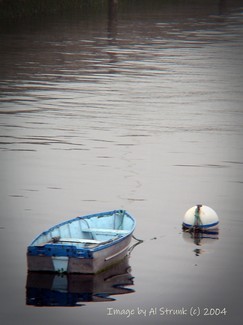 “Comet’s Boat”