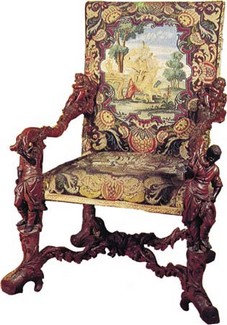
Back in my “Heyday,” I was asked quite seriously by one of my former professors, “When are you going to endow a chair?” at his favorite university. Not coincidentally it was the same university that had awarded me a diploma. In case you are not familiar with the term “endow a chair,” it means to fully fund an account for a distinguished professor that will pay him or her a generous salary, plus his expected income taxes on that salary, fund his retirement, and award him incremental increases, for a goodly number of years. This endowed salary is also expected to be higher than that offered by the university. In return for my generosity, my name would be attached to that position. In a moment of incredible brilliance, an answer came into my head. Before I let you in on my response, let’s examine the cost of an endowed chair.
In this tally, I will use salaries generally known to be the case today. A full professor today at a small-to-moderate sized university is paid about $150,000. That is a goodly sum for a full professor who does little active research, spends a minimal amount of time if front of a classroom, and who comes and goes pretty much at his convenience with little accounting to anyone. An endowed chair would expect to have enough in reserve to pay about $200,000 per year, plus raises, taxes, etc. for 25 years.
I happen to own a Monte Carlo simulator that can make all the calculations that can determine the amount of money needed to fund all those needs plus 8 percent to be set aside into his retirement fund in just a few seconds. Through the magic and speed of my PC the amount needed to purchase an annuity that yields 4 percent annually, that pays an initial monthly income of $16,667, sets aside 24 percent for income taxes, pays another 8 percent into a retirement account, that gives annual increases of 3.0 percent, and that has at least a 98 percent probability of having a positive balance at the end of 25 years is…….$6,950,000.00.
I did not have the courage or the humility to tell my former professor friend that I did not have nearly $7 million in pocket change at the moment that I could spare for one of his needy colleagues. My instinct suggested that I offer to endow 2 chairs contingent on my winning the Lotto. But that would not have been a very creative response coming from his former star student. Instead, I looked at him with the same serious look that was on his face and said, “My cash flow will not support an endowed chair yet, but I can offer to upholster one in a week or two.” He was speechless. Sad and speechless.
"Chaise à l'air loufoque? Je ne pense pas mon cher professeur!" It certainly appears the sort of nicely padded chair that one would want to sit one's nether extremity comfortably upon, when the CEO of the Oxford University Endowment Management Limited committee calls together all the members of that august body for another dreadfully tedious session!
A droll anecdote, indeed! Bravo Sierra, *click-click*.....
Ron: I carved out my teaching skills in the USAF doing 30 hours per week in the classroom, 10 hours more in preparing the course materials, and 20 more in the laboratory. I also taught at the university level as an adjunct for less than minimum wages. At one time I had a large box nearly full of wonderful comments from reviewers and students alike--not for my ego, but for any future employer who might ask to read a few. Still, the best compliment ever paid me was from 3 seasoned instructors who sat in my classroom for about 3 weeks. I asked them "why?" They said "We heard you were the best. We like to learn from the best." I would not trade that approval rating for all the endowed chairs in existence.
The goofy looking chair and my last paragraph summarized my feelings about endowed chairs and those who have the need to feel special.
It is interesting how others perceive ones monetary success from their view. For example, those in higher education would view those in private business as doing setter monetarily, while those in business might look at your analysis and think that those in higher education are doing just as well as Congress members.
On the other end of the scale, I've read that perhaps 60% of college teachers today are adjunct. That means they are paid under contract, semester to semester, for the courses that they teach. They routinely have to move on to other schools when their contracts are abruptly ended. No benefits. Some make $15,000 or less a year with a doctorate, and often, postdoctoral work just for attempting to find a "tenure-track," position. It is no wonder that those that have somehow achieved an endowed chair will sit on it until they are senile, while the meatgrinder at the other end of the scale demoralizes young educators who pay the price of admission.
Deputy Dave Jenkins sets out to find the murderer of the local high school principal, aided by a voice from the grave that is sometimes helpful and sometimes misleading.
"Murder isn't usually this funny."
Amazon reviewer