I hope you enjoy this excerpt from one of my travel essays.
With ticket in hand I ascended a steep flight of stairs to my assigned track—a platform where my enthusiasm ballooned. A thicket of passengers stood waiting for a train. Many were wearing headphones. Not me: nothing was going to prevent me from experiencing the approaching train. I remembered all the times I had heard these very trains chugging from the distance, en route to their next stop; all the times the powerful whistle had stirred my rest and warmed my heart—I was not going to miss its grand entrance.
Two trains had come and gone through the station, each filled with business-class patrons. Through the oversized windows I noticed hundreds of brightly lit desks, all of them covered with laptop computers, their occupants staring at the screens as if watching their money grow, rather than taking in the surroundings.
From overhead speakers a distorted voice, a voice squelched by static, announced the pending arrival of my Amtrak train. In a matter of minutes it would roar through the station producing a momentous clatter. The television screen on the platform updated arrival and departure times, indicating that my train among others was on-time. The whistle started singing its song to me from a distance, a song I had depended on for peace every day for months.
Along with other passengers I shuffled toward the track, my enraptured heart racing. The lead car’s bright lights flooded the tunnel. Suddenly I was overwhelmed by a one-of-a-kind magic, a storm of sights and sounds that caused a ripple of gooseflesh all over my body. Car after car blazed past me, and within moments I heard the screeching brakes slowing them down. Once the train stopped, the doors slid open and the attendant set down a small stool. I showed him my ticket, followed his instructions on where to sit. I appraised his tidy uniform, the style of which hadn’t changed much over the years. The square hat, the tailored jacket and vest, the shirt pocket filled with pens, tools, and miscellaneous supplies—his attire made me feel as though I was going to be special for a day, just like Jack Dawson and Fabrizio in the movie “Titanic,” who express their gratitude for being on board the massive ship.
I walked to my seat, sat down. I’m actually on the train, I told myself. I’m really here in this long, picturesque car, the same one I’d been thinking about in my sleep and daydreaming about day after day. The emotions channeling through me were on another level, surpassing by far the rush children get at sporting events. A kid can go to a game any time, but he doesn’t get to ride a train as often—if at all. To me, being on the train, here and now, was more gratifying, more thrilling, more surreal, than listening to screaming sports fans. This train ride was a real and tangible reward, and my trip had only just begun.
As the train rolled out of the station, the figures of passengers still waiting for their train became smaller as the distance between us increased. And as the last car of the Amtrak train cleared the fringe of the station, I realized that my latest peregrination was about to bestow new meaning. We rushed through the towering clutter of the city, a smorgasbord of eye-pleasing backdrops: tall buildings, immense warehouses, massive billboards. Large apartment complexes towered over supermarkets and small plazas. The window opposite me provided a similar view, although the passenger occupying that seat had already cracked a newspaper.
You reminded me of a couple of steam powered trains I got to ride. The Amtrak ride I got from Grafton West Virginia to Washington DC in 1973 for Transpo 73 and the one I took from Trenton New Jersey to Pennsylvania Station in Manhattan on the day before Thanksgiving, 1977.
Regardless whether I was on the train, plane or bus, the two things that I favored were a window so that I could see the world passing and a friendly stranger seat mate that I could talk to as we enjoyed the trip for what it was. Just like you seem to in this brief love for leaving an Amtrak station with all your rich language describing it. Our electronic devices and even the old newspapers and books, while they while away the boring hours, do not enrich travel like conversation with strangers.
At the young of age of seven, Jill's mother Eve takes her for regular sessions to a child psychologist for treatment of her anxiety, which only makes her behavior worse. When she reaches her teens, she starts drinking and then smoking marijuana with
Jamie was a healthy, active 12-year old who loved to skate and played hockey as well as any boy. Then one afternoon during a game, she suffered a stroke that changed her world. Her memoir takes the reader through her ordeal and her journey out of the
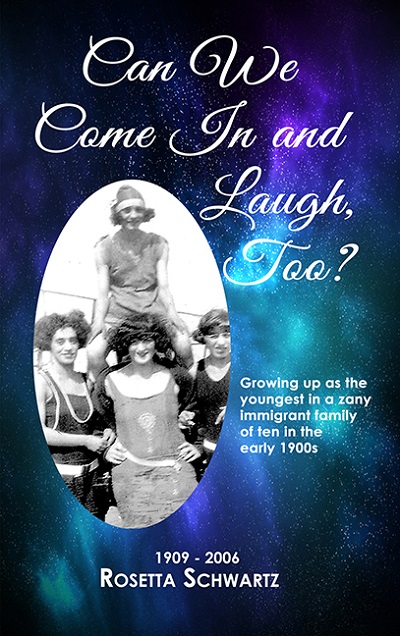
Rosetta was born in 1909 as the youngest of ten children. The family had more laughter than money and neighbors would knock on their door to ask, "Can we come in and laugh, too?"