My first attempt at historical fiction. The facts gathered for this story were thanks to the Merck Medical Manual (Merck and Co., Pocket Books, [c] 1997) and The Cruelest Miles--The Historic Story of Dogs and Men In A Race Against An Epidemic by Gay Salisbury and Laney Salisbury (W.W. Norton and Co., Publishers, New York and London, [c] 2003).
I.
January 20, 1925, Nome, Alaska~
I am so scared and so frightened, I really don't know what to do.
My little girl, Penny-Rose, is so sick, and I really don't know if anything can be done to help her or stop her suffering.
My baby girl is only two, just a tiny mite of a thing, with soft, curly black hair like her daddy, and big, black eyes, but as I hear her in the other room, coughing and struggling for every breath, my heart is filled with a sense of dread. She got sick with fever only a few days ago--that and a severe sore throat--, but it was only yesterday, the 19th, when she took bad.
Later, Same Day~
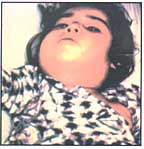
My Penny-Rose started having problems catching her breath; when I just looked at her, I found her in much distress. Her wide black eyes were huge with terror, her little face was soaked with beads of sweat, and flushed from her constant coughing fits, and tears streamed down her cheeks. When I looked into her mouth (that is, once she let me; at first, she resisted), I was horrified to find her usually sweet breath particularly foul-smelling, and it was then when I first saw a grey membrane in the back of her throat; this was probably what was causing her discomfort and suffering. Her little heart was pounding, and her small chest was heaving wildly as she fought and gasped for a precious breath of air.
That was when my mind flashed back to one week ago, when a child from the Eskimo village up the road came to the store where I worked and started to play with Penny-Rose. (I knew the child from when her mother would come to the store to buy some oil or fresh cooked salmon or seal meat. The child's name was Grace Eileen Sitka, and she was only six, just a few years older than my baby girl.) The child in question was seemingly "out of it": she seemed ill, and I grew worried, for she was coughing badly, but even despite the cough, she still played with Penny-Rose. She said she had a very bad sore throat. When I told her mother about it, she said she was going to take her little girl to the doctor's after she was through paying for her purchases. She was then to be on her way to take little Grace to the doctor's, so he could help her and treat her sore throat and coughing spells.
That night, however, I received some very sad news. The little girl Penny-Rose had innocently played with, not knowing she was sick, died. She died because her throat closed up completely, and she couldn't get in any air because a thick, grey membrane had formed in the back of her throat. She died from a disease known to many as "The Strangler": diptheria.
Diptheria was something to be feared because it was highly contagious, and it had already killed millions of people around the world, especially children. It was so bad that any time a child came down with a sore throat, it was a cause for immediate alarm.
January 21, 1925, Nome, Alaska~
Now my Penny-Rose has come down with the exact same symptoms. She now lies in the other room, fighting for each and every breath. Her gasping, strangling cries tears at my very heart, and it causes me to cry. She has the "strangling disease", and I am afraid that she is going to end up dead like poor little Grace Sitka.
I have already called for Doctor Proctor, who lives in the next village. I told him about my baby girl and of her symptoms, and he said he would be over as soon as he could, for he was very busy tending to other people who had fallen ill with the same symptoms: severe sore throat that develop ulcers that grow worse over time, fever, extremely foul breath, gasping, strangling breathing, obvious distress in patients. He said most of the sufferers were children, and most were of the Eskimo or Native Alaskan Indian tribes. He would get to my Penny-Rose as soon as he could, he told me.
Oh, God! I only hope Dr. Proctor gets to my little girl before it is too late!!
II.
January 22, 1925, Nome, Alaska~
I can't believe it: my little Penny-Rose has died; she has gone on Home to Jesus. She died even before Dr. Proctor could even get to my house; by the time he had gotten to her, she was already dead. When he looked at her, she was already turning cold, she was completely without breath, and her eyes were now closed forever.
When Dr. Proctor told me the devastating news that my baby girl was dead, my heart was stabbed.
Penny-Rose was my only child, and now she is gone, forever!
I am so overcome with grief I am afraid I'll go mad, and each time I try to lie down to get some needed rest, all I can hear in my mind is the awful sound of my baby's strangling cries, and all I can see in my mind's eye is the fear in her young face. I see the walls expand in and out, in and out, like giant lungs. I am so frightened that I truly AM going mad!!
I shan't sleep, I can't sleep. I am so overcome all I can do is cry. I have to make the proper funeral arrangements to have my baby girl buried, and I am busily, crazily going through the house, cleaning everything in sight. I want to make sure there is NO chance of my or Amos' ever getting diptheria, and although my heart breaks, I feel I have to burn everything Penny-Rose has ever owned. I hate to do this, but this is the only way I can make sure that WE don't catch the strangling disease known as diptheria!
Diptheria: an airborne bacterial infection that is highly contagious. The bacteria thrives in the moist membranes of the throat and nose, and it releases a powerful toxin that makes its sufferers tired and apathetic. Known as "The Strangler", it has been around for centuries, striking terror in all.
Two to five days after a person is first exposed, the person who catches diptheria first exhibits a low-grade fever and a severe sore throat that becomes worse over time. The throat becomes ulcerated, and ulcers ultimately form in the back of the throat and in the mouth.
As this bacteria multiplies, more toxins are then released, and the ulcers thicken and expand, forming a tuogh, leathery-like greyish membrane made up of dead blood cells, dead blood clots, and dead skin. The membrane can spread to the larger portions of the throat and mouth, and it can go down the windpipe, slowly and painfully suffocating its victims. Most people who had diptheria were infants younger than one year of age or children between the ages of one and ten years.
At first, nothing much could be done, and for centuries, people died by the hundreds and thousands. People relied on "visual aids" to diagnose diptheria (ulcers on throat that expand to form a tough, leathery membrane, severe sore throat that grows worse over time, fever, extremely foul breath, gasping, strangling breathing as the membrane expands, much distress); by the time these symptoms first appeared, it was already too late, as most of these people then died from asphyxia.
This was prior to 1891.
In 1981, antitoxin to fight diptheria was developed. It was first developed by a Prussian Army surgeion named Emil Behring. This antitoxin could "neutralize" the diptheria toxin. It was first used on a child, and miraculously enough, the child's life was saved, and the child survived!
But even with the development of the antitoxin, and as late as the 1920's, epidemics of diptheria continued. Before the antitoxin was developed, as many as 150,000 people or more died of diptheria; after the antitoxin was developed, as many as 150, 000 people could contract diptheria, but only 15,000 of these people died. 10,000 survived, thanks to the antitoxin.
It was a leading killer of very young children.
Over the next two decades, diptheria continued to strike terror in people. Even a simple sore throat was cause for panic.
Many of the people who suffered from diptheria were people in the colder climates, such as northern Alaska, and it was hard to get to the remote villages where these people lived. Many of the victims were either Native Alaskan Indian or Inuit (Eskimo). These people, for some strange reason, showed very little in the way of resistance to the diptheria toxin.
Families, upon learning one of their own came down with diptheria, would panic and flee, unaware that they had been exposed; and this was how the disease would spread.
Today:
Nowadays, people are vaccinated against diptheria and many other communicable diseases such as measles or mumps. They get these vaccinations when they are very young, and they should get the vaccine several more times during their lifetime. They were then fully protected from disease and its terrifying symptoms, diseases like diptheria.
Diptheria is rare nowadays, especially in developed countries like the United States or Canada (only fewer than five cases have been reported since 1980), but outbreaks can STILL happen in underdeveloped countries or anywhere in the world where people are NOT vaccinated. An example of this is the recent outbreak in Russia during the late 1990's.
People who HAVE been vaccinated against diptheria need to have throat swabs or cultures performed, especially if they have been exposed to people suffering from it. This person then needs to be under quarantine, especially if he starts to develop suspicious symptoms. If a person IS found to have diptheria, then this person needs to be in a hospital or under a doctor's care, where antitoxin can then be given, and close observations of breathing can then be closely monitored.
*Quick treatment and diagnosis is CRITICAL if a person is to have ANY chance to survive!*
*Note:
The annual sled dog race (the Iditarod) was based on the first run to get serum to the people of Nome. The entire run normally took 15 days by way of dogsled; thanks to the courage of some very brave men and dogs who battled brutal weather conditions and fierce blizzards, the entire journey took an incredible five-and-a-half days, saving the lives of thousands!
The movie "Balto" is based on this first journey, and every year, the town of Nome, Alaska, still holds the annual Iditarod Dog Sled Race, in honor of that historic feat. The race is an annual celebration of courage and bravery, testing the mettle of both man and dog. It is a thrilling experience to all who attend.
this is so sad and so scary, knowing that it was based on true events
what makes it scary now is that antibiotics and antiviral medicines are being over-prescribed, and new, drug resistant strains of bacteria and viruses are flourishing
I read this with my mouth practically opened. At first it made me sad then as I read on I realized what I was really reading. There are so many diseases that can kill us, I'm glad to be born in a time when most of them have been conquered. You really took us there with this one Karen. amor usted mi amor. G
Ireland 1947. Seven weeks of relentless snow. Guard Eamon Foley is searching for a missing child.
At Toby Appleyard’s farm, he discovers the kitchen littered with dead cats. And the skeletal remains of a woman. Upstairs, Toby is dead in his bed.
Encountering danger, romance, heartache and tragedy, Catherine Merit strives to fit into a world filled with prejudice, hatred and violence where she is forced to kill a man in order to save herself. Third book of the Indignities Series.
Autumn 1940. Germany invades Britain. Newport is blitzed. Danny O’Shea’s house is bombed, his wife is killed. While taking his young son Adam to neutral Ireland, they witness an attack on a German convoy. The result is brutal.


 I.
I.