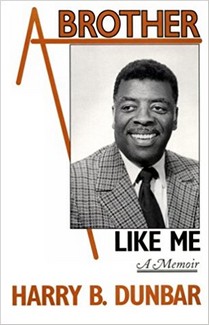
This memoir by a retired black college professor highlights his life and experiences from childhood through his professional career. He covers his service as a draftee in the U.S. Army serving in Europe and in the Southwest Pacific during World War II. He chronicles his life after the war as an undergraduate and graduate student in the United States and in France. He details events in his 45-year career as a teacher and advocate for his people.
EPILOGUE
I thank former colleagues, former students and others for sharing my recollections, reflections and impressions garnered from a forty-five -year working life in a career that rewarded me richly. To paraphrase Henry Channing, you made it possible for me ;"to live content with small means; to seek elegance rather luxury, and refinement rather than fashion; to be worthy not respectable, and wealthy not rich, to study hard, think quietly, talk gently, act frankly; to listen to stars and birds, to babes and sages, with open heart; to bear all cheerfully, do all bravely, await occasions, hurry never. In a word, to let the spiritual, unbidden and unconscious, grow up through the common." Again with apologies to Channikng, this has been my symphony.
Excerpt
Hudson was a bawdy city in the 1930s. Columbia Street, the street on which we lived, was a notorious street and the center of the city's red-light district. Teenager that I was in 1938, I did not know this, but learned of it some fifty-five years later from reading an article about Hudson's "Red Light Past" in the October 21, 1994 issue of the New York Times. The reading of this article unleashed a flood of memories heretofore unrecalled.
The memory of two events which occurred during my life in Hudson remain with me and will for life. One fall day in 1937 I was walking back to Hudson Junior High from having lunch at home, when I heard someone call outg wshat I thought was my name. I turned to see who it was and took a blow in my right eye from a chestnut that was propelled by a slingshot in the hands of a young school dropout, whose name I remember to this day and who was standing on the steps of a building taking random shots at passers by. The vision in my right eye was and is substantially impaired from the trauma. A second unforgettable occurrence in my Hudson experience took place on New Year's Eve of 1938. A saloon was located directly across the street from our home on Columbia Street. Some time just before midnight on the New Year's Eve some drunken patrons from the saloon, including the owner whom we knew, came out into Columbia Street to take turns firing a shotgun into the air to celebrate New Year. My mother looked out a second floor window to see what was going on. One of the revelers, whome she was able to identify by name, took his turn and, with insufficient elevatin, fired into the bedroom where my sisters were asleep, and struck Mother in the face with a volley of buckshot pellets.
At the young of age of seven, Jill's mother Eve takes her for regular sessions to a child psychologist for treatment of her anxiety, which only makes her behavior worse. When she reaches her teens, she starts drinking and then smoking marijuana with
Jamie was a healthy, active 12-year old who loved to skate and played hockey as well as any boy. Then one afternoon during a game, she suffered a stroke that changed her world. Her memoir takes the reader through her ordeal and her journey out of the
Join me as we travel together on the road called "Aging." I will be sharing my personal experiences with you and offer ideas on how we can better navigate the complex byways of our older years. Grief, healing, generations, ancestors, and more.