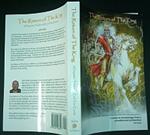
The Return of the King is a biblical timeline of eschatology (end times). It is written intentionally to a non-technical audience.
The Return of The King (ROTK) is a detailed timeline of end-time events as prophesied in the Bible. Unlike some works of this nature, ROTK is written to a non-technical audience, providing full definitions of all theological terms used in the book. It is written by a minister of over 20 years who is accustomed to breaking complicated theological content down for its simplest digestion. ROTK is written from a premillennial perspective, which understands scripture to be literal in nature, and prophecy to be interpreted via normal and customary interpretational methods rather than being relegated to symbolic in its nature. ROTK is also written in conjunction with the ROTK Teacher's and Student's editions which can be obtained for teaching the biblical study of eschatology (end time events) in a classroom setting. For more information and excerpts from this work, visit the author's blog at www.returningking.com.
Excerpt
Preface
Never does one approach a piece of great literature, be it a masterful novel or a historical account, without regard for the narrative. While the events themselves may be central, even life changing for the reader, it is the story which guides one's perspective for each recorded action in the written account. A story is essentially a demonstration of conflict resolution. A problem arises and is dealt with by the end of the work. It is the finality of the resolution of such conflict in which a reader finds satisfaction and fulfillment in having taken the literary journey.
Strangely, when it comes to the biblical narrative, many have found themselves completely comfortable to remain in ignorance concerning the end of the story. Some understand that the great conflict of the Bible has been completely resolved by Jesus' atoning work of redemption on the cross. While it is certainly true that Jesus provided the means of the destruction of sin for the individual, the true conflict of sin remains, however. Sin and its destructive qualities still remains among mankind. It wreaks havoc on cultures, families and individuals; even among those who have found redemption in Christ. The scripture makes it utterly clear that the narrative of scripture did not end upon Christ's death, burial and resurrection. He rose to authority. He was given the name that is above every other name, "that at the name of Jesus every knee should bow, in heaven and on earth and under the earth, and every tongue confess that Jesus Christ is Lord, to the glory of God the Father." This designation, however, is not the end of the story, for every knee has not yet bowed to him as King. While the promise of such a truth has been granted, the fruition of the promise remains a future event. The story continues.
Thus is the nature of eschatology, the theological term for the "study of end things." This work is designed to examine the remainder of the biblical narrative concerning the story of Christ's redemptive work and establishment of himself as King of the universe with man's full acquiescence.
As this work is concerned with the end of the account, a short introduction is necessary to provide the reader some rough details concerning the beginning and the middle of the story. The first and most important detail to be observed is that the bible is not the account of man, but of God. It is his story, not mankind's, which the Bible is concerned. In a nutshell, God's story is that he created the heavens and the earth to reveal his own worthy glory. That creation was tainted by man's sin, inspired by God's earlier creation, Satan. At that moment, man became self-aware and antagonistic toward his God. And, from that very moment God put into place a plan of redemption; of man, the earth and the entire universe, to eradicate the sin which had entered it.
Scripture is chock full of prophecy which details the process by which God would renew the entire creation and destroy the sin within it. In Genesis God promised that an offspring of woman would destroy the work of Satan. He later promised Abraham that he would be the father of a great nation who would produce this One and be a blessing to the entire earth. He promised that a great King would arise from David's lineage which would rule the earth forever. Promise after promise, the Lord ensured the conflict would be resolved through a future coming King.
There are two general categories of such promises which God revealed. The first was a categorical promise of an atoning for sin. This coming King would offer himself as a substitutionary payment for the penalty of sin, which God himself demanded was to be death. God then promised that this King would rise from the dead and be exalted to God's right hand. Jesus has fulfilled these promises. They are historical realities.
It is the second general category of promise concerning this coming Messiah which is essential to the end of the story. He is to come a second time to be the King of the earth. He is to rule the earth in person for a one thousand year term, after which he will usher in the final judgments of God upon the sin which remains in existence. He is to permanently re-create the earth and establish Heaven upon it.
The examination of the numerous remaining promises of God are the purpose of this work. While Jesus has indeed come and offered a glorious personal restoration to those who will receive him as their King today, he will come again and complete that restoration on a profoundly complete level. As such, the end of the story is as of yet unwritten in history. It is the supreme privilege of a future age, perhaps this very generation, to witness astonishing events which will unfold in light of God's judgment of sin, installation of his King, and restoration of his creation.
No story can be properly understood without knowledge of its end. Nor is a narrative complete without the expression of its true resolution. The Return of The King is the biblical account of that which remains untold historically. It is a scriptural expose' concerning the end of the story.
Three titles in one book for 1/3 the combined price
"Coping with Stress" - Help yourself or someone else learn about stress and lessen it in your live.
"Crisis Intervention/Suicide Prevention" - Help yourself or someone else through
Finally! Understand and learn from the New Testament Book of James.
Try James first for free
Now there is a Bible translation that is easy to read, understand, and study.
This translation is unique in that it is arranged
Finally! Understand and learn from the New Testament Book of John.
Try James first for free
Now there is a Bible translation that is easy to read, understand, and study.
This translation is unique in that it is arranged