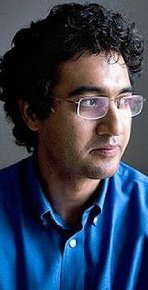
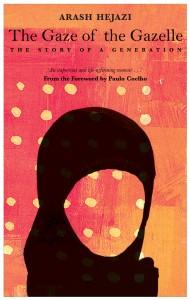
On June 20, 2009, during demonstrations to protest the contested and controversial Iranian presidential election, a young girl named Neda Agha-Soltan was shot to death in the streets of Tehran. Within hours, the video footage of her death, captured on a roving camera-phone, had circled the globe. It was also the moment of choice for Arash Hejazi—a writer who had originally trained as a doctor—who tried and failed to save Neda’s life. Within days Hejazi left Iran to tell the world the story the government was denying: Neda had died at the hands of the pro-government militia. The Gaze of the Gazelle is Hejazi’s personal story of how that tragedy came to be and how it will change the course of politics in Iran for a new generation.
In a tale that mingles politics and the personal, mythology and history, Hejazi tries to answer the question: How did it come to this? His quest for an answer leads him through the story of the decades long aftermath of the Iranian Revolution, when Ayatollah Khomeini was brought back from exile to drive the Shah from his throne and set up the Islamic Republic of Iran.
Against the background of Saddam Hussein’s invasion of Iran and the prolonged war that followed, Hejazi skillfully interweaves his own story and those of his family and friends with the machinations of the mullahs and politicians who seek to control Iranian lives. This timely, moving, and eloquent book describes the determination of a new generation to recover hope in the name of Neda, who gave her life in pursuit of a freer and better world.
‘When I decided to abandon my medical career, I could never have imagined that one day, if someone Googled the two words ‘Iran’ and ‘Doctor’ my name would appear among the top ten search results. And not because I was a good doctor, but because I had just failed to save the life of a young girl bleeding to death in the street.’
So begins–or maybe concludes–the chain of events that were to change the life of a young Iranian doctor forever. On 20 June 2009, during demonstrations to protest the fraudulent presidential election, a young girl called Neda was shot to death in the streets of Tehran. Within hours, the video footage of her death, fortuitously captured on a roving camera-phone, had circled the globe. Outside the country, the incident was a nine-day wonder; in Iran it changed the course of politics for a new generation.
It was also the moment of choice for the young doctor who had tried and failed to save her. Within days he had left Iran to tell the world the story the government was denying: Neda had died at the hands of the pro-government militia. After this, any chance of returning home was gone; Arash Hejazi, author and publisher himself became a target.
But as Paulo Coelho, author of The Alchemist, writes in the introduction to his friend’s book: ‘Arash’s story is not summarised in that moment; now he has to tell the story of that generation.’The Gaze of the Gazelle is that story.
In a tale that mingles politics and the personal, mythology and history, he tries to answer the question ‘How did it come to this?’ His quest for an answer tells the story of the years since the Iranian Revolution brought Ayatollah Khomeini back from exile to drive the Shah from his peacock throne and set up the Islamic Republic of Iran.
Against the background of Saddam Hussein’s invasion of Iran and the prolonged and dirty war that followed, the author skilfully interweaves his own story and that of his family and friends with the machinations of mullahs and the manoeuvres of politicians who seek to control their lives. The joy of revolution turns to the sorrow of loss: of friends and family at the front and in the prisons of the regime, of hope in the future. And of the determination of a new generation to recover that hope in the name of Neda, who gave her life in pursuit of a freer and better world.
This ‘important and life-affirming memoir,’ as Coelho says, is a must read for all who share that dream and seek to discover a country beyond the headlines and the hysteria that surrounds the Iranian bomb.
Excerpt
On the evening of 20 June 2009, at approximately, 7pm GMT a brief video-clip was posted on YouTube and Facebook. Within minutes it had been picked up and broadcast globally by virtually every news channel. A mere 47 seconds of film shook the world.
It shows a young woman, shot in the chest and bleeding, fall to the ground. As she falls, dying, she gazes unknowing into the lens of a casual camera-phone in the crowd filming events around her. It is this accidental clip that millions around the world witness.
‘Stay, Neda! STAY WITH ME!’ a voice cries out in the background.
Her name is Neda. In Persian, Neda means ‘the call’, ‘the voice’.
In a few days, Neda became the symbol of Iran’s Green Movement. On that day of her death, millions of Iranians had rallied in the streets of Tehran to protest against the widespread fraud used to rig the recent presidential elections, in which people had invested their hopes for a better future, in favour of the incumbent president. People called these demonstrations ‘rallies of silence’ in the belief that the sound of silence would echo their frustrations better than any shouts or slogans.
Then, Neda, ‘the call’, ‘the voice’, who was killed alongside hundreds of other silent protesters, became their symbol.
Neda continued to haunt the world’s media and politicians: U2 and Bon Jovi sang in homage to her and in solidarity with the Iranians; in London, The Times pronounced her its ‘2009 Person of the Year’; US President Barack Obama called her death ‘unjust’ and ‘heartbreaking’; the ‘unnamed people’ who captured her death on camera and made it public were chosen as winners of a George Polk Award, the first time the journalism prize had honoured an anonymous work. UK Prime Minister Gordon Brown, showing the photo of her lying on the street, said: ‘What we see unlocks what we cannot see. What we see, unlocks the invisible ties and bonds of sympathy that bring us together to become a human community…’
There is someone else in that video, a man in jeans and a white shirt who is exerting pressure on the wound in a fruitless attempt to stop the bleeding.
I am that person. I was there when she died. I tried to save her but failed. It was a friend who captured the tragedy on his camera-phone; it was I who sent it out anonymously. I saw her gaze before she passed, and that gaze was the gaze of the gazelle that has been running from the hunter for many hours and now lies on the ground, exhausted and with an arrow deep in its side. She sinks down in her own, still warm blood. From where she lies sprawled on the ground she watches the murderous hunter approaching with a knife in his hand. Her gaze reflects neither hope nor despair. She has no desire. At this moment, a vague perception of life creeps into her veins, runs into her soul and spreads through her mind.
How can I name her feeling in that last moment anything other than the Gaze of the Gazelle.
§
The government of Iran first claimed that the video was fake and that Neda was alive; then they alleged she had been shot by the BBC’s correspondent in Iran. Later still they accused the CIA of shooting her ‘in the head’.
I left Iran a few days after this incident, and when I realised how far the government was ready to go to cover its crimes, I decided to speak up. In two interviews–with the BBC on 25 June and with The Times on 26 June–I told the story of her death to the world. My interviews travelled across the world’s media as fast as the original video. Since then, video and interviews have joined together in exposing the hidden face of one of the most violent and treacherous governments in the world.
But the story is not yet over. Even while I am still immersed in the effects of that bloody scene and the mesmerising gaze of that innocent girl, while I can still hear the shouts on the street and feel forever the intolerable burning in my eyes left by the teargas, I look back. It is hard to believe that this is Iran, a broad, rich country that was once the cradle of civilisation. Its culture is as old as human civilisation itself, it is the land of Scheherazade of One Thousand and One Nights and was once the fountain of poetry and science whose poets and scientists set the scene for the global blossoming of mathematics, medicine, astronomy and literature.
Iran has always been at the centre of world attention. In its thousands of years of continuous history, it has played an important role in international affairs, first as the greatest empire in the world, then when it opposed the Arab invasion in the seventh century, today as the home of one of the most hated governments in the world, one that propagates hatred above all else.
Iran is the world’s fourth exporter of oil and sits on possibly the world’s biggest natural gas deposits. With its high mountains and vast deserts, green fields and endless seas, and located on a strategic communications highway, Iran has been declared one of the 13 ‘enemies of the Internet’. In a land where its most revered sage, Zarathustra, once preached that redemption is only achievable through Good Thought, Good Deed and Good Word, the police and militia are massacring their own people, the government has been accused of sponsoring global terrorism, hundreds of reporters, writers, intellectuals and scholars are being tortured in prison cells, and young people under the legal age are being executed daily. This is a country that practises one of the most sophisticated censorship systems, where millions of people are suffering from absolute poverty and where drug addiction and prostitution have become common in the cities. Those with the courage to stand up for lost dreams are falling to the ground like the last remaining leaves of a dying tree.
How did it come to this?
There were no camera-phones back when everything started but Neda’s gaze is working as one now, opening old scars, these gaping wounds that have worked as my own camcorders. I guess now is playback time.
I have already shown and told your story to the world, Neda; millions of people know how you were murdered, just because you wanted to have a voice. You are the martyr, people are chanting your name all over the world like a mantra, crystallising the accumulated hopes and dreams of the Iranian nation.
I have lost everything because I told your story; my career, my country, my family, my security… and the worst part is that I cannot be healed myself; not until I tell my own story, the story of a generation that was there to see everything, bear everything and lose everything. I need simply to be able to bear witness to an era full of dark hatred and bright hopes. I am tired of seeing and saying nothing. Your death has become my business. I had to be there at that particular time and place. I was the only person among those there who had access to the technology and contacts that could take your story out to the world and I was the only one who could leave Iran to bear witness to your unjust death. It is as if all my life’s achievements, failures, horrors, advantages and trivial experiences were destined to lead me to that particular time and place. I didn’t believe in destiny before and I am still trying not to. But it’s proving hard given all the events I have been through. You are the sum of my life Neda; the sum of the life of my entire generation.
We were part of a generation that was later called the Burnt Generation–the generation known in the United States as ‘Generation X’. We were between seven and 15 years old at the time of the Islamic Revolution. We were the generation that witnessed the murder of its uncles during the Revolution and the execution and imprisonment of its parents afterwards; a generation that was doomed to spend the best years of its life amid the horrors of the Iran–Iraq war, either on the frontline, running on landmines to open up a path through them for the troops, or at home, dreading the return of a friend from the front in a casket and the participation in the funeral procession that set out from the school yard. A generation that entered puberty while being trained how to use AK-47 assault rifles, were not permitted to have any contact with the opposite sex and were not allowed to dance or party. Boys who were not allowed to have any kind of hairstyle resembling ‘deviant westerners’, girls who were not allowed to wear anything but a certain form of approved Hijab and a long coat that covered their bodies from neck to ankle. A generation that was taught not to trust anyone, even friends, lest they be government spies, and who were afraid to speak lest their words be used against them. A generation that dreaded even its own shadow and saw too much, far more than anyone should be forced to witness in a lifetime.
But also a generation that for lack of anything else to do spent its time learning. We were the true witnesses of our nation. We were the hunted, but in the course of the parallel evolution of the hunter and the hunted, we evolved faster. We survived to bear witness to what we had endured for the next generation: Neda’s generation.
Arash Hejazi
Professional Reviews
Paulo Coelho's foreword
There is always a moment in your life when you have to make a decision. I have always said that God is the Lord of the valiant, and real courage is when you make difficult decisions based on what you should do not what prudence recommends.
Did Arash live up to his name? I don’t know. But he certainly did put his life in his single arrow, the arrow that has unified the aspirations of the Iranians under that image of Neda.
But Arash’s story is not summed up in that moment: he has a story of a generation to tell. It came as no surprise when he produced an important and life-affirming memoir. In the Gaze of the Gazelle, Arash reveals the true spirit of Iran. He looks unflinchingly into the mirror and reflects on the recent past of his family and of Iran itself. More than many an historical textbook, this memoir illuminates the sense of nationhood and pride that keeps a society together despite the hardships that are thrown at it. A nation that can be stopped by nothing in its pursuit of happiness, and across thousands of years, has learned that there is no tomorrow, there is no yesterday, there’s only what you choose to do today, now, this moment.
My memories as an immigrant professional woman in Ottawa, Canada 47 years ago. A new life after having survived the liberal war of a new country Bangladesh on December 16, 1971.
Sexuality is very misunderstood.What if the tornado dropped Dorothy not into Oz, but onto the shooting set of an X-rated film?
Eric Edwards makes sex films. Period... Sex-on-command. Sex-for-hire.... So begins the story of Eric Edwards, Mr.