Miriam’s story reveals a family’s
struggle and strength as they carve
a life out of the rugged northern
Minnesota wilderness during the
Great Depression. This is a second edition, reprinted in memory of Miriam Dloniak Kaurala
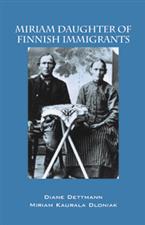
In the early 1900s, my grandparents, Paul and Hilja Kaurala met on a ship as they crossed the Atlantic from Finland. They arrived in America with not much more than the clothes on their backs. They settled in northern Minnesota where they homesteaded a small piece of property and raised seven children.
During the Great Depression, they drew strength from their Finnish heritage as they faced the unknowns of the wilderness, the bitter cold winters, and poverty. As a family they were committed to each other and to becoming Americans. In Miriam Daughter of Finnish Immigrants (Outskirts Press, 2008) my aunt, Miriam Kaurala Dloniak, shares her memories of how life was growing up during the 1920s. Miriam's story crosses cultures and appeals to readers of various ages and heritages.
“Miriam’s story is a book that deserves a broad audience of readers." ”Mary Ann Grossmann Saint Paul Pioneer Press
Scott Hall at KAXE radio in Grand Rapids, Minnesota interviewed Diane about Miriam Daughter of Finnish Immigrants on his radio show. He said, “Diane has done a real service to those of us interested in the history of our area. The book is a great story of an immigrant family facing the hardships of survival in northern Minnesota.
“I can only imagine the life that Miriam endured. When I see my parents and grandparents in that light now, I understand the origins of their humor and work ethic. I appreciate the struggles faced by many at the turn of the century. Miriam’s story gives us a glimpse into the past struggles that our parents and grandparents endured, and will make you smile as you read this delightful, insightful, book.” Todd Rengo Nordic Connections-Finnish Design, Esko, Minnesota
Excerpt
In the long winter evenings, we sat around the big wooden kitchen table, doing our needle work in the glow of the flickering kerosene light. There was Mother, Martha, Esther, Ora and myself; each of us had a piece of material on which mother had stamped a simple design to be worked. Mine was a cross-stitched rose design, which I struggled to embroider.
Ora, a little past three at the time, had not as yet mastered the art of sewing. This did not stop her, however, she merely took her piece of material and by pushing the needle in and out, gathered the fabric into a rosette which she hung on the wall with a needle.
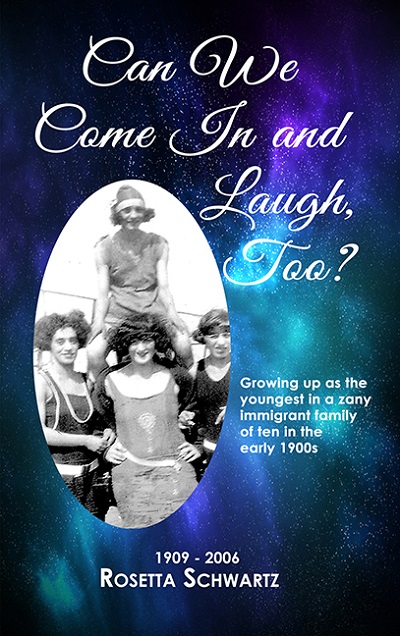
Rosetta was born in 1909 as the youngest of ten children. The family had more laughter than money and neighbors would knock on their door to ask, "Can we come in and laugh, too?"