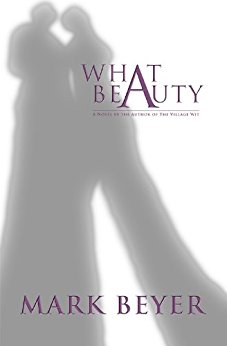
A story of art, obsession and ego. Minus Orth is a NYC artist/sculptor, who meets Karen Kosek, a 60s & 70s culture critic, now a bag lady. Or is she? This mystery he must unravel.
Minus Orth walks dogs for a living and sculpts for his life. He’s ready to create a unique sculpture cycle — Mythical Gods in Their Twilight. Meanwhile, he has a girlfriend, Belinda, who’s itching to get married. His friend, Peter N, has reaped artistic success that’s both inspirational and a thorn. He plays poker with a quartet of exiled aristocrats. And at Minus’s art co-op, the residents live on the fringe of society.
One day Minus crosses paths with Karen Kosek, best remembered as a culture critic of the 1960s. Karen dropped out of sight years ago. Now she dresses as a bag lady — ragged clothes, a garbage smell, and bulging plastic bags she carries as if they hold the secrets to the good life. Minus orchestrates a tenuous relationship with Karen, and discovers in her a woman who has not been trampled underfoot, but is burrowed deeper in society’s crust than anyone could imagine.
Thus begins an odyssey in which Minus becomes obsessed with Karen’s past and present, obsessed with creating his sculpture cycle, and with the role artists play in society’s split personality. “Do you have what it takes to make something beautiful?” is a question that comes to the minds of many characters in this story. Their answers are hilarious, confused, self-delusional, virtuous, or simply truthful, because the people who create beauty are different from those who value beauty, and far afield from the powers able to help it flourish … or destroy it.
Excerpt
“I met a woman the other day.”
The four dogs look at me as if I’ve pulled raw bacon from my pockets. I have with me Marshall the Ridgeback, Pan the Samoyed, Boilermaker the Alsatian, and Chief the Chesapeake. A messy color palate and mixed media of barks, dusty paws, dog breath, and wet noses.
We’ve walked north on the park path near enough to 5th Avenue to hear the rise and fall of morning traffic moving south toward Midtown. At the zoo entrance the foursome take me left through a loamy spring grass patch and all the way across the park to the far side of the Sheep Meadow. They stop for a rest in the sun, tongues out to lap at the warm air, wiggling through panted breaths, saliva dribbling from the edges. Through the trees behind us I can see the top of the carousel.
“Let me rephrase that. I ‘noticed’ a woman. She doesn’t know I exist. Not yet. What d’ya’ll think’a’dat?” My skip into a West Texas drawl doesn’t faze them.
Boiler makes a sound like he’s clearing his throat. He has smart eyes and an active jaw. He won’t “speak” for me on command, but I’m teaching him. The Petersons pay me extra money for each new trick Boiler brings home. I’ve been averaging twenty dollars tip per month. Already he’s as nimble and sly as the Artful Dodger, or a Chinese acrobat. If he had hands, I’m sure he could juggle four balls by now. The end of this road is in sight, however, because even the smartest dog can learn just so much.
Marshall, meanwhile, is sniffing Pan’s ass. Pan suddenly thinks a fly is trying to get some action, and his hips buckle. His snout moves around, teeth bared to warn. There’s a scuffle, but my own low bark is enough to make them separate like shy fighters in the ring. Chief still thinks I’m holding bacon.
“She’s disguised as a homeless woman. I have to find out why. She’s this great writer – I think she’s great, and was bold – and here she is, pretending to be an indigent scab. Beats me why.”
The canine quartet starts to dance in place, showing me their angst. I click my tongue and they turn as a team down the path. I give the leads a double tug that keeps them from dragging me like a bucked charioteer. A half-block later Boiler and Pan pull up. They’re in opposite hands to my leash arrangement, so while they sniff the ground in preparation to dump, I do a quick bracelet change with the leads. Marshall and Chief separate from the squatters. They come next to me, panting, tongues flapping like streamer flags in the wind.
The sunshine has brought dozens of people out to the Sheep Meadow. Blankets dot the scrabble lawn like a lot of dropped postage stamps. Girls have shed tops and sit in shorts, spaghetti straps, and sandals, while their boyfriends have gone topless but leave jeans on. A lot of white skin is on display, smelling of the Caribbean beach and coconut cocktails. Music rides the air. I hear a country tune, some hip-hop, and a slice of a Top 40 love ballad.
Pan and Boiler pinch off and start scratching at the earth. I let them clean their paws a moment, then tug them to my side and issue a command to the crew to sit tight. I carry pooh bags in my back pocket. Double-volume sandwich bags work best with these dogs; their dumps are twice the mass a human can drop. Marshall, Boiler, Pan, and Chief watch me while I crouch to clean up. Strolling tourists stop on the path to see what they see. I twist the bag ends into knots and grab the dog leads.
I say, “Let’s go, boys!” and they leap into a trot. I follow at a dead run because they deserve a bit of a jog, even if New York’s leash laws have become so punitive that big dogs rarely get the chance to run full stride without risking triple-digit fines.
Half of what I save on health club fees for all the exercise I get goes to treats and gifts for all my mutts (I’ve got three little dogs to walk in the afternoons). They all deserve the love. Extra love, by my estimation, because I’ve seen how their owners trouble themselves over their pets: kisses and neck rubs and rough-house play and dinner scraps hand-fed beneath the table. Their children see the dogs as friends, mostly, although I’ve noticed a couple of the kids couldn’t care less. These miscreant igits walk past their pet without a glance, while its tail wags in happy anticipation, only to be ignored. I’ve asked myself, “Who does this to a friend?” I can’t account for that kind of personality. Sometimes I don’t understand a kid’s world anymore.
With our bounding pace the crap bags dance in my hand. The smell becomes overpowering. I draw the leads to the right, towards a Dog Do-Do trash can near the Mall’s entrance. The boys bear right like they’re harnessed to a prairie schooner. I’m hardly a vision of athletic excellence, but I don’t fear a heart attack. This is despite the thumping I feel in my chest, accentuated by the backpack slapping my spine with each footfall. My knees want to buckle.
“Whoa up there!” Another tug on the leads encourages the mutts to slow down on sunny side of the Sheep Meadow’s tree line. The quartet looks at me with their sun-glazed eyes. “You’re going to kill me,” I tell them. I’m sure they want to answer. I lean over to hold my knees for support. Their chests heave like bellows. They nose in and I can smell meat breath and a pitter whiff of ass. “Good boys. Good dogs. Chief, I think you still owe me a dump.” I deposit the bags in the trash and stand to the side. We’re on the grass, the five of us. The sun is overhead and strong, which makes the shadows dark along the timberline. The fifty-foot Dutch elms arch across the Literary Walk, where life-size statues of dead white poets line a wide path leading to the Bethesda Fountain. Tourists are surprised to find Shakespeare and Byron keeping them company, along with other lesser-known Europeans.
The Bard’s sculpture is an odd piece for me. It shows a forty-ish man of letters – book in hand, fingers keeping place as the writer contemplates the world, his art, &etc – dressed in padded trunk breeches, galley hose, a straight trim jerkin, and a leather overcoat with plenty of sleeve and collar. Quite the urbane gentleman, we are to believe. Now this is significant. He’s neither young nor old; no wrinkles mar his male comeliness, though he owns to a half-bald pate that shines in bronze under the porous boughs. For me, this Shakespeare lacks resemblance to those few woodcuts attributing his historical appearance. The statue looks more like an actor who has played Shakespeare’s repertoire of characters. An ageless man standing testament to those timeless plays.
People pass through the arched trees, lots of smiling walkers, couples hand in hand, children gripping string-tied balloons bobbing above their heads. Their clothes remind me of the time I opened my first ten-tub watercolor kit.
Someone walking hurriedly sideswipes me even though I’m standing well onto the grass. It’s a woman. She makes no apology, doesn’t turn around, but continues her march around a group of halted tourists taking up the center of the path. I see her from the back, a vagrant, wearing two overcoats. The tails of the inner coat hang lower than the green pea coat squeezed over the top of multiple layers. The stink she leaves behind putrefies the air. This can’t be Karen Kosek, whose gray hair and upright walk I’d recognize again. Unless she has a wardrobe the likes of the Bard’s oeuvre, which I doubt. There’s something off in this one’s stink, though, because it’s nasty. Her shoes, too; some type of military boot with undone laces that drag along the ground. I look past her, out across the far side of the park, above the trees, at the windows in those high rises crowding Central Park West. Somewhere thereabouts, from one-in-ten-thousand chromium-reflected windows, I imagine Karen K stares down at all of us in the park. She laughs inside her charade, thinking she has fooled us. “Not all of us,” I say aloud. Chief and Boilermaker look up, noses twitching leftrightleft in flex-O-snout agility to sniff out fear and food morsels, or just a hand to lick. I give them my palms and they start in with rough-tongued laps.
“That’s right, boys,” I tell them. “Mizzz Kosek can’t fool everyone all the time. And I wonder if she can be fooled.” I see a route to a plan. Silver buttons shine from its center. My watch reads ten-thirty. If we walk the winding paths and clear out through Artisan’s Gate, where I can spray-wash their paws before heading across 59th Street, the boys will have gotten their money’s worth. “Here, you guys. Come – come now. Let’s go look at the big birds and then start on home. Sorry, boys. We’ll pick it up another day.”
They lead me toward Christophe Fratin’s Eagles and Prey. Fratin sculpted in sand-cast bronze. He made his career on animal sculpture, and often humanized his models. His Ape with Basket looks a lot like Bigfoot, out picking berries. By contrast, Eagles and Prey is a grand, enormous sculpture of the late animalier style. Two eagles with spread wings have pounced on a horned sheep. Talons tear through hide. The sheep’s face is the classic portrait of resignation to death’s struggle, all the fight sapped from its terrified eyes, its mouth agape for the approaching release. To what release, the animal is probably more certain than most humans sneaking up on retirement. Score one for America’s manifest destiny: an imperialist motif from a French artist.
I walk around the statue and wonder, in this brief moment of intellectual repose, if I should try sculpting animals. Hell, I already have a pack of models who would gladly, I think, hang around nibbling on kibble while I sketched them in various states of agitation. These mutts might look terribly sporting in bronze cast, frozen for all time on the heels of a rabbit, teeth bared and eyes flaring, tails curled with the strain of imminent capture. I can almost hear the rabbit’s heart thumping like raindrops on a corrugated awning. The reverie of imagination is enough for me, though, to the point where I’m already drained of enthusiasm. I’m not even sure if I like animalier, to speak the truth. Which is different, I feel certain, from admiring what beauty the work portrays.
I corral the dogs and chorus, “Look at the boyds, pups, look at the boyds.” My cobbled New Jersey accent isn’t something I use amongst my Jersey friends. Chief looks back for a moment. The others have their snouts to the ground. The dogs aren’t in the mood for more stopping. They know they’re headed home for a long day in a small room, closed off from their favored society. My backpack straps dig into my shoulders like harness ropes.
What Beauty — a review
Mark Beyer knows a lot about art history, classicism, and contemporary New York City. That erudition, and an exciting prose style, are what makes What Beauty such a pleasure to read.
By the time his protagonist, sculptor Minus Orth, has decided to base his latest series of works on characters from classic lore, Beyer has already given his reader enough clues about the importance of the ancient Greek epics to his modern-day vision. There are chariots rolling down the streets of Manhattan, wars of wits with inscrutable fathers, aloof gods playing games with us mortals, wounded warriors waking to visions of beautiful temptresses, and a fascinating hero-in-disguise plot that unravels with amazing expertise. Orth's ambition to succeed in the art world is a Herculean fight in our secular age, and he does battle with adversaries as dangerous in their way as anything Odysseus faced: critics, rivals, and a mentor he's not sure he can trust.
Packed with wit, emotion, and memorable characters, What Beauty is a rewarding read for people who are up to the challenge.
3 WAY MIRROR is about a lost identity as experienced by a twenty-eight-year old who thinks he's Charles Randall, until strange events suggest otherwise.
3 WAY MIRROR is about a lost identity as experienced by a twenty-eight-year old who thinks he's Charles Randall, until strange events suggest otherwise.