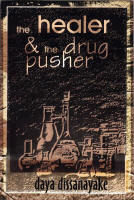
novel based around two hospitals in Sri Lanka thousand years ago
in 10th cent. Sri Lanka. Persian sailor starnded in Jaffna, life saved at a hospital in the North, by Tamil Buddhist villagers.
his blindness treated at hospital in the South by Sinhala Buddhist priests
a young girl dying today from an adverse drug reaction
Professional Reviews
A tale of two medical systems
The Healer & the Drug Pusher
by daya dissanayake
Published by the Writers Club Press, New York
Review : Lyn Ockersz
Read superficially, this novel gives the impression of being a literary defense of Alternative Medicine or Complementary Medicine. On closer scrutiny, however, the novel reveals itself to be a veritable mirror held to contemporary society and the degree of its dehumanisation.
So what we find in focus here is not only the Contemporary Vs Traditional debate in medicine but Lankan society and its newly-emergent and often mutually-reinforcing ills. In fact the principal illness under scrutiny in this novel, which dramatises the efficacy of the traditional system of medicine, is the fast spreading ailment of Man’s callous indifference towards his neighbour. A sickness of the soul.
Two parallel stories are worked out in the novel – one based on ancient Sri Lanka and its relatively life-supportive culture and the other on contemporary urban Sri Lanka and its vastly spiritually impoverished civilisation. So the novel is one of comparisons and contrasts, the former civilisation recommending itself to us through its comparative humanity and its spirit of cordiality and cooperation in human relationships. The latter culture compares unfavourably with the former but it is not without its redeeming features, particularly in the person of Bhanu, a bright spirited young woman who is determined to expose serious limitations and lapses of the medical establishment of the day.
Summarised briefly the two story lines are as follows: Mitra, a blind 10th century AD Persian castaway from a trading vessel in the Indian Ocean is found by some Tamil fishermen of Northern Sri Lanka. Mitra is brought to a Northern hospital, treated kindly by the Buddhist physician-monks of the peninsula and is invited to live at his home and is invited to live at his home and continue the treatment he undergoes for blindness by Channa, a physician at the hospital cum monastery. What is also brought to the reader’s notice through these early episodes is that Buddhism flourished everywhere in the island in those days, including the North. Besides the communities of the island were integrated closely and interacted on equal terms. A racial consciousness, as we know it today, didn’t exist then. Mutual respect of cultures was a fact of life.
Mitra, a young man, lives with Sankar, undergoes elaborate but humanely administered medical treatment for his blindness by native physicians and acquires a cure. Meanwhile he falls in love with Pali, Sankar’s daughter, a kind, selflessly-giving young woman. This touching relationship established the humane treatment of the disabled in those days. The relationship grows spontaneously and naturally – the characters are not made to serve a superimposed thesis on the treatment of the disabled. The relationship grows out of the natural dispositions of two young hearts, thirsting for life.
The second story is a foil for the first and reflects the inherent inferiority of the contemporary medical scene. Bhanu’s closest friend Suneeta is dying of kidney failure. It was brought about mainly through her consumption of ‘Smooth’, a harmful drug actively promoted for acne by a multinational drug firm in Colombo. Ironically, ‘Smooth’ is promoted in Sri Lanka by Bhanu’s father, Raju, who is the sales manager of the firm.
Finally, Suneeta is cured by native medication as a result of her father, Sumanadasa, seeking far and wide for it. Suneeta was wilting for months in a major hospital dispensing “Western Medicine”, but only takes five doses of the native herb, Bovitiya, for her to be back on her feet.
Meanwhile, we are given an insight into the dislocated and dehumanised system which is “Western Medical Treatment”. The so-called Western medical specialists are so prone to money-making that they can hardly find the time to diagnose disease and prescribe medicines. The inhumanity of the system is brought home to us by the episode centering on a foreign woman, Rhoda, who is befriended by Bhanu in hospital, and her husband.
The latter who has taken ill and hospitalised is virtually allowed to die by the “busy specialist”, who is believed to be treating him. The lack of authorial comment in this simply told episode, evokes an empathic response from the reader to the fate of the “foreigners”.
Principal characters in this novel, such as Bhanu, Mitra and Pali, come alive as a result of the author delving into their inner lives. However, one cannot escape the impression that some minor characters in the second story are made to serve as mouthpieces for the exposition of theoretical issues in the debate concerning the relative merits or otherwise of the two systems of medicine. Characters, in other words, are pressed into the service of a thesis. Fortunately this tendency is not pronounced and ‘The Healer & the Drug Pusher’ could be enjoyed as a simply and sensitively handled dramitisation of Man’s eternal struggle for survival and solidarity in vastly differing sets of circumstances.
Ceylon Daily News. February 9, 2001
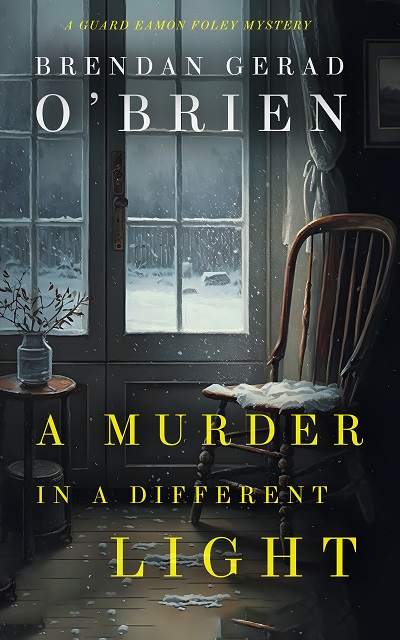
Ireland 1947. Seven weeks of relentless snow. Guard Eamon Foley is searching for a missing child.
At Toby Appleyard’s farm, he discovers the kitchen littered with dead cats. And the skeletal remains of a woman. Upstairs, Toby is dead in his bed.
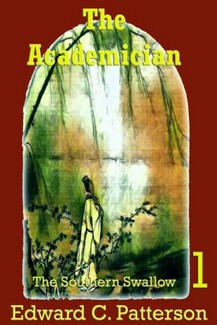
Book I of Southern Swallow Series – 12th Century scholar Li K'ai-men takes command of his first official assignments during a time of political unrest and barbarian invasions.
Book I of Southern Swallow Series – 12th Century scholar Li K'ai-men takes command of his first official assignments during a time of political unrest and barbarian invasions.