Kindle Edition
Amazon
Category:
Memoir
Publisher: Strategic Book Publising
ISBN-10: 1618973371
Type: Non-Fiction
Pages: 228
ISBN-13: 9781618973375
Price: $9.99 (eBook)
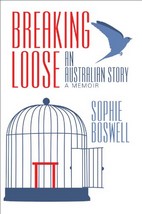
While giving a colorful overview of Australian history during the 40's and 50's, Sophie takes the reader through her journey of inner thoughts and the things and events that molded her character and eventually turned out a free-thinking individual despite her brother's efforts to manipulate her.
Beginning in a small country town named Toowoomba, in Queensland, Australia, and moving on to Surfers Paradise when it was one sandy street in 1946, Sophie portrays the life of a little girl struggling to make sense out of her life, her parents lives, and her hateful brother.
Richly colored, this story also portrays what life was like for many Australians during World War11 and its aftermath.
Excerpt
The image of my first home is as vivid in my mind today as it was when I was four and my permanent memory kicked in. The power of place for a small child is so deeply imbedded in their psyche that it never leaves. And the smell of camphor-laurel trees that lined Curzon Street and burning eucalyptus, sixty odd years later, still triggers a feeling of peace and contentment.
Toowoomba was settled in 1836. A hundred years later it boasted many fine old “homesteads” with high pitched tin roofs and wide verandas. Our house was one of these. Squatting in the back left corner of an acre of lawns and gardens while its chimney puffed out spirals of eucalyptus-scented smoke non-stop, this “Old Queenslander” with its steep pyramid-shaped tin roof, its formal gardens, and having an azure sky above it most of the time, was a post card waiting to happen.
From its pink cement path which ran through several neatly trimmed circular rose gardens to the front stairs that stepped up to a wide and shadowy veranda, its slightly sloping roof protected the front of the house from long, hot summers. The impressive front door, made of cedar, had two vertical panels carved to resemble a forest of leaves. Surrounding the door were three panels of stained glass that allowed sun to filter through to highlight colors in the carpet runner of the long, dark hallway. Wide hopper windows, floor to ceiling, at the front of the house were permanently draped with cream-colored lace curtains. A row of pink hydrangeas with their coral-like clusters, interrupted by timber stairs with potted petunias on either side, set the picture off the way a French mount frames a painting.
The external image of our house, as well as presenting and preserving an era, projected outwardly some of the lifestyle that went on inside the home ¬ the “upper crust” living of “well-off” people in “the Antipodes.” Unlike the majority of people in rural Australia, apart from wealthy property owners whose day to day life was basic, to use a kind word, Dad’s intention was to provide a comfortable lifestyle for his wife and to bring up his children along the lines of the way he was brought up. Having a part-time maid and gardener, to him, was quite normal, even during a war.
Unlike most inland Queensland country towns known for little else but red dust and one wide street with several pubs, Toowoomba was a sophisticated town with a temperate climate, rich volcanic soil, fresh water springs, and famous for its Festival of Flowers, an annual event which brought many tourists to the town “up on the range” to smell cool mountain air, inhale exquisite perfumes, and enjoy Devonshire teas and the view at Picnic Point. Tabletop Mountain and the hazy Lockyer Valley could be seen in the foreground while miles of timbered hills and valleys stretched all the way to the coastline.
Also, with the construction of a zigzag road up the range which opened up the west, many of the European workers chose to remain in Toowoomba. They brought with them much more than the knowledge of road construction. Love of art, music and painting was second nature to them ¬ most of them Germans ¬ and so this “Gateway to the West” became a cultural center from day one.
One of my earliest and happiest memories was about playing around the flower garden with my cat, Blackie. Of all the beautiful flowers in my favorite corner of the garden, it was the pink, blue and violet delphiniums and white foxgloves twice as tall as me, that fascinated me the most since I thought they touched the sky. From my cathedral of flowers, our house appeared to be a long way away as I searched for fairies ¬ the ones my mother showed me in picture books.
My mother, Joyce, was a great believer in “make-believe” for children. She was also a stickler for law and order and routine. Mum had a kind face, sparkling sky-blue eyes, fair skin and brown hair. She stood five foot two, but being an energetic charismatic woman who said what the thought, there always seemed to be much more of her. One of the greatest things she gave me, at this young age, was to feed my imagination more than my stomach. The early introduction into a world of fantasy via the flower garden and those elusive fairies, together with stargazing under my mother’s knowledgeable tuition, opened my mind to believe that anything was possible. Words such as “can’t” or “evil” were best “buried in the garden.”
|