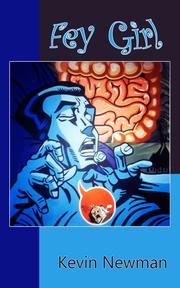
Jude Pender has troubles managing his emotions. Case in point: Cecile. He thinks he can bury his thoughts and that the rest of his neurons will naturally grow around them, leaving an obelisk that he can visit as if in a dream. He's wrong, and since he doesn't know when to give up, the result will be an explosive release after a series of betrayals.
This novel was written in 2009 and promotional copies were made available as of 2010
Excerpt
Chapter 1
One day watching blue jays, sparrows, and a bunch of other birds I don’t know the names of, I thought: ‘Where the fuck did they all come from?’ My dad has a lot of bird feeders. This isn’t odd I suppose, many people have bird feeders in their backyards.
In this day and age it’s almost impossible not to have a rudimentary understanding of ecology. That’s what I’m talking about: this ecosystem right outside my garage where dozens of birds are fluttering around. Squirrels and chipmunks cluster around the base of the bird feeders and it’s like they’re fighting over the remains of a king’s feast. Further back is a salt lick that gets smaller and smaller and eventually it’s replaced, despite the fact that I never see a deer in my backyard.
That blue brick of salt, specially bought with awareness of some dietary need for deer: that’s what my dad’s into. In our basement are ten plastic buckets full of seeds. Each bucket holds something different than the others. It’s like my dad has come up with the perfect cocktail for all the birds. And there’s a feeder periodically filled with sugar and water for the hummingbirds. I don’t get why he does it. I never will.
I look at the woods in our neighborhood: they are thicker and more complex in some areas than others. What I see is exactly what we learned in high school science. The project I worked on in grade nine – that mini-ecosystem, full of dirt and worms – that was meant to give us an understanding of a balanced and thriving ecosystem. That’s what I see in the forest. These thoughts, I suppose, were reinforced by Simba and Mustafa’s singing journey through the Serengeti when I was a teen.
As I see it, no matter what I do the forest absorbs my actions. When we were kids, the boys and I would run through the forest playing a modified game of tackle and tag. We called this game Ninja and even spent time on our own practicing the art of moving silently through the forest. At least I did.
So, you step on a branch and it pops, the dry leaves surrounding it crackle and the flower growing out from beneath the forest floor, creeping up each day to receive what little light filters down is crushed. What happens then? Well, Max comes barreling through the foliage; as his shoulder connects with your chest, the air in your lungs explodes while his arms wrap around you and the both of you crash to the ground crushing everything beneath you. When you finally catch your breath and roll over to sit up, what’s left is an imprint of the whole affair. At some point you get hungry and go home and the imprints remain for as long as it takes for organisms to make use of the mess you left behind. Of course if you burn down the forest it will take more than your lifetime for it to shrug off your actions. But based on the lineage of life on this world it’s less than a hiccup from a tsetse fly.
This is how I see the world around me: it’s the vine that grows up the wall of your neighbour’s house, so slowly that each time you look at it the memories associated with it almost invariably include that vine at that amount of coverage regardless of whether it existed there in that way in fact.
You can see the same thing happening with the organism known as homo-sapien-sapien. Try to imagine the friend you’ve known since you were in grade school. Without the help of picture day, your mind seems intent to supply an image overlay of your friend as you perceive them currently. Remembering yourself as you were then seems more improbable. Trying to remember the farmer’s field as it was before that highway you’re driving on existed or the high rise that was once a parking lot is almost futile. Driving through the town you grew up in and haven’t been to in years can be baffling when you pass several big box mini malls surrounded by grey pavement that was once a field of green grass that slowly turned brown by the end of August.
My dad, through the application of energy, has created this twisting avian vine. When I’m home to visit, my mind at first sees the backyard as I last saw it and then slowly what I once viewed is as if it never existed. The energy applied in the beginning was a physical effort and a monetary infusion that then supplied a cocktail of joules to the birds.
But I look upon these dozens of fluttering creatures and I think this is what they mean by unsustainable. When my dad passes away not one person I know is going to continue this venture. I personally have no interest in participating in that carefully arranged orchestra of a multiplex of bird seed constantly refilled into feeders even if it means that I can see this variety of feathers. And while other members of my family might try to continue this as a kind of tradition, they won’t put in nearly the same effort.
What will happen? It will be a reversal of fortunes: these birds suddenly had it good; they have been able to expend very little energy to acquire a constant source of food: this means they can have more chicks; more chicks eat more food, but there’s more than enough to go around because that’s what my dad wants. When the feeders get low, he fills them again, like clockwork. The limit on the population, then, is probably only held in check by the time it takes to lay eggs, not by the food supply.
When he passes on, that food supply will either disappear or diminish to such a negligible amount that it will essentially revert to roughly the same amount as before he came along: this probably means that birds will die. When he goes, he’s taking a dozen or more birds with him, maybe even one hundred. Some birds will search for other sources of food, but will have to expend much more energy to do so. But, for the generation of birds whose only knowledge of how to get food is to go to the feeder, they will suddenly have to compete over a more limited and harder to acquire source of energy. They’ve been used to a constant source even in the middle of February. I am certain most will starve and die in the winter or they’ll have to migrate.
This is what I think about in the here and now: it becomes an allegory for what will happen in our lives in the future. Right now, I’m having the time of my life; I’ve got my folk, and they’ve got me. We have this intricate network of friendships and more limited connections and the priority seems to be fun. Fun is the new food, and the fuel for this seems to be our words, our actions, booze, sex and the occasional drug; cigarettes mark the time between seasons. The networks will eventually drift further apart and the food we rely on will change: its source and value will change over time and when that happens we’ll have to migrate.
The most difficult thing that two humans can attempt is to communicate. No, not talk, communicate! Most relational problems are either caused by or aggravated by a failure to communicate properly. Learn how to do just that, communicate. See how much