Kindle Edition
Amazon
Walt Lamberg's Amazon.com Author's Page
Category:
Literary Criticism
Publisher: Amazon.com
Type: Non-Fiction
Pages: 89
Copyright: May 19, 2012
Price: $0.99 (eBook)
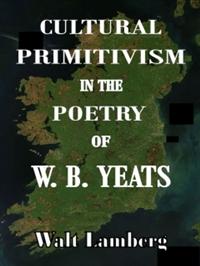
This nonfiction book is a work of literary criticism of the early poetry of the Irish poet, William Butler Yeats.
Many readers of poetry who enjoy the work of William Butler Yeats know him primarily for his great poems written during the 20th Century, such poems as "No Second Troy," "The Mask," "On Being Asked for a War Poem," "The Second Coming," and "Leda and the Swan." This book focuses on his early poetry written during the 1880s and 1890s. One key idea is that readers of his later poems can enhance their understanding and appreciation of his later poems by understanding what Yeats was attempting to do in his early poetry by way of creating literary symbols and expressing themes.
This book analyzes and interprets the early poetry in light of Yeats' deep and life-long interest in cultural primitivism. Cultural primitivism can be viewed as a movement in 19th Century and 20th Century art, literature, music, and philosophy, in which there was an interest in learning about primitive cultures and in making use of the symbols, myths, legends, and ideas of those cultures in art, in literature, and in music and in understanding the meaning of human existence. Other notable figures who were influenced by cultural primitivism were Herman Melville and William Faulkner in literature, Paul Gauguin and Pablo Picasso in art, and Bela Bartok and Igor Stravinsky in music.
In Ireland, Yeats shared with other young writers an interest in Irish folklore and Irish pagan culture and religion (which seems to have been motivated in part by Irish nationalism, as Ireland sought independence from Great Britain, as well as by a loss of faith in Roman Catholicism). There was a related interest in Neo-Platonism, the occult, and Theosophy (a philosophical study that aimed to understand metaphysical truths about humanity and God). There was also an interest in comparative religion and in Irish and Greek mythologies. All of these interests were assimilated by Yeats in the symbols and themes of both his early and later poetry.
|