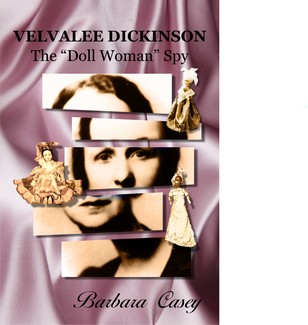
Small-boned, petite—no more than 5 feet tall, if that, and weighing less than 100 pounds, Velvalee Malvena Dickinson hurried into the Midtown Manhattan bank. She feared that the FBI was watching her, and her immediate mission was to remove the contents of her safety deposit box in case she needed to make a quick escape.
She was too late, however.
In fact, the FBI had been surveilling Velvalee for well over a year. They now had enough evidence for an arrest on the suspicion of violating wartime censorship codes, at the very least, and possibly espionage, which, if convicted, carried the death penalty.
As soon as she opened the metal box, FBI agents who had followed her into the dimly-lit vault announced that she was under arrest. When she flung the box at the agents, they immediately confiscated its contents which included $15,940, two-thirds of it in Federal Reserve Notes that were later traced through their serial numbers to the Japanese Consulate.
These same bills had been withdrawn by the Imperial Japanese Government before the bombing of Pearl Harbor. Immediately prior to being transferred to Velvalee, they had been in the possession of Captain Yuzo Ishikawa of the Japanese Naval Inspector’s Office in New York. Also discovered in the safety deposit box were secret Japanese codes and instructions on the use of them.
As one agent tried to handcuff Velvalee, the frightened, diminutive 50-year-old woman fought desperately, kicking, scratching, and screaming in an attempt to escape. Quickly, effectively, and efficiently, the agents lifted Velvalee off the ground by her armpits, all the while being pounded by Velvalee’s pocketbook, and carried her from the bank as shocked employees and patrons watched in silence. The date was January 21, 1944—a Friday; and Velvalee Malvena Dickinson had become the first American woman to face the death penalty on charges of spying for a wartime enemy.