|
Kindle Edition
Amazon
Facebook--Japanese Yoga
Sennin Foundation
Category:
Spirituality
Publisher: Michi Publishing
ISBN-10: 0615542395
Type: Non-Fiction
Pages: 240
Copyright: 2012
ISBN-13: 9780615542393
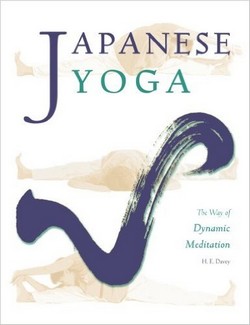
Learn to realize your full potential using Nakamura Tempu's mind and body unification principles. Japanese Yoga includes meditation, breathing exercises, autosuggestion, stretching, self-healing, and methods to develop ki (life energy).
Emphasizing gentle stretching and meditation exercises, the ultimate goal of Japanese yoga (Shin-shin-toitsu-do) is enhanced mind/body integration, calmness, and willpower for a healthier and fuller life. Developed by Nakamura Tempu Sensei in the early 1900s from Indian Raja yoga, Japanese martial arts and meditation practices, as well as Western medicine and psychotherapy, Japanese yoga offers a new approach to experienced yoga students and a natural methodology that newcomers will find easy to learn.
After a brief history of Shin-shin-toitsu-do, H. E. Davey Sensei presents Mr. Nakamura's Four Basic Principles to Unify Mind and Body. These principles relate the meditative experience to the movement of everyday living and thus make it a "dynamic meditation." Each of the Four Basic Principles is illustrated with step-by-step explanations of practical experiments.
Readers are then introduced to different forms of seated and moving meditation, health exercises, and self-healing arts. All these are linked back to the Four Basic Principles and can enhance performance in art, music, business, sports, and other activities. Readers learn to use Japanese yoga techniques throughout the day, without having to sit on the floor or seek out a quiet space.
Included at the end of the book are simple but effective stretching exercises, information about ongoing practice, and a glossary and reference section. Amply illustrated and cogently presented, Japanese Yoga belongs on every mind/body/spirit reading list.
Excerpt
“Emotional baggage,” which is carried over from the past, colors our perceptions. Likewise, past conclusions and beliefs, based on reasoning that may or may not have been accurate, also tint our perception of reality. Retaining our capacity for reason is common sense, but definite conclusions and beliefs keep us from seeing life as it really is at any given moment.
Emotional reactions can be unreasonable, and reason can be flawed. It’s difficult to have deep confidence in either one, especially when they’re often at war with each other. But the universal mind exists in the instant, in a moment beyond time, and it sees the universe as it literally is. It’s the universe perceiving itself. It is, moreover, something we can have absolute confidence in, and with that confidence, we can maintain a genuinely positive attitude.”
― H.E. Davey, Japanese Yoga: The Way of Dynamic Meditation
|