A memoir of growing up in Ireland's heartland in the 1930s-1950s
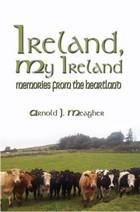
Arnold J. Meagher was born in Ballinamuck, County Longford, a small village in the heart of Ireland. When he was four, he moved with his family to the larger village of Drumlish, four and a half miles away. It is in the larger village that he begins his stories of growing up in Ireland’s heartland, among villagers that loved to chat, among dew-covered pastures on his grandmother’s farm and among the fairy forts and whispering bogs that dot the countryside. He tells of his joys and fears–his fear of the dead, fueled by ghost stories told by neighbors on long winter nights around his grandmother’s hearth, and the ever present fear of the Little people, sharpened by an encounter with a banshee at age nine, and his fear of The Master, his primary school teacher, who was prone to impulsive cane beating of his students. But his joys were also many and on balance trumped his fears–the joys of Gaelic football to which he and his five brothers were addicted, the joys of afternoon tea in the meadow, the joys of his first kiss and first awakenings of a relationship with a girl in an environment where society as a whole imposed a celibate life on its youth, and the joys of the corncrake’s nightly lullaby that sang him asleep on summer nights. These stories, told with a child’s innocence and candor, paint a portrait of the heartland that uplifts and swells the Irish heart with pride.
Ireland, My Ireland deals with a rural Ireland of the 1940s and a way of living that is rapidly disappearing, but lives on in the stories that Irish men and women of that generation, scattered around the world, pass on to their children and grandchildren. This book is part of that storytelling tradition.
(Available in hardback or paperback from the author or on Kindle)
Excerpt
The only places in my village that I feared were the graveyard, the fairy forts, and the dark spaces of night. And the only people I feared were The Master, Mr. McCabe, the Little People, the dentist, and the dead. I had plenty of friends among the living in my village, but I was not so sure where I stood with the unnumbered ghosts of the dead: the dead of centuries, who were stacked and packed on top of each other, held down with great flags of stone in a maze of monuments, tall grasses, inscriptions and epitaphs. I had no close friends in the graveyard. To me the graveyard was full of strangers, dead strangers, many of whom came alive at night and crept out from under the great flagstones, which is why some flagstones tilted up.
Professional Reviews
Longford Leader Review
Longford Leader Review by Eugene McGee, Editor, The Longford Leader, Longford, Ireland
A candid and honest account of an almost forgotten way of life
A wonderfully written and timely memoir.
Irish emigrants in America writing books about their younger days spent back in the old country has become a bit of a fad in recent years with Angela’s Ashes’ by Limerickman Frank McCourt being the most famous. Now Longford has its own contribution to this literary genre with the publication of a book called ‘Ireland, My Ireland, memories from the heartland’ by Arnold Meagher.
The author who has lived in America since 1957, was reared in Drumlish and Ballinamuck in the nineteen thirties, forties and fifties. His father, also Arnold, was a member of the Garda Siochana in Drumlish for many years before going on to run a pub in Ballinamuck, now Dillon’s, after his retirement. His mother, the former May Reynolds from Gaigue, taught all her career in Gaigue National School and the Meaghers were a very well known family in the area not least because of their prowess at Gaelic football.
As a description of life in very hard economic times prior to, during and immediately after World War 2 in a small village in rural Ireland the book is a remarkable achievement and should be seen as a very important contribution to the social history of county Longford in that difficult period.
One only has to look at the one-page glossary of Irish words and terminology at the end of the book, which has been included for the American readers, to realize how down to earth the book is because many of the words explained in this glossary will be very familiar to Longford people. Words such as Stirabout, meitheal, Tay (tea), A Mhac, Poreen, Sheugh, Smidereens and many others.
Inevitably in a book of reminiscences such as this the early life of young Arnold Meagher was pock-marked with incidents that left an indelible mark on his memory. His first visit to the dentist in Longford, the first time he saw a bullock being killed at Davis’s in Drumlish and, inevitably in that era, the abuse of corporal punishment in national school.
These and may other such incidents are told with startling honesty and even 50 or 60 years later Meagher’s recall is precise. But unlike many other authors of similar books he does not seek to philosophize too much on these seminal events of his early life. He accepts them all as part of the Ireland and Longford of the time and recalls them without being too judgmental.
The role of Gaelic football as one of the very few social outlets for rural people in the nineteen forties is perfectly portrayed in a chapter detailing a championship game between Drumlish and Mullinalaghta in McKeon’s field in Drumlish in 1943.
Conditions then were far removed from what they are now but Arnold Meagher, nine at the time, writes: “I can recall as if it were only last week the excitement provided by a championship game between my own parish Drumlish and a neighboring one, Mullinalaghta. I was 9 and World War 2 was in full swing.”
He goes on to paint a vivid picture of the dramatic game, which ended with the great Jim Hanniffy scoring a match-winning goal near the end to the delight of the locals who chaired him off the field.
Football played a huge part in Meagher’s life in St Mel’s College too and his account of life in the diocesan college paints a stark picture of conditions there at the time. Once again the account of life in the college is ruthlessly explicit and honest with an honest attempt to see both sides of the story.
As a barometer of life in Ireland’s priest-dominated secondary schools of the time, it is breathtaking in it’s comprehensive account of how young boys taken away from their homes for the first time in their lives coped, or did not cope.
Arnold Meagher had a great affinity with his grandmother, Mrs Mary Reynolds,
and her 42-acre farm on the side of Gaigue Hill where he spent many summers as a boy. The description of life on a small farm in those harsh economic times when there were no cheques in the post like today from the EU is a terrific reminder of subsistence living as nine children were reared on that farm by Mrs. Reynolds.
The joy of having tea in the meadow at haymaking time is recalled as follows: “We seated ourselves propped against a cock of hay. My grandmother spread out the buttered slices of brown skillet-baked bread on a double page of the Longford Leader. She poured each one of us a mug of hot tay and my brothers passed the buttered bread. It all tasted so good. Food then always tasted better outdoors, be it in the meadow or on the bog.”
Eufaula Tribune Review
Ann S. Smith, The Eufaula Tribune, Eufaula, Alabama, July 17, 2003
Friends of Arnie Meagher know he is a great storyteller. With his resonant voice and rich Irish brogue, his gentle humor, quick wit and hearty laugh, he is a spellbinder, whether reading for his church congregation or for children in Eufaula's elementary schools. Now he has put some of his stories into print in a collection of stories from his childhood in Ireland in a book, "Ireland, My Ireland: Memories from the Heartland."
Meagher and his eight siblings get together for a family reunion every four or five years. They spend a lot of their time recalling stories from their childhood in a small village in the Irish countryside. About five or six years ago, they urged Meagher to write them down, and his wife, Jackie Devlin, encouraged him to preserve the stories from a vanishing way of life. For Meagher, writing the stories "transported me back in time and space." For readers, he takes them to an era and setting far removed from today's urbanized society. He paints memorable pictures of his childhood world.
You don't have to be Irish to enjoy the stories. People who grew up in the rural South-or any other rural area-during the 1930's and '40's will readily relate to many of his experiences because there are parallels: long, hard days of work just to provide basic necessities, absence of luxuries, and, in many areas, lack of electricity and running water.
There are also contrasts, as in the extreme harshness of The Master (the school teacher who frequently cane whipped his students) and the absolute dominance of the Catholic Church and its control over the lives of believers.
Five Pillars of Youth. Although each story stands on its own, his stories are organized around five areas that comprised Meagher's world: village, farm, family, church, and school - "the five pillars of my youth with associated milestones, joys and fears." He recalls that the joys were many-going barefoot in summer, playing Gaelic football and winning a championship while captain of his team, feast days on his grandmother's farm, the corncrake's nightly summer lullaby, listening to storytellers around his grandmother's hearth on long winter nights, fishing for trout, and drinking the last drops from the wine cruets as an altar boy.
There were fears, too. They include "the graveyard and the ghosts of the dead," the (school) Master's excessive use of the cane in primary school, the "Little People", the dentist, and getting caught smoking. He describes those joys and fears in candid, easy prose, in a way that readers can tap into with their own emotions.
Recollections from the bleak days of World War II reflect the conflicting fears of the Irish people. There was strong anti-British sentiment in a country that had struggled so long under British rule before finally gaining independence. The official policy was strict neutrality, but six-year-old Arnie heard the talk of fear that the British would take over their ports and the Germans might invade. Cars (his family had a Baby Ford) were mothballed because there was no gas, so he and his siblings and his mother went to school in a small cart drawn by a pony. He preserves for posterity the technique of hand-cutting the "turf" from the peat bogs to use for heating fuel, and vividly describes the silence of the vast stretches of bog.
The Little People. Some of his fondest memories are from his days and nights on his grandmother's farm. It was from her that he developed his firm belief in the Little People. "It was part and parcel of her being, of who she was." He describes how she made him wait until she carefully waved the Little People away before she allowed him to gently pour out the water from washing his bare feet on summer nights, so he wouldn't douse the Little People. "They were tricksters, and they might spirit you away," he says.
It was also during his time on the farm that he learned to love the song of the corncrake, a bird "just a little smaller than a chicken." Cutover hayfields provided habitat for the bird, and he writes that he went to sleep in the summer to the corncrake's lullaby. Now the bird, once so much a part of rural Ireland, is on the endangered species list there, and its habitat is being destroyed by new methods of harvesting and storing hay.
A Fascinating Life. The stories in Meagher's book tell only about his childhood years before he went away to boarding school, but he could write equally fascinating stories about his life since then. He emigrated to the United States in 1957 after graduating from All Hallows College and being ordained into the Catholic priesthood. He was assigned to the Sacramento diocese, where he served for 15 years as an assistant priest. Because he was serving in a diocese with a large Mexican-American population, he was sent to Cuernavaca, Mexico, for six months of intensive study in Spanish, and returned to work with the Mexican speaking population who were primarily agricultural workers.
When he decided he didn't want to spend the rest of his life single, he left the priesthood (with a dispensation) and enrolled in University of California-Davis, where he earned a doctorate in Latin American Studies. It was there he met his future wife, Jackie Devlin, who was pursuing a doctorate in economics. He taught Latin American history at the University of Houston, Clear Lake campus, while Jackie worked as an economist for Exxon and taught economics at Rice University.
His varied career includes owning and operating a small writing company, managing communications for engineering firm and owning Irish retail shops in Houston and Chicago. For the past 15 years, he has been a partner in Techserv, a company that provides consulting services to companies bidding on government contracts.
Eufaulians will have an opportunity to hear him read from his stories at a book signing that he hopes to schedule for later this summer. Meanwhile, he invites readers to "Boil the kettle, wet a pot of tea, throw your feet up on a stool and share in a boy's joys and fears growing up in a rural village in Ireland's heartland."
Friendly Sons of St Patrick Review
For anyone with an interest in how daily life was experienced in rural Ireland, in the mid-20th Century, a wonderful new resource is now available. Ireland, My Ireland, by Arnold J. Meagher is a warm personal account of the life of a growing boy, on a small farm in County Longford, in the 1940s and ‘50s. One of nine children, son of a Garda (policeman) and a schoolteacher, he spent most of his time when not in school on his Grandmother’s farm. His recollections of the day-to-day activities of his close-knit family capture a way of life, which, if not gone, is rapidly disappearing.
On the farm, he took part in all of the daily chores common to most rural smallholdings of the time. Cows had to be milked, morning and evening, and by hand of course. Eggs had to be collected from the henhouse and the flower garden needed constant weeding. There were bigger seasonal undertakings, too: making hay: threshing grain and cutting turf. All are described in affectionate detail.
It is all here. He vividly recalls games of Gaelic football. He resurrects life in the village school. He paints a picture of Market Day. There is some exploration of nature and folk myth and where would an Irish boyhood be without the ever-present Church? All of this he accomplishes in a relaxed, conversational style.
Like Dr. Meagher, (no relation) I grew up in mid-century Ireland in a very similar environment. This was before rural electrification came to the country in the 1950s. Reading of his joyfully remembered boyhood, I found myself totally transported back to those times again. His recall is extraordinary and his readers are the beneficiaries of that. I urge you buy a copy because you will return to it over and over again.
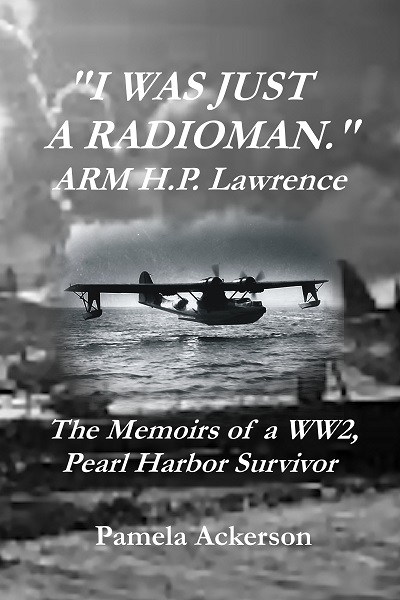
This is not a drill. The attack on Pearl. They were the ghost planes of the night, deadly, illusive, sharp-clawed Black Cats. The Memoirs of ARM H.P. Lawrence, a Pearl Harbor survivor, Black Cat, and decorated war veteran.
She never felt safe at home as a young girl, and didn't understand why when she finally escaped she wasn't safe in the big wide world either ...effectively jumping out of the frying pan into the fire!