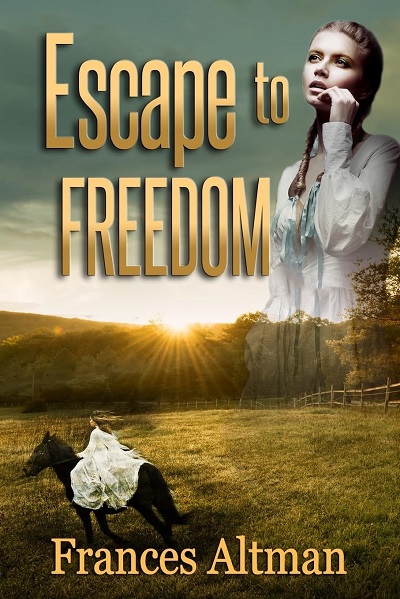
A journey of self-discovery and determination for a young girl in pre-gold rush San Francisco.
Meet Bonita. Often reckless, often victimized, a deeply spiritual person who transforms herself from a rebellious adolescent into a prominent entrepreneur.
When we meet her as a twelve-year-old in 1843, her future looks idyllic—a privileged life on a hacienda over looking San Francisco Bay. But her penchant for eavesdropping and her feisty willfulness wreck everything. She learns that she’s not who she’s been told she was, and she strikes out on her own to discover the truth.
Along the way, she becomes immersed in the swirl of historic events that surrounds her—the Mexican-American war, the gold rush, California drive for statehood.
An intense romance both complicates and enhances her quest.
Her search and its discoveries create fresh challenges, challenges she meets with the originality and boldness that by that point we’ve come to expect of this extraordinary woman named Bonita.
Excerpt
ONE
Roping Grizzlies
My night of the grizzlies. I believe, my daughter, that this is as good a place as any to begin telling my story. Perhaps these pages will never find you, but whether you ever read them, whether we ever embrace on this side of heaven, you live always in my heart. And as I write, I imagine you at my side on that moonlit night more than six years past.
They insisted over and over that a twelve-year-old white girl had no business out lassoing bears. They tried to stop me like they always had, but I refused to accept the refusals. It’s the way I am, Mija, and the way you are, I’m sure. So there I was, riding Pintado bareback, following Luis and Salvador and three other vaqueros to Arroyo Calaveras where we dump what’s left of Rancho Sausalito’s cattle after they sell the hides and tallow and after we of the household have consumed what meat that we can. The moon was bright, so I was careful to stay in the shadows of the oak trees and the chaparral. I didn’t intend to participate this first time, but I hungered at least to experience the feel and the smells and the sounds of it all.
A few miles out, Luis held up his hand, a signal for everyone to rein in and dismount. I followed suit. I knew from listening to their stories what would happen next. They’d leave the horses and creep the last hundred yards or so to the bank of the wash. They’d count how many bears were feeding, where they were concentrated, then plot their attack. They’d isolate a single animal, throw three or four loops around him, and haul him back to the special corral where he’d be staked out to fight a bull on Saturday. After the fight, his paws would become a tasty dish, his skin a rug, or maybe chaps with claws draped over the instep of someone’s fancy boots.
I kept a slight rise between myself and the men, sneaked toward the edge of the dry creek bed. I could smell the rotten meat and could hear the bears growling and snuffling. I inched forward on my stomach, wary of spoiling things for the vaqueros and hurting my chances of joining them someday. I crept to the rim, peered over.
Grizzlies are pretty much gone around here now, Mija, but you didn’t grow up around San Francisco Bay in the 1830’s and early forties without seeing them. Still, I’d never been this close, not in the wild. Other times, you’d glimpse them in the distance as they roamed free, or when the vaqueros dragged them in, clawing and biting at the lariats that bound them, or when they fought a bull during one of those bloody, roaring battles to the death.
I counted five. A pair of sows and their yearling cubs. The adults foraged among the bones for the tastiest remains. Two of the cubs fought a tug-of-war over a skull, growling and squealing like puppies. Finally, one of them ripped off the jawbone and romped away in triumph, headed straight toward me. It had never occurred to me bears would play like this. I suddenly regretted what would happen when the vaqueros moved in, thought perhaps it would be better to go back than to see the animal imprisoned.
That’s when Luis and his compañeros spurred their mounts into action, leaping like very shades of the devil from the shadows of an outcropping, howling like coyotes. Hooves shook the earth. Lariats whipped the air. The ground where I lay crumbled beneath me and sent me tumbling into the arroyo.
I dropped a few feet onto a jutting rock, which knocked the breath out of me. I continued to roll catawampus I don’t know how far until I fetched up against a soft, wiry-haired mound of live bear. The cub—no baby from up close—let out a yip and leapt sideways. We stared at one another for a long moment. I should have been terrified, I suppose, but I don’t recall feeling much of anything. My emotions were as paralyzed as my body. That stillness didn’t last long. The cub snapped out of his surprise, swiped at me with his forepaw, then bounded off. The swat probably wouldn’t have looked like much if you’d been watching from up top, but it knocked me six ways from Sunday and delivered the most intense pain I’d ever endured. I somehow found enough breath to yell, scream or make some kind of sound because the hoof beats suddenly stopped. I heard Luis yelling.
“¿Quién es? ¿Qué pasó?”
“It’s Bonita,” I cried. “Bonnie.”
The rumbling hoof beats and yelling and growling resumed as the vaqueros distracted the other grizzlies. They held them at bay so Luis could tend to me. He knelt beside me, spoke in a tone that was both angry and concerned.
“What are you doing here, Bonita? Are you hurt?”
I had no good explanation for the first question, so I answered the second. “Estoy bien,” I said. But of course I was not in the least all right.
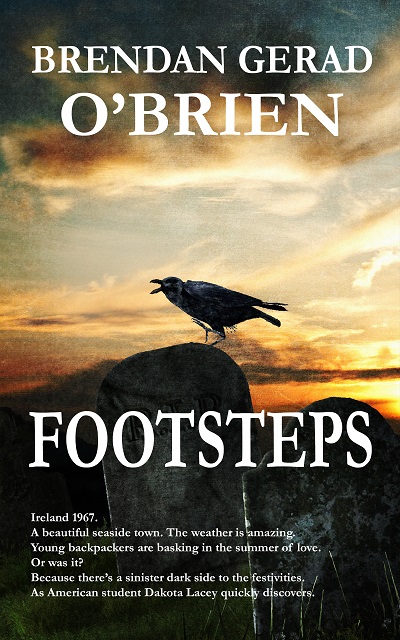
Ireland 1967. The Summer of love. Or was it?
A holiday weekend. Amazing weather. American student Dakota Lacey is hiking around Kerry.
But there’s a sinister, dark side to the atmosphere. Lone female hikers are being brutally attacked.
Third Book in Five Book Series - Southern Swallow - a tale of 12th Century China. Li K'ai-men becomes entangled in an intrigue that becomes his undoing.