Category: Historical Fiction Publisher: Scott Skipper
ISBN-10: 1490964924
Copyright: June 13, 2013
ISBN-13: 9781301207961
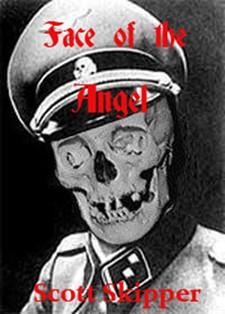
The life in exile of Josef Mengele, the Auschwitz Angel of Death.
Doctor Josef Mengele selected thousands for the gas chambers on the platform of the train station at the Auschwitz death camp. The survivors called him the Angel of Death. He was brilliant, urbane and charming, and he performed vivisection on the prisoners he spared from the Zyklon B. Then he spent forty years being hunted.
Although at one time he was in the hands of the U. S. Army, Mengele was never charged with war crimes. He moved about with the help of dozens of people, sometime unwittingly, though often knowing full well who he was. He evaded scores of professional Nazi hunters and spies for forty years even though his wife's name was in the Buenos Aires phone book. The stories told about him by the Simon Wiesenthal and the other pursuers grew in proportion to the years that they searched for him as did his fear and sense of isolation as well as the price on his head.
Excerpt
On a hot day in July Mengele walked a country road in the state where he was born. A farmer riding a bicycle and pulling another overtook him. "Would you rather ride?" he asked.
"Sure I would. Thank you, sir, it's very kind."
"To tell the truth, it's easier to let you ride than to pull the damned thing. How far do you go?"
"Donauwörth."
"I go by there."
"Have you passed any checkpoints between here and there?"
"Oh, ja, they're always asking for papers. Damned nuisance the Führer conscripted old men like me. It forces the Americans to check everyone."
Mengele felt the weight of the two identity papers in his breast pocket as he mounted the bicycle. He lagged behind the farmer feigning unfamiliarity with cycling and withdrew the Mengele set. He rolled it and inserted it into rusted tube of the handlebars.
"What's your name, friend?" the farmer asked.
"Ulmann, Fritz Ulmann."
At Donauwörth Mengele thanked his benefactor and forgot that he had put the identity paper in the handlebars.
In the little wedge shaped village at the confluence of the Danube and Wörnitz rivers, he inquired as to the whereabouts of the home of his school friend, Albert Miller. Miller wasn't home but his wife, who Mengele had never met, answered his knock. "My name is Mengele and what you've heard is not true," was his greeting.
The woman looked at him astonished. "It's not true the Mengeles make farm machinery?"
"Oh, yes, that's true, but nothing else."
"Well, what else is there?"
"Nothing. I'm an old friend of your husband. I've just been released by the Americans and I need a place to stay for few days until I can contact my family and get some money."
"Come in, then. Albert will be back soon. He managed to make it home from the war without being captured, thank God. Sit. All I have to offer is beer."
"No, I never drink, thank you just the same."
Frau Miller said, "That's a little odd for a German, but not as odd as your introduction."
Albert Miller was a veterinarian by training. Mengele was happy to see his friend from the Frankfurt Institute.
"Josef, what a surprise!" Miller said when he came home. "What can I do besides offer a meal and place to sleep?"
"Contact my family in Günzburg and my wife in Autenreid. Let them know I'm alive?"
"Well, maybe. Why don't you go there and tell them yourself?"
"They are probably being watched."
"Why? Who's watching them?"
"The Americans because of the untrue things the Jews are saying about me. I never did anything wrong but that won't stop them from putting me on trial for what the Jews are saying I did at Auschwitz."
"What are they accusing you of?"
"Complete nonsense—experimenting on people. It's rubbish. I didn't invent Auschwitz! I tried to help people!" His voice was rising hysterically.
Frau Miller looked worried. Herr Miller said, "Calm yourself, Beppo. I'll do what I can. I know you wouldn't do anything wicked."
"Thank you, Albert, I'll never forget it. I know that Irene thinks I'm dead and my parents probably think so too, but it's too dangerous to approach them."
"When I can I will attempt to contact them for you—"
"It must not be in writing. There must be no evidence of my whereabouts."
"Fine, fine, but it will take me some time. I just left the war too you know, and need to keep some food on the table."
The Millers put Mengele in an attic room with a tiny, fly blown dormer. He sat brooding, looking through the filthy window for hours worrying about his fate and his specimens, arguing with what he imagined the accusations against him were and practicing what he would say at his trial when the allied prosecutors paraded the list of supposed atrocities before the world. He argued to himself that he should be tried by doctors not lawyers. Some several days into his sojourn at Donauwörth, Frau Miller stomped up the narrow steps and banged on the door with the side of her fist.
"Josef, Albert's been arrested. They've taken Albert."
Mengele pulled the door open. "Who arrested him?"
"The Americans—I just heard it at the market."
"I must leave immediately. When they come for me, tell them I went to Switzerland."
"What will I do about Albert?"
"Pray that the Jews aren't telling lies about him like they are about me."
"This is your fault. It's you they are looking for—"
"Yes, and that's why I'm leaving." He slung his duffle bag over his shoulder and pushed the woman out of his way taking two and three steps at a time.
Professional Reviews
History Made Interesting
An outstanding read - history made interesting although it is a difficult subject. I thought it moved along very well.
Larry Scheetz
Compelling historical fiction that traces the life of a young English immigrant woman who travels to America at the turn of the century to start a new life for herself. Encountering danger, romance, heartache and tragedy, she strives to fit into a
Dublin 1941. A brutal murder. Mistaken identity. And barman Eamon Foley is running for his life.
Nine months later Foley is in a crowded pub, and his brother-in-law is shot dead.