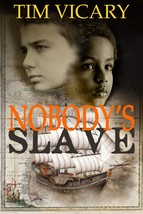
A gripping historical drama about two boys caught up in the Elizabethan slave trade
This book is a WINNER of the Kindle Book Award 2014
Two boys meet on a voyage that transforms their lives.
Madu, a young African, is captured by the English slave-trader, Sir John Hawkins. Tom Oakley is a young sailor in charge of the slaves. At first the two boys boys hate each other. But as the story develops their roles are reversed, and they become closer friends than either would have once believed possible.
This is a fast-moving drama based around real historical events. History as you never learned it in school!
Professional Reviews
Rivetting!
Having read Tim's book A Game of Proof (The trials of Sarah Newby)and enjoyed very much ,I was interested to see what other books had been written by the same author,this is completely different,but just as good,with a lot of historical facts within the book,I feel the synopsis doesn't do the book justice and would advise anyone with a slight interest to download this book you will not be disappointed,now looking forward to Tim's other books,historical or legal thriller,I expect they will be as well written as the two already read. M. Cooper.
Very Readable
I came across this book whilst browsing the kindle store. Since buying my kindle a year and a half ago I have become an avid reader. Some of the books I have downloaded have been pretty rubbish and I haven't bothered to finish them. This however, was for me a brilliant read. I read it non stop in two days whilst being off sick from work!
I enjoyed the characters and the friendship of the two boys, under adverse circumstances on different occasions.
I enjoyed it from a historical point of view.
Thank God we do not trade in slavery in this country any longer. Mrs Rosemary A. Franks
Nobody's Slave
I'm going to start off my review of Tim Vicary's historical fiction novel Nobody's Slave in an unusual manner with a quote of Tim's final sentence in his author's notes:
"Nobody has a monopoly of virtue."
These six words sum up the theme, based on true historical events, of Nobody's Slave.
Madu is a the son of a Sumba tribe member, captured as a slave by the Mani tribe. His mother was pregnant when she was captured and bore Madu, fathered by a Sumba. Madu has always felt an outcast with the Mani tribe members and never felt he met the high standards of his harsh stepfather, Nwoye, who is embarrassed this child is not of his blood.
Madu and his best friend, Temba, have nearly completed their manhood training. Boys that partner for their manhood training often became loyal friends for life and stand by each other. They capture a leopard, part of the ritual, and are triumphantly carrying it back to the village.
Madu hopes Nwoye will show a sign of approval, but is apprehensive as they trapped their leopard in a rather unorthodox and danger manner. Madu desperately wants to be accepted at the Festival of the New Warriors. His fate, otherwise, is that of a social outcast and lowly farmer.
Madu and Temba arrive at the village with their prize but drums beat insistently in the jungle. They warn of war with the Sumba and each village is to gather in haste at the nearest Mani town, Conga, for safety and to mount a defence against an army that has already captured five Mani villages.
Tom Oakley, is a seaman aboard the ancient Jesus of Lubeck, one of Queen Elizabeth's navy, under command of the ship's Master, Robert Barrett. Tom is a young boy, devoid of fear, in search of excitement and adventures. Dangers exhilarate him. The Jesus of Lubeck weathers an ferocious storm, but not without damage.
Cloth, purchased for trade, is used to plug holes in the hull. Francis Drake, Tom's cousin, is the Master's mate and supervises the improvised repairs. Also aboard is Robert Hawkins, a courtier, admiral and merchant-adventurer, who persuaded the Queen to loan him the Jesus of Lubeck. They survive to continue on to their destination, Guinea, Africa.
The Mani fortify Conga as best they can in the limited time they are afforded before battle commences. It is here Madu first learns the fate of the villages conquered by the Sumba: slaughter, cannibalism, slavery to the Sumba tribe or sold to the red-face, who keep captives in their great canoes and eat them.
The crew of the Jesus of Lubeck hope to fill their hold with African slaves, partially to make up for the loss of cloth but, mostly, to make a handsome profit. Thomas tells his cousin Simon:
"You don't want to worry about they Africans, Si. They're not like us. They're savages - they don't feel like we do. Black ivory, that's all."
Tom doesn't give much thought for the Africans, other than to muse:
"...he would not like to lie there, chained the stuffy darkness, unable to see outside or even stand up without bending; but then he was not a slave, nor likely to be."
He laughs in remembrance of the Africans' fear and how their skin shined "like polish ebony when it was wet..." Tom is not much of a introspective thinker.
The plan is sell a cargo hold full of African people to the Spaniards, who Tom and the crew hold in great disregard because of their Catholic faith, but their coin is welcome. The Mani and crew collaborate, each for their own purpose.
The manhunt is successful, for the most part, but Tom looses his cousin, Simon, to warriors in the first skirmish. The Sumba in Conga are vanquished. Madu is captive, his friend, Temba, and stepfather dead. He will never know the fate of his mother and sisters. His greatest fear is the red-face mean to eat him.
As often happens in life, best-laid plans go astray and dismissive words return to haunt. Such is the story of Nobody's Slave. Fate decrees Madu and Tom's worlds collide, separate and collide again. Both young boys are forced to confront their hatred of each other and their foe's nationality daily. Both will be in the complete power of the other at one point. Both will betray the other.
Nobody's Slave conveys a myriad of human cruelty into 255 pages. It also illustrates the human capacity to forgive, if not forget, past transgressions. Tim's prose is action-packed, yet descriptive of the suffering of unfortunate human beings and the propensities of those who hold ultimate power over the helpless. Beliefs and superstitions of the day are given validity.
Tim has a knack for delving into the minds of his characters and bringing out the worst and best in them. He doesn't shy away from the basest of emotions, but also demonstrates no person is completely evil whatever their deeds.
Nobody's Slave is thought-provoking. The reader is given insight into man's darkest motives and fears. No nation is exempt from exploitation for its own benefit and somehow justifying those actions.
I'm going to start of my review of Tim Vicary's historical fiction novel Nobody's Slave in an unusual manner with a quote of Tim's final sentence in his author's notes:
Nobody has a monopoly of virtue."
These six words sum up the theme, based on true historical events, of Nobody's Slave.
Madu is a the son of a Sumba tribe member, captured as a slave by the Mani tribe. His mother was pregnant when she was captured and bore Madu, fathered by a Sumba. Madu has always felt an outcast with the Mani tribe members and never felt he met the high standards of his harsh stepfather, Nwoye, who is embarrassed this child is not of his blood.
Madu and his best friend, Temba, have nearly completed their manhood training. Boys that partner for their manhood training often became loyal friends for life and stand by each other. They capture a leopard, part of the ritual, and are triumphantly carrying it back to the village.
Madu hopes Nwoye will show a sign of approval, but is apprehensive as they trapped their leopard in a rather unorthodox and danger manner. Madu desperately wants to be accepted at the Festival of the New Warriors. His fate, otherwise, is that of a social outcast and lowly farmer.
Madu and Temba arrive at the village with their prize but drums beat insistently in the jungle. They warn of war with the Sumba and each village is to gather in haste at the nearest Mani town, Conga, for safety and to mount a defence against an army that has already captured five Mani villages.
Tom Oakley, is a seaman aboard the ancient Jesus of Lubeck, one of Queen Elizabeth's navy, under command of the ship's Master, Robert Barrett. Tom is a young boy, devoid of fear, in search of excitement and adventures. Dangers exhilarate him. The Jesus of Lubeck weathers an ferocious storm, but not without damage.
Cloth, purchased for trade, is used to plug holes in the hull. Francis Drake, Tom's cousin, is the Master's mate and supervises the improvised repairs. Also aboard is Robert Hawkins, a courtier, admiral and merchant-adventurer, who persuaded the Queen to loan him the Jesus of Lubeck. They survive to continue on to their destination, Guinea, Africa.
The Mani fortify Conga as best they can in the limited time they are afforded before battle commences. It is here Madu first learns the fate of the villages conquered by the Sumba: slaughter, cannibalism, slavery to the Sumba tribe or sold to the red-face, who keep captives in their great canoes and eat them.
The crew of the Jesus of Lubeck hope to fill their hold with African slaves, partially to make up for the loss of cloth but, mostly, to make a handsome profit. Thomas tells his cousin Simon:
You don't want to worry about they Africans, Si. They're not like us. They're savages - they don't feel like we do. Black ivory, that's all."
Tom doesn't give much thought for the Africans, other than to muse:
"...he would not like to lie there, chained the stuffy darkness, unable to see outside or even stand up without bending; but then he was not a slave, nor likely to be."
He laughs in remembrance of the Africans' fear and how their skin shined "like polish ebony when it was wet..." Tom is not much of a introspective thinker.
The plan is sell a cargo hold full of African people to the Spaniards, who Tom and the crew hold in great disregard because of their Catholic faith, but their coin is welcome. The Mani and crew collaborate, each for their own purpose.
The manhunt is successful, for the most part, but Tom looses his cousin, Simon, to warriors in the first skirmish. The Sumba in Conga are vanquished. Madu is captive, his friend, Temba, and stepfather dead. He will never know the fate of his mother and sisters. His greatest fear is the red-face mean to eat him.
As often happens in life, best-laid plans go astray and dismissive words return to haunt. Such is the story of Nobody's Slave. Fate decrees Madu and Tom's worlds collide, separate and collide again. Both young boys are forced to confront their hatred of each other and their foe's nationality daily. Both will be in the complete power of the other at one point. Both will betray the other.
Nobody's Slave conveys a myriad of human cruelty into 255 pages. It also illustrates the human capacity to forgive, if not forget, past transgressions. Tim's prose is action-packed, yet descriptive of the suffering of unfortunate human beings and the propensities of those who hold ultimate power over the helpless. Beliefs and superstitions of the day are given validity.
Tim has a knack for delving into the minds of his characters and bringing out the worst and best in them. He doesn't shy away from the basest of emotions, but also demonstrates no person is completely evil whatever their deeds.
Nobody's Slave is thought-provoking. The reader is given insight into man's darkest motives and fears. No nation is exempt from exploitation for its own benefit and somehow justifying those actions.
Tralee, Ireland. September 1948.
An arrogant, and highly agitated, priest arrives home after 40 years.
Days later he's dead. Suicide? Or did his past catch up with him?
Dublin 1941. A brutal murder. Mistaken identity. And barman Eamon Foley is running for his life.
Nine months later Foley is in a crowded pub, and his brother-in-law is shot dead.
Fourth Book in the Southern Swallow Series finds the Academician Li K'ai-men in exile on Hai-nan Island. China has a new invasion threat. A showdown between ingenuity and technology explodes as the Sung Dynasty tries to preserve itself.