Led by Gewis, fleeing famine and invaders the Gewissae are storm driven far from their intended landing place in post Roman Britannia. They become warrior confederates of Caradoc in exchange for land.
The Gewissae, the followers of warrior chieftain, Gewis, fleeing famine in their blighted land to join their kin on the east coast, are storm driven to the West Country of a Britannia now deserted by Rome. There they become warrior confederates of Caradoc, ruler of the Durotriges, in exchange for a place to build and farm. Joining to defend the land with Dux Caradoc's Legio II Militia, and Arthur the peacekeeper's Frisian cavalry, they tip the balance of power. In battle with the armies of warring petty tyrants they start the knitting up of the broken land of post-Roman Britannia, creating the Kingdom of Wessex as the Fates intended. Following on from the Axe the Shield and the Triton it is the continuing story of the workings of the Fates, forging in the white heat of joy and tragedy the iron hard warrior kings needed to build a nation, which will, over time, create an empire that changes the world.
Excerpt
See Wyrd Sisters Publishing website.
Professional Reviews
The Axe the Shield and the Halig Rood
R Van Horne - See all my reviews
This review is from: The Axe the Shield and the Halig Rood (Paperback)
A page turning romp through the dark ages told with clarity and some ambition, featuring a reinvention of the Arthurian myth for good measure. James M Hockey is really finding his voice as a writer with this his second book. It's a worthy successor to The Axe The Shield And The Triton. If you are a fan of heroic fiction you will feel right at home with both these books.
The Axe the Shield and the Halig Rood
By Towse - See all my reviews
This review is from: The Axe the Shield and the Halig Rood (Paperback)
The second in a projected series, this is an imaginative re-drawing of Dark Age Britain in the late C5th AD, only two generations after the withdrawal of Rome. Into what will become the English heartland of Wessex, arrive a tribe of refugees from across the North Sea, led by the warrior Gewis. Blown well of course from their planned landfall, they find themselves in a land of tribal conflict and the warrior lords of petty kingdoms. This is the `age of Arthur' and Hockey has created an original and entirely plausible version of this giant of myth. There is no magic here except the power of the gods in the minds of those who follow them. Rather this is Britain before England as re-interpreted from the Anglo Saxon Chronicle, Nennius, Gildas and the Welsh Triads. The Gewissae make alliance with the warlord Caradoc, becoming his warrior confederates in exchange for land to settle. So begins a relationship that will empower both peoples and result in the founding of Wessex and the dynasty of Alfred and Athelstan.
Presented as a story within a story, this feels like a saga in the vein of Beowulf. It is the foundation myth of a people to be told around the hearth of the mead hall. I can imagine Raedwald of the Wuffingas of Sutton Hoo listening to his tribes own version amongst the hearthmen of his own hall.
In his author's note, Hockey admits he has played `havoc with accepted views of the nature of post-Roman Britain and the migration period'. There are points of interpretation that I might disagree with. However his creation remains at all times plausible, and as the discovery of the wonderful Staffordshire hoard illustrates so well, our understanding of that period has to endure constant expansion and revision with the discoveries of new artefacts and new science.
I would have welcomed the chance to read the first book, The Axe, the Shield and the Triton, as it would have told me of previous events that had impacted on the development of major characters. But this is not essential, as the story stands quite adequately alone.
I look forward to seeing how the saga develops as Hockey's blend of myth, history, archaeology and folklore evokes a sense of time and place that sites comfortably with someone raised with tales of the evolution of the English (and British) psyche.
Towse Harrison
Review originally published in the Historical Novel Society Review
T Axe the Shield and the Halig Rood
By OldPierre - See all my reviews
This review is from: The Axe the Shield and the Halig Rood (Paperback)
When a sequel to a novel is published it is often a disappointment - that is definitely not the case here. The original story (The Axe, the Shield and the Triton) took us to the point where Rome had fallen and the players had returned to their distant homelands which had suffered drought and famine. This part of the story starts when the villagers land on the South coast of Britain, homeless, and a long way from the related peoples thay had hoped to join. The way the author tells this aspect of the tale is so real you feel their worries and doubts as to whether this migration was the right thing to do.
As in the previous episode the story is told through the voices of the Gleeman who keeps his audience and hence the reader avid for the next installment.
This is a tale which touches on Arthurian legend, but concentrates on the birth and growth of a village eked out from the good will of the local 'Dux' - effectively the local king and the battles required to keep that foothold and allow it to grow.
Once again the author's experience of the sea and West country are clearly evident in the descriptions of the unfolding events.
This is a book that leaves the reader wanting more as did the gleeman's audience. I am hungry for the next offering from this author which I understand is due shortly.
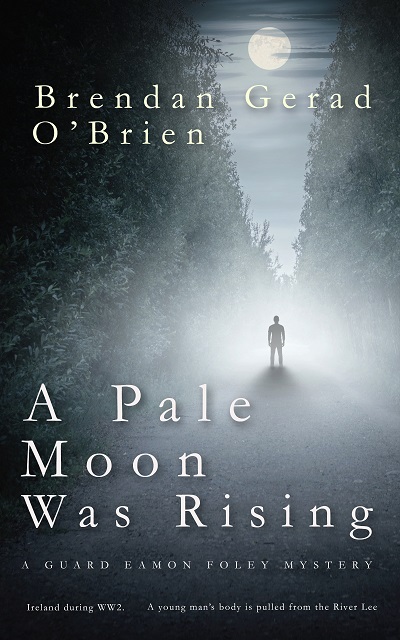
Ireland 1944.. A young man’s body is pulled from the River Lee. He’s wearing a distinctive silver ring that belonged to Paudy Daly, the eldest son of the notorious Mixer Daly. Why?
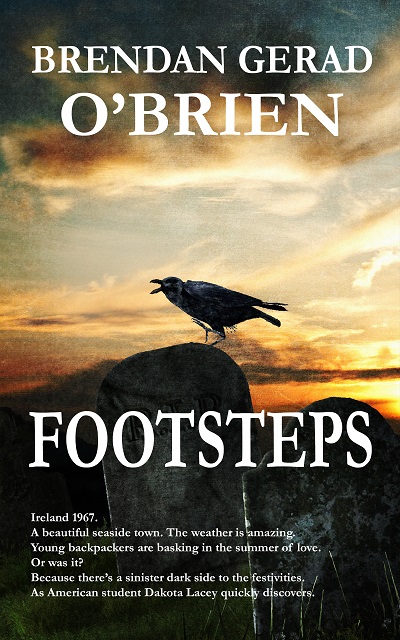
Ireland 1967. The Summer of love. Or was it?
A holiday weekend. Amazing weather. American student Dakota Lacey is hiking around Kerry.
But there’s a sinister, dark side to the atmosphere. Lone female hikers are being brutally attacked.
Ireland 1944.. A young man’s body is pulled from the River Lee. He’s wearing a distinctive silver ring that belonged to Paudy Daly, the eldest son of the notorious Mixer Daly. Why?