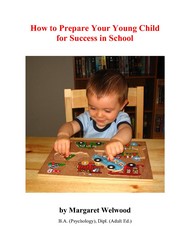
For parents and caregivers of children pre-birth to four years old: Prepare your child for success in school with no-cost or low-cost activities--and learn what you can do now to delay the symptoms of Alzheimer's Disease when your child is an older adult.
Originally written for parents studying English as a Second Language, this free e-book will also help new parents who are native speakers of English. Get your little one off to a good start with low-cost or free activities that foster self-confidence and language development. Music, books, toys, TV and play--this simple guide outlines choices recommended by experts in the field.
Excerpt
Dr. William Douglass reports that watching TV makes it MORE DIFFICULT for children to learn . . . and that children who were exposed to more than three hours of TV a day before the age of three scored lower on intelligence tests in grade one! Please notice, he didn't say “watched TV.” It seems that they were just in the same room when the TV was on.
According to the American Academy of Pediatrics, children under two years old shouldn't see any TV at all, and children two years old and over should not see more than two hours a day.
You can also check out this archived issue of Time magazine to learn more about how movies, even movies made for young children, interfere with language learning.
The American Academy of Pediatrics also gives us other key points:
In order to learn what they need to learn, children need time to play alone. This encourages independence, self-confidence, creativity, and language skills, says Maria Luisa Escolar, M.D.
Professional Reviews
Review by: The Edimath on Sep. 12, 2013
This compact and easily readable book by Margaret Welwood provides advice on how parents can help their young children develop. Perhaps the most striking aspect of the book is that, through its simple and direct language, it expresses the author's pure joy on the subject of bringing up a baby and being part of its development. The style will appeal to those who prefer a friendly tone over the formal, removed voices of some child-development books.
The book does not claim to be a thorough treatment of every aspect of child development. Instead, it focuses on some core principles, such as using music to aid a child's development; showing the child simple, bright colours; selecting toys to help develop creativity; and choosing the appropriate kinds of speech to best engage the child with. The book even addresses development according to the age of the child, stressing the importance of sound imitation and simple words to begin with and concepts later on.
The author draws on twenty-five years teaching English as a second language and, just as importantly, on her experiences with the many children she has seen grow up within her own circle of family and friends. She transmits her knowledge delightfully, so why not give this pragmatic guide a go?
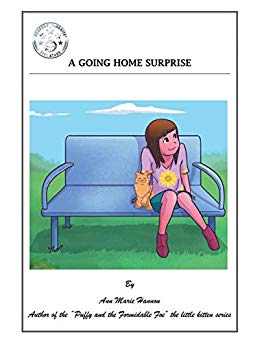
When Kathy finds a small stray kitten some amazing things happen. Story's from a Mom's view of the love, caring and patience needed when a child wants to own a pet. Recipient of the prestigious Mom's Choice Award. Delightful illustrations!
You May Be Single, But You’re Not Alone.
Being a great dad is challenging enough when you’re part of a two-person team. But now you’re raising your kids single-handedly. How can you provide the emotional, physical, and spiritual support your
You May Be Single, But You’re Not Alone.
Being a great dad is challenging enough when you’re part of a two-person team. But now you’re raising your kids single-handedly. How can you provide the emotional, physical, and spiritual support your