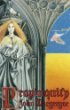
Two years before Foucault's Pendulum, seventeen years before The Da Vinci Code - the novel that launched the conspiracy fiction genre.
Despite the many plot parallels between these two detective mystical conspiracy thrillers, before sitting down to write The Da Vinci Code, Dan Brown likely didn't read the more literary Propinquity (published 1986) - for hardly anyone has read it. Thanks to a crash-and-burn by its publisher that same year,Propinquity is a collector's item.
The Da Vinci Code was dissed by many heavyweight reviewers, but sold 80 million copies. The critics were lavish with Propinquity - comparing the then youthful John Macgregor with some of the world greats.Propinquity sold (count 'em) 600 copies.
Nonetheless, the story coincidences are startling:
At the center of Propinquity is the secret tomb of a medieval French princess - carrier of the same gnostic illumination dispensed by Christ. Deep under Westminster Abbey, the tomb contains documents on the life of this female avatar, and speaking of a feminine divine power. A male doctor is shown the crypt by a young, female medievalist, fluent in Old French. As a child she'd witnessed her father visiting the crypt - he being a high-ranking cleric set on keeping the secret secret.
Like The Da Vinci Code, Propinquity has a long timeline:
2,000 years back, Joseph of Arimathea had brought the Holy Grail to England - and set up a monastery where Westminster Abbey now stands. The Roman state later appropriated Christianity, and redesigned it in its own image. But the Westminster monks acted as a secret society which kept the gnostic teaching alive. After twelve centuries, into their midst walked Berengaria, Richard the Lionheart's Queen - herself a gnostic.
Berengaria was presently done away with by the Church. For centuries it kept her tomb, and history, secret: if word got out, "Christianity would come down like Wall Street in the Great Crash". But now our heroic couple - the Church hierarchy and police on their tails - are in a race to reveal all.
Sounding familiar so far?
The difference is that The Da Vinci Code is a best-seller, whilst Propinquity - also quite a page-turner (see Chapter 13's ritual sex among the tombs at the heart of Christendom) - is more thoughtful and exploratory. The novel, which laid the foundations for the modern conspiracy fiction genre, begins with a half dozen leisurely chapters looking at the hero's early life. It then quickens the pace and gets down to the mystery, which takes us to London, Oxford, Haiti and the Australian bush. This builds a nice familiarity with the characters, but it's not out of your usual how-to-write-a-pot-boiler manual.
Notwithstanding the 1:133,000 sales ratio, Propinquity did something The Da Vinci Code never did: it won a major literary prize. That would be the 1986 Adelaide Festival Biennial Award for Literature. It was also shortlisted for The Age Book of the Year in 1987 - but was beaten out by Robert Hughes' The Fatal Shore.
Macgregor went on to a journalism career, writing for the New York Times, and winning a major investigative journalism award for unravelling a real-life conspiracy by the FBI. He has been generous about Dan Brown's book, saying, "The Da Vinci Code is a nicely constructed novel. Sometimes critics don't realise how hard good structure is." Propinquity contains more elegant language than Brown seems capable of; its pacing may be less even than Da Vinci's.
However Propinquity contains one plot twist unthought-of by Brown: Our modern heroic couple discover that the entombed queen may not actually be dead, but in a centuries-long coma induced by herbs. So there is a thrilling quest (spanning several continents) to find the antidote, lost to science for centuries, and bring her back to life...to watch those blue, medieval Saxon eyes open, to behold the modern world. And perhaps change it irrevocably.
I won't spoil the plot... But I'm glad John Macgregor has decided to unearth Propinquity from its crypt after so many years.
Professional Reviews
"Close to unclassifiability" (Times on Sunday)
This is a novel close to unclassifiability.
It opens at school (unusually, Geelong Grammar) but then it swerves off track and onto an international rollercoaster. The engagingly dangerous hero runs a garden requisite company, studies medicine at Oxford, then does some intimate practical anatomy with a friend in London. The height of his eccentric career is to mastermind the resuscitation of a long-dead royal figure found coldly catatonic in the depths of Westminster Abbey.
At no stage does this weird story give itself or the reader the easy exit of symbolism. Macgregor eschews with equal firmness the categories of fantasy and experimental novel, just as he turns his back on Carlton and Balmain, those narrow brown lands of local literature...
Macgregor is most reminiscent of Ian Jeffries, a much-overlooked English novelist whose totally ill-assorted novels share with Propinquity a sharp uncluttered style, an out-of-whack hero and quasi-random gathering of plot materials, more deranged diary than neat novel.
So Propinquity may not have very near neighbours in the close formation of the Australian novel, but it does have its distant friends of varied types of manic sanity; it even might be mentioned in the same sentence as those masters of veridical clowning, Brain Nolan (a.k.a. Flann O'Brien and Myles na Gopaleen) and Joseph Hasek, he of Good Soldier Schweik immortality.
Professor Stephen Knight
Times on Sunday
July 19, 1987
Escapism with intelligence
There is some very nice writing in Propinquity. Macgregor has a fine sense of place, easing one quickly into each locale...
Whether Macgregor is describing Geelong, the cold recesses of Westminster Abbey, the voodoo trail in Haiti, or buttering crumpets in Mullumbimby, the flowing assuredness of his prose sucks the reader in...
John Macgregor won the Adelaide Festival National Manuscript Award for Propinquity and there is plenty of evidence here is a talent worth watching. Escapism with intelligence.
Andrew Stokes
The Australian
October 17-18, 1987
"One of the most imaginative novels for some years"
A second reading confirms my belief that it is is one of the most imaginative novels to appear for some years.
Part Three in the Mu Series - Sarah Thompson reluctantly abandons her desperate search for her soul mate on Maui and returns to her Montana hometown. Her brother has had a terrible accident...
3 WAY MIRROR is about a lost identity as experienced by a twenty-eight-year old who thinks he's Charles Randall, until strange events suggest otherwise.