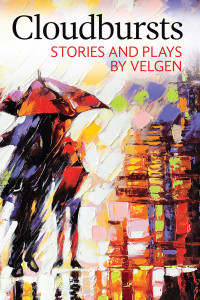
A collection of short stories and plays, creative work of a lifetime: childhood through those senior years.
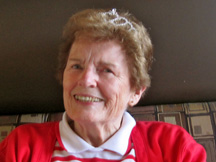
For years, Velgen was immersed in left brain writing pursuits, mostly targeted at grammar, language, and history. Still, in the quiet of her closet, she turned out pieces of fiction, short stories that popped up at odd times; book themes, along with plays that seemed to fit better than story form. Breaking out of the closet, she shares her burgeoning fiction collection with readers. “Some of these pieces amaze me with emotions I didn’t know were in me,” she admits. “Still, scary as it sounds, all the work in this book is fiction.” Just don’t tell her that stories arrive from “out there” somewhere; she knows they are all stored inside that right brain of hers — and yours.
Excerpt
PEPIN
As a kid, I always thought “Pepin” was a funny name for a town in the middle of the country. Somewhere about the fourth or fifth grade, I learned the derivation: Pepin was King of the Franks in the 8th century; as such he established papal authority in that part of western Europe. He was also known as Pepin the Short — which I liked better because it was funny — like the town.
The town of Pepin is located on the Wisconsin side of the Mississippi River, on the banks of Lake Pepin, which is probably the first wide spot in the river after leaving Lake Itasca, its source near Minneapolis. Lake Pepin freezes over every winter with ice so thick it can support cars, and (a long time ago) my figure skating attempts. In the summer, it sometimes warms up enough for swimming. I don’t recall anyone ever daring to swim across the one mile to Bay City, Minnesota, but I’m sure someone did.
The reason I know so much about Pepin is that some of my relatives live there. My mother’s sister, her husband, and their two sons spent most of their lives there — and grandchildren still roam those quiet town streets (no longer dusty, as I recalled them in summer or crunchy with snow in winter). My family spent most Christmases with my aunt, uncle and cousins, until the year my father died. After that, Mother visited her sister’s family a few times, and I spent weekends there when I was attending a nearby college.
Altogether, Pepin holds some of the best moments of my life. It’s where I learned to ride a bicycle — an old beat-up thing with a bare chain that caught my pants regularly, causing terribly embarrassing moments when I had to remove the slacks, outdoors!
Pepin is also where I learned about community. Most of the town knows everybody in it and is related to many of them. Nobody locked their doors or cars then. Kids walked wherever they needed to go: to the two-block downtown area that harbored a movie house that changed its movies every two weeks, a general store, and a one-pump gas station; or to the lake to go swimming or boating; or to a nearby creek to fish for bass; or to hike up the bluffs that served as backdrop to the town. We thought they were mountains and bragged about walking all the way to the top (a mere three miles, but a long trek to a 10-year-old).
Somewhere at the foot of one of those bluffs was a Girl Scout camp that I attended a few times. As a wannabe writer, I always kept journals of special events, such as trips or camp, certain birthdays, a winter holiday or two, and a fishing trip with my younger cousin. [Why would a 12-year-old girl accompany a nine-year-old boy to the fishing creek? Because she didn’t know how to fish!]
All of those childhood adventures took place a half-century ago. Why am I remembering them now? (I ask a lot of questions, don’t I?)
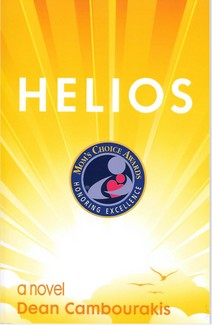
Helios is an award winning novel about a brilliant inventor of new technology, a fallen CEO seeking redemption, and an idealistic youth who comes of age in corporate America.
I Made My Boy Out of Poetry is a powerful literary vision of rare scope, beauty and emotional intensity composed of stories and poems that flow in and out of each other like the most lucid and articulate of dreams. These are portraits and studies of