
Kindle Edition
Amazon
gjgriffithswriter
https://www.amazon.com/dp/B07BTLMQBZ
Category:
Historical Fiction
Type: Fiction
Pages: 208
Copyright: March 29, 2018
ISBN-13: 9781986976640
Price: $0.99 (eBook)
NOW ONLY 0.99!
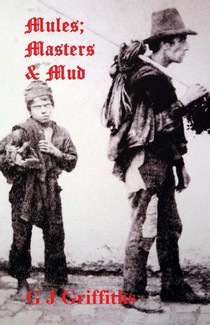
The continuing story of the Quarry Bank Runaways is about what happened to two cotton apprentices over three decades during the Industrial Revolution; first as qualified young men with hopes and later when they are full grown. By the start of the Victorian period the fates and their ambitions would have collided.
WARNING! This book may contain NUTS! (Non-Uniform Text Speech)
In other words speech in what some have called "Olde English Vernacular". It is spoken by characters in the book from the North, the Midlands and the South of England. There is a glossary at the end of the book to help if you can rise to the challenge. It adds shades of colour to this 19th century story that you may not be expecting.
When Mrs Alexander wrote about “the rich man in his castle, the poor man at his gate” and declared that “God made them, high or lowly, and order’d their estate” in the ever popular hymn All Things Bright and Beautiful, she was probably reflecting one of the mores of the times. It would fit in well with prejudices and beliefs of the middle and upper classes that paternalism had indeed been intended by God, thus laws protecting the workers in their fields, mills and factories were not necessary. In the words of Browning so long as “God’s in his heaven, all’s right with the world!”
The continuing story of the Quarry Bank Runaways is about what happened to two cotton apprentices over three decades during the Industrial Revolution; first as qualified young men with hopes and later when they are full grown. By the start of the Victorian period the fates and their ambitions would have collided. Serious events and incidents, both personal and national, were about to impinge upon the lives of Thomas Priestley and Joseph Sefton, who had earlier run away from their apprentice master, Samuel Greg. What would cause a qualified mule spinner to give up his comparatively safe job and risk failure, ridicule or destitution? Ambitious and determined working class individuals like Tommy and Joe had to carefully step through a pathway involving love, loyalty and legal persecution and prejudice, from within the social hierarchy of the times.
The inspiration to write The Quarry Bank Runaways and Mules; Masters & Mud came about after reading The Real Oliver Twist by John Waller, a biography of Robert Blincoe, and acting as a tour guide around the Quarry Bank Mill Museum in England. There to discover the existence of the real apprentices and the lives of many child cotton apprentices during the Industrial Revolution.
Excerpt
An extract from Mules; Masters & Mud - the sequel to The Quarry Bank Runaways.
It is the chapter about the runaway apprentice Thomas Priestley when, as an adult, he is wounded while attending what became known as the Peterloo Massacre.
Chapter Ten: Injury
On a fine sunny morning in August 1819 Thomas, with eight other cotton workers, was travelling on a horse drawn cart to Manchester. The road from Mellor was not one of the best in wet weather, but the rain had stopped as they joined the turnpike road, passing through Stockport, to pick up Tommy and some other club members, when everyone was in high spirits. They were all looking forward to hearing Henry Hunt speak to an assembly of people on Parliamentary reform and against the Corn Laws, for which the high price of food was being blamed. The many peaceable workers, like Thomas, had high hopes for a non-violent orator like Hunt to bring to the attention of the government the claims of “ordinary folk” of the causes for the many hardships in their lives. It was rumoured that hundreds would be there in St. Peter’s Fields and that it would remain peaceful enough for women and children to be present.
‘Wotcher, Tommy, ’ow’s things?’
‘Pretty fair, Jacob, pretty fair... What’s that clothes prop for, then? It looks like a flag.’
‘Clothes prop? Nay, mate that’s me banner demandin’ the vote, ain’t it.’
Jacob was a secret convener of club meetings and groups for the surrounding mills of Stockport. He had become quite a confidante of Thomas and Will Souter and kept them informed as much as he could about changes in employment law and other developments. He had listened to Francis Place speak against the Combinations Acts and had joined the march two years earlier when the workers had hoped to present a petition to the Prince Regent in London. The large group of protesters had walked but a few miles south of Manchester when troops had broken it up, causing more dissidence to spread to many more workers.
There were eight leather flagons on the cart with contents that added much to the holiday mood amongst the men aboard. As soon as the scrumpy cider had all disappeared everyone was agreed the ale would be most welcome. Even with an early morning start to the journey the cart was not going to reach Manchester much before lunchtime. Frequent stops for the relief of eight bladders had a lot to do with the delays and word had reached the pie-men and other purveyors of food about the meeting on St. Peter’s Fields. The suppliers of such refreshments were scattered along the route every half mile or so and they were doing well. The cart from Mellor found it was one of very many by the time they reached Ancoats. Most of the men on the cart had never been to Manchester and while they were most impressed by the many enormous mills that towered above them, they were alarmed to see how densely populated the area was. Dozens of people walked to and fro while small gangs of small children played in the filth.
‘Where do all these people live?’ asked Thomas.
‘Why in these tenements an’ back-to-back houses, Tommy. Oh, an’ though they’ve got better roads around ’ere it’s for the convenience o’ the mill owners an’ merchants, see: for the transport o’ bales an’ what ’ave thee.’
‘Look at the state o’ the roads,’ said Tommy.
There were piles of discarded bits of broken furniture, rotting vegetables, filthy soiled clothing and stinking excrement littering the sides of a yellow stream. The yellow stream was an open running sewer that would eventually find its way into the Rochdale Canal or either of the rivers Mersey or Irwell.
‘Aye, an’ ’alf these ’omes ’ave got no privies or plumbin’, pal,’ said Will. ‘No surprise, there’s so many poor kiddies dead afore they’re ten around the town, eh,’ he continued. ‘Thee can nigh see th’ miasma that’s acomin’ up off them streets; causin’ all sorts o’ diseases, see.’
The wagoner driving the cart was attempting to find a way through Redhill Street and as they passed by the enormous eight storey edifice that was McConnel’s Mills he told Jacob that he was about to stop.
‘See, Jacob, ah needs ter find a farriers ter attend to me hoss… Mebee, a stable somewhere round ’ere, if ah can… Hoss is trottin’ a bit lame, see.’
‘No problem, mate,’ replied Jacob. ‘It ain’t that far ter walk from here… Ah knows the right road. We go past th’ Infirmary on Piccadilly?’
The wagoner nodded and the workers got down from the cart, still in high spirits, chatting about the high hopes they had about Orator Hunt and what they expected to hear in his speech. There were no open public spaces neighbouring the many mills; no parks for the group to stroll through or sit and chat; no public buildings nor churches with churchyards. Everything about the place where they had stopped was about cotton: scotching it; carding it; spinning it; weaving it and selling it. They were in the growing heart of Cottonopolis.
The group from Mellor and Stockport were amazed to see dozens of wagons and carts lined up around the streets bordering St. Peter’s Fields. But the sheer numbers of happy people, men, women and children, congregating upon the site meant for the speeches was a shock – there were many, many thousands and they all seemed to be in the same holiday mood as all of the club members. There were sideshows, entertainers of all kinds, pedlars and stalls with refreshments; the carnival atmosphere belying the serious nature of the reasons for such an assembly of thousands from the working classes of the north of England. Henry Hunt’s reputation as a radical reformer had reached the local magistrates and they had called upon the Yeomanry of Manchester and Cheshire to stand by in case of insurrection from the crowds. A narrow passage, lined by constables, allowed Hunt and others to approach the raised platform amidst the packed assembly and the suffocating heat of the middle of the August day. Watching from his room at the corner of St. Peter’s Field the chairman of the magistrates was encouraged by Hunt’s enthusiastic reception to issue warrants for the arrest of the speakers and send orders for dispersal of the assembly. He feared for the preservation of the peace, ensuing riots and, therefore, that lives and property were in danger; not only that but he assumed what he saw was but a part of a nationwide rebellious movement.
The speeches began; banners were waved; repeal of the Corn Laws was demanded; shouts and cheers followed; universal suffrage was reasonably demanded; more cheers and cries of: ‘Hear, hear! Well said, sir! Hurrah, that’s right!’ could be heard above the holiday hum of the crowd. Up on their platform Hunt and his entourage were growing ever more animated and arms were raised, waved in the way of many a country church choir master. The people, many still dressed in their plain working clothes, were unaffected by the contrast with the fine apparel worn by the lecturers. Ordinary people were whooping and applauding with such exuberance that they could be heard miles away. The swelling sound was now about to be misinterpreted by the Yeomanry, strategically assembled to the west and east of St. Peter’s Fields, supported by hundreds of constables and a company of hussars. The poorly trained, volunteer cavalrymen of the Yeomanry were commanded by Captain Birley, who was also a local factory owner.
It was not ten minutes after one thirty when the captain led his cavalry towards the platform of speakers. This was to assist the chief of constables and his men in the arrest of those same speakers. In attempting to force their way through, the horsemen lost all sense of self-control and drew their sabres, hacking their way through everyone in their path, men, women and children! In the panic of people trying to get out of the way the untrained horses reared and plunged into them, injuring many more. When the arrest warrant had been served by the police officer, the Yeomanry then set about seizing and destroying the many flags and banners, and to disperse the crowd further. But this was not possible while the main exit from the area was blocked by rows of foot soldiers with fixed bayonets.
Thomas and Jacob became incensed at the sight of a large group of flag-carrying women from a female reform society, all dressed in white, who were being savagely attacked by horsemen. More spilt blood conflicted horribly with the white dresses of the women and a few brave souls attempted to defend themselves with their short flag staffs. With eyes as wild as those of their steeds the cavalrymen slashed out, not caring whether the flags parried their deadly sabres or whose head was split open.
‘Come on, Jacob!’ yelled Thomas as he flung himself forward at one of the horsemen and held on to his weapon arm. The man would not be pulled down from the saddle and received a hefty blow to his back from Jacob’s banner pole. This was then a signal to the soldier’s comrades to turn their attention to the two men and rain blows upon them. Thomas and Jacob were not alone in attempting to return the fight physically, while the many brickbats and loud curses from the people heard by the magistrates caused them to rouse the hussars into the fray.
‘The crowd must be dispersed! The yeomanry are now being assaulted! Go to it!’ they ordered the officer commanding the hussars. Within ten, or maybe, fifteen minutes the assembly in St. Peter’s Fields had been dispersed, although riots continued throughout the streets of Manchester for hours. Bloodied and injured bodies in their hundreds strewed the area and later it was found that there were eleven fatalities among them, including nine men and two women. Thomas and Jacob, with three of the women reformers, lay unconscious where they fell. They were surrounded by others, similarly wounded and bleeding, unable to hear the groans and cries of pain that arose like an invisible cloud of doom over the field.
The majority of the ruling classes did not save their blame and recriminations just for those working class people who were able to walk away from St. Peter’s Fields free of injury. Many of the wounded did not seek medical treatment for they were certain that it would invite retribution from the authorities. Rumours of such a spiteful attitude had a strong basis in fact. The mill owner who had captained the unruly yeomanry, one Hugh Birley, was greatly offended when he discovered that one of his male workers had dared to attend the meeting in St. Peter’s. His hurt and annoyed feelings were somewhat appeased, however, when he subsequently sacked the three sons of the man later. The surgeon in the Infirmary who was attending to the wounds of some of the workers brought there had definite views about the ‘upstarts’ from the lower classes learning a suitable lesson as a penalty for their ‘crimes’. Unfortunately, Thomas and Jacob were two of those on the receiving end of the surgeon’s disciplinary measures as they lay awaiting treatment.
‘The sabre wounds to your heads are going to need sponge cleaning and packing, gentlemen. The redness and pus that is forming indicates to me that wound fever has begun, but of course that is quite normal where sepsis is concerned. Are you in pain?’
Both men had not ceased groaning since they had recovered consciousness and the red swelling around the cuts was considered by the surgeon to be a sign of healing, rather than one of serious infection. Their bodies and limbs were covered in bruises and this was considered to be of very little concern. Jacob’s cuts to his crown and ear were deeper than those to Tommy’s head and arm and causing him considerable pain.
‘Will thou see ter me companion first of all, sir? I think he’s a sufferin’ most,’ said Thomas.
The surgeon drew closer with his bowl of vinegar water and the same cloth that he had been using all afternoon.
‘I expect you two foolish fellows will be returning to work peacefully quite soon. No doubt you’ll agree that you’ve had your fill of these ill-advised Manchester meetings.’
Despite the pain and the temptation to swoon again into a state of unconsciousness Thomas and Jacob shook their heads, just a little, as much as the soreness would allow.
‘Oh, no, sir; our cause is just. We mun stick together an’ demand the vote an’ better workin’ conditions,’ answered Jacob.
‘While them laws as keeps the price o’ bread up too ’igh is there we gotter keep goin’, sir. Folks is starving’ while wages is pressed down by factory owners,’ added Thomas.
Their replies appeared to upset the disposition of the surgeon. The discussion that followed, for more minutes than the time it took the hussars and cavalry to disperse the assembly of people, was a diatribe from the medical man versus an insistence of more rights from the two wounded men. It ended when the surgeon ordered the pair to be taken away by their friends and to be taken ‘back to whence they came’ – untreated!
***
Eddy had begged to be allowed a day off to see his wounded brother in his simple lodgings near to the bleaching works in Edgeley. He had got a lift on a wagon and was unable to pay much attention to the garrulous driver in his anxiety about Tommy’s injuries. Will Souter had stayed with Thomas for as long as he could before returning to work at Quarry Bank and his news of the events in Manchester had caused a hotchpotch of opinions about the wisdom of attending the meeting. Condemnation came naturally from the managers while support for fellow workers was the popular emotion from the spinners. Will was relieved to find that he still had his job but the overlookers reminded him again and again that that would not be the case once Robert Hyde Greg assumed the reins and took over from Samuel, his father.
John, the wagon driver, was still chatting to Eddy as they approached Edgeley along the main Cheadle road.
‘Oh, aye, lad, ah remembers all this ’ere land afore they come along an’ planted woods an’ dug the reservoyer… Twas long afore Sykes come along an’ took it for their bleachin’ works, tha knowst.’
‘Huh, huh,’ responded Eddy but deeply distracted by his own worried thoughts.
‘Ah’ll drop thee off by them rows o’ cottages then, lad,’ he said nodding in their direction. ‘S’near to the Manchester road, ye seem ter think, eh?’ John gave up waiting for an answer; then he called to his horse, ‘Whoa!’
He waited and Eddy suddenly came to life, realising they had stopped. He jumped down from the wagon, muttering garbled words of appreciation.
‘Oh, aye… Right… Thanks, John.’
‘Glad ter ’elp, lad. Hope thy brother’s owreet. Bad do that in Manchester… Aye, very bad!’
But Eddy had quickly walked well away, looking around, trying to remember which house matched Will’s description. He knocked at one of the doors and waited, his heart pounded against his ribs.
‘Thee found it alright, then?’ said a plump woman with rosy cheeks and wearing a long apron. She beckoned him in to the sparsely furnished and damp smelling front room.
‘How’s Tommy doin’?’
‘Not so bad as when his pal called me in. Will was it?’
Eddy drew cautiously closer to the bed.
‘Aye, but he don’t look too good, to me,’ said Eddy.
The nurse attending to Thomas was standing at the foot of his bed holding a bowl of pink water, a pink-stained towel and a large pink block of carbolic soap. Thomas was lying there mumbling deliriously, his face covered with perspiration, his left arm horribly swollen below the elbow. A rough cap of blooded cotton covered most of his head and he kept twisting his face from side to side.
‘Tommy’s a strong man,’ said the nurse. ‘If we can keep ’is strength up wi’ a bit o’ me chicken broth an’ a sip o’ sherry water when e’er we can, I think ’e might be all right for a while... But…’
She sucked her long next breath in through a row of gappy blackened teeth and held Thomas’ uninjured right arm by the wrist, a grim expression changed her face. ‘But we may need th’ medic or a barber for ’is bad arm… Very bad that is, son. We needs ter bleed him I thinks - unless thee wants to do it alone?’
‘What! No, no, I could never do that… Can… can thou find a proper bloke ter do it, nurse?’
Thirty minutes later she’d returned with a local barber who was known to apply simple surgery or traditional remedies to the sick – bleeding or horse leeches were his speciality. Eddy was not sure he liked the idea of a man who was not a doctor. If only Milly were here to tell him what it was best to do. The young man felt like he was just a little child again, confused and distraught.
‘Eh up, lad! Let’s ’ave a look at ’im, then.’
The man had a leather bag of water under his arm that sloshed about as he handed it to Eddy, while he prodded and poked Thomas’ injured arm, causing terrible groans of pain from him to rebound from the damp, unpainted walls. The screaming stayed in Eddy’s ears for a while, obliterating his bewildered fears but bringing back the tears, all of which he had suffered while the nurse had been gone. Eddy had knelt beside the bed praying for help from God, grateful for his brother’s guidance in how to speak to the Lord when feeling helpless and alone. He had gently slid his hand under Thomas’ left hand and stared intently at the remaining stump of his forefinger, remembering when Tommy had told him the story of losing it in a spinning mule, how it had become a focus for him when he had run away from Quarry Bank Mill, how Tommy had continued to use it as his lucky talisman – his “rabbit’s foot” – over the successive years, how he’d found strength when obstacles lay in his path and he’d had to battle on. And now the stump was swollen like a scarlet blister at the end of his swollen and scarlet arm.
‘Dost ’ave ter cause Tommy pain like that?’ demanded the youth.
‘Aye, lad, if’n thee wants me ter ’elp thy brother. Ah needs to see ’ow much poison’s in theer... An’ it ain’t lookin’ right cheerful ah can tell thee.’
The big man turned to the nurse as he grabbed the leather bag from Eddy with his large hairy hands. ‘Martha, thee did reet ter fetch me but I ain’t too sure that there’s much blood left in this ’ere arm for me leeches. They ain’t too partial ter pus an’ poison, see.’
So saying he took six leeches, one at a time, from the bag and carefully placed them on the red and yellow swellings on Thomas’ bloated forearm.
‘It ain’t so bad if I shares the poison art among them, see. But there’s a lot in theer an it’s a spreading round the poor feller.’
He then placed a gentle hand on Thomas’ brow.
‘He’s burnin’ up… An thee could ’ave ter fetch a surgeon ter tek ’is arm off, son. Best not delay too long.’
‘I thought thee might say that,’ said Martha. ‘Can thee pay?’ she asked Eddy.
‘Is he gunner die, then?’
‘The leeches could gi’ ’im a bit o’ time, son – but it’s gunner keep festerin’, see. An’ the more o’ that poison gets inter ’im… less likely he’ll live. Best tek ’is arm off afore it spreads into the rest on ’is body, pal… Dost want me an’ Martha ter tek care on it? We’ve done it afore, tha knowst.’
The big man put a friendly arm around Eddy’s shoulders and Martha nodded, reassuringly, to Eddy. Seeing his confusion and moistening eyes Martha approached the pair and put her hand on his chest. What was he to do? Of the only two people he truly trusted in the world, one was dying in front of him, while the other was far away in London. He was tempted to burst into tears once more and flee from the room, leaving it all to the adults. How could he give permission to them to cut off Tommy’s arm, so losing his hand and lucky charm, his source of strength?
They slowly became aware of a new sound in the room, a struggling, fractured voice: ‘Eddy… Eddy, pal… C’mere, mate.’
|