
Kindle Edition
Download to your Nook (eBook)
Amazon
gregdidalesuky
rogue phoenix press
Abebooks
Category:
Mystery/Suspense
Publisher: Rogue Phoenix Press
ISBN-10: BOOIVYCELO
Type: Fiction
Pages: 372
Copyright: march 10, 2014
ISBN-13: 978153742201
Price: $4.99 (eBook)
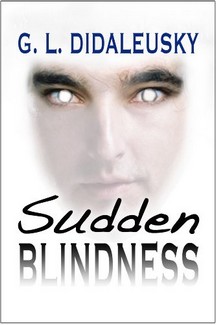
People in Ocala, a small city in Florida, face an epidemic of unexplained sudden blindness.
People in Ocala, a small city in Florida, face an epidemic of unexplained sudden blindness. The head of Ocala Regional Medical Center's emergency room, David Belmont, and his wife Sarah, a high school science teacher, seek answers to what is causing the blindness, where the blindness originated, and why it suddenly afflicts people and animals without warning or other symptoms. Their son, a high school senior, is one of the victims. These questions are baffling an experienced investigative medical team from CDC. Unbeknownst to David, Sarah and the leader of the CDC team have a mutual amorous secret.
Excerpt
Prologue
April 12
A moonless night accentuated the meandering headlights of a moving vehicle along a winding lakeside road near the city limits of Gainesville, Florida. The driver said to his passenger excitedly, "Can't believe, Carl, how easy it was break into that home. The owners were definitely sound sleepers. They hardly resisted when we tied them up in their bed."
"It's got to be our easiest home invasion yet, Eddy," Carl said, as he pulled out a flask from his pant's pocket and took a sip of whiskey from it. He then handed it to his cohort in crime.
"I figure we should get a few thousand bucks for everything. The jewelry looks expensive."
"Their lab tops are at the high end," said Carl. "We should get a good price for them too."
"What was strange in all of this, the guy seemed more upset when we took a few bottles of his homemade wine."
"Look out, Eddy!" The road made a sharp turn to the left and their vehicle continued straight ahead. The car shook violently as it sped down a wooded terrain's uneven incline toward the lake.
Eddy, squeezing the steering wheel for dear life, pushed down on the break pedal as hard as he could. Nothing happened. "Holy shit!" The break lining had obviously ruptured. His head struck the steering wheel, followed by blood cascading down from his forehead.
Carl's body lounged forward as his face slammed into the dashboard. A cracking sound came from his neck.
They flew by sparsely spaced pine trees, coming within inches of them. The car's headlights now lit up the water in front of them. Neither of them saw it, for their unconscious bodies pounced around in the front seat of the car like rag dolls. It took less than a minute for the car to submerge into the deep lake. Unless someone saw the vehicle enter the watery grave, no one would discover these two unhallowed residents.
Something in the back seat emitted a faint, yellow glow as the car sank to the bottom of the lake.
April 26th
Bus driver, Frank Murphy, said into a microphone, "We're about fifteen minutes to the Gulf of Mexico and Port Hawk."
Some people on the capacity-filled bus exclaimed enthusiastically with "Thank God!" "Hallelujah!" Others commented with a less exuberance. Most of the people on the bus were couples in their late fifties or early sixties.
Frank continued, "The casino ship's shuttle boats will be leaving a little over an hour once we stop. There'll be time to visit several little quaint novelty shops along the boardwalk."
The blacktopped two-lane road started at I-75, just south of Gainesville. Frank has been making the ninety-minute casino bus trip for the past ten years. He knows every bump and curve in the road. There are several other bus trips to casino ships on the Gulf and Atlantic side of Florida, along with the Indian casinos. Frank can't figure out why residents of Florida hadn't voted for casino gambling at hi jai facilities, dog and horse tracks in Florida. There would be a tremendous increase in tax revenue for the state. The irony in all of this, he doesn't gamble.
"How many times have you been on the casino ship?" Asked a passenger sitting behind Frank.
Frank chuckled, then said, "Only once. I got severe sea sickness."
"Was it a rough sea?"
"No. Hardly a ripple. I should've known better, since I get motion sickness on airplanes and even some elevators. I've been like this since I was a kid. I couldn't go on merry-go-rounds or any other rides at carnivals."
"What a shame. Not able to enjoy the rides."
"No big thing. I became extremely efficient at those carnival games. I always walked away with an armful of prizes."
The bus suddenly veered to the right and onto the shoulder of the road, its tires running over the ripped warning strips causing a whining sound to alert drivers their vehicle has left the highway. The low mumbling sound of passengers talking stopped, their attention diverted toward Frank Patton, who sat erect behind the steering wheel, his hands tightly grasping it.
"Is everything all right?" said the passenger behind him. Panic filled his words.
"I can't see!" Frank cried out as he applied the brakes. Within seconds, the bus jerked to the right as it headed down a slight embankment toward a row of pine trees. A moment later, the front of the bus crashed into them, killing Frank instantly.
April 27th
The early morning temperature was in the mid-sixties without a cloud in the sky as Carlos Garcia, a roofer of twenty years, climbed a ladder to the second story of a Colonial home. It was just one of several similar new houses under construction in Lewiston, Florida. The economy was finally showing signs of recover after a long recession.
"Glad to see you made it to work this morning," said Ken Tanner as he loaded roofing nails into an air-powered gun.
"I wouldn't miss it for all the enchiladas in Mexico," he said followed by a broad smile. The two of them were best friends, working together for the past several years. Carlos was a third generation American from Hispanic heritage. He comes from a family of roofers, father and grandfather.
"It's another beautiful day in paradise," said Ken.
"If you call lugging fifty pound bundles of shingles around on a slanting roof all day as paradise, I'd rather be hunting for gators," he said as he now stood on the bare plywood decked roof.
They both laughed.
"Did you hear about the bus driver that died when he cashed his bus filled with passengers into a tree yesterday?" Tanner asked, as he placed the nail gun into his belt holster. "I drove by the accident scene this morning. Not even a skid mark on the road. He probably had a heart attack or a stroke."
Carlos displayed a solemn expression. "He lived in the same town as me.
I knew him. Not personally. But talked to him briefly on occasions. You know, to say hi. How's it going? Stuff like that."
"I guess when it's your time to go. You have to go. No choice in the matter."
"Yeah. Its God's decision."
They both looked toward the ladder. The supervisor frowned at them, then barked, "I'm not paying you guys to discuss current news!"
A moment latter, Carlos and Ken, along with three other roofers began laying down rolls of tar-colored paper over the plywood roof.
One of the other roofers slipped about a foot or two as he walked over to get another roll. "Be careful," said Carlos standing a few feet away. It was the young man's first day on the job and he hadn't yet gotten used to the pitch of the roof. Carlos remembered his first few days laying shingles. It took him quit a while to acquire balance on an uneven surface. "Concentrate on what you're doing. Don't let your mind wander to other things."
"Sure will, Mr. Garcia."
"Rookie," said Ken condescendingly. He then noticed Carlos's relaxed posture suddenly tensed, frozen like a statue with arms straight out in front of him. "What's wrong?"
"I can't see!"
"What do you mean, you can't see? Do you have something in your eyes?"
"No. Everything is completely black."
"Don't move. I'll come a get you, my friend."
"Please hurry!"
A mild breeze slightly raised the edge the tarpaper. It also affected Carlos, causing him to lose to his balance and stumble forward. He fell off the roof headfirst onto a concrete driveway.
Chapter One
May 16th
"Dr. Belmont, there's a twenty-year-old patient that suddenly went totally blind from no apparent cause," said Nurse Mitchell as she stopped in front of the emergency room station. David looked up and frowned. Two other doctors, who sat putting patient findings into their computer, peered toward her with austere expressions."His vital signs are normal. He is alert and orientated. His parents are with him in room two."
"Is he taking street drugs? Did he have a recent head injury?"
"Only occasional marijuana. No history of head trauma. He's been in excellent health.
"Doesn't sound good," said David getting up from his chair. He knew sudden blindness or amaurosis fugax could have many causes: Blood clot or occlusion by one the major vessels to the eye, detached retina, or a tumor in the brain near the optic nerve. These are only a few on a large list of possible etiologies.
He walked into the exam room two with the Nurse Mitchell. David immediately noticed a frightened expression on his young patient's face. "I'm Dr. Belmont." He shook the parents' hands, and then turned to his young patient. "What's your name young man?"
Josh Barton," he said as tears rolled down his cheeks. He appeared scared.
"Doctor," said his mother. Her lips quivered. "Can you help my son?"
"We'll do the best we can." He knew sudden blindness in a young person was uncommon. This would be his first non-trauma case in his twenty years as an emergency room physician. "After I finish with my exam of your son, I'll send him for a CT brain scan. It should give us some answers to what causing his condition."
"You mean blindness? Don't you, Dr. Belmont?" asked the father.
"Yes, Mr. Barton."
The mother began to sob. Her husband put his arm around her in a comforting gesture.
Belmont reached over to his right, grabbing an ophthalmoscope from its wall holder. "Keep your head still, Josh. I'm going to look into your eyes." David examined the pupils to see if they were equal and reactive to light. The left pupil and right pupils were equal and reactive to light. No evidence of drug induced blindness that would sometimes show large or pinpoint pupils. The movement of the eye globe was normal in all four quadrants. He then looked in both eyes for any papilledema or swelling of the brain or any occlusion or rupture of the vessels in the eye. The optic disc in the back of the eyes appeared normal. "That's good," he said out loud.
"What's good? Dr. Belmont," said Josh.
"There's no apparent increase in the pressure inside your brain or rupture of any vessels in the back of your eye."
"Does mean he's going to be okay? Said the mother.
"Don't know yet."
"Will he be able to see again?
"Let the doctor do his job, honey," said Mr. Barton.
"It's no problem. You can ask as many questions as you want. Unfortunately, I can't answer those questions at this time. It's only the beginning of Josh's medical workup." David could imagine the agony they're going through with their son. He has a seventeen-year-old son, Wade, graduating from high school in less than a month. The thought of his son being blind and missing the exciting life experiences that college brings would be terrible. He'd recently gotten Florida State University acceptance letter and would be starting his first semester in the fall. "You can go with him when he has his brain scan. I'm sure he'll feel more comfortable with the both of you there with him."
"Thank you doctor," said Ms. Barton as she reached over and held her son's hand.
David completed his exam and didn't find anything pointing to a specific medical cause. It was as if something stealthily reached in and turned off his vision. An orderly took him by wheelchair to the nuclear medicine department on the second floor.
"What do you thinks causing his blindness?" Nurse Mitchell asked as she closed the exam room door.
"Nothing obvious yet," said David. "Hopefully we'll have an answer after the CT scan." He walked over the ER station and typed into the computer Josh's history and physical exam. Under assessment, he put, SUDDEN BLINDNESS-ETIOLOGY UNDETERMINED. He'd been an emergency room physician for the past twenty years, the last five as head of the department, and had never seen a patient go completely blind for no apparent reason, other than from trauma, a toxic chemical getting into the eye or a detached retina. None of these things existed with this patient. David knew it was going to be a diagnosis by exclusion.
About forty-five minutes later, David received a phone call from a physician in the nuclear medicine department. "It's Carl Simon. I just reviewed the CT brain scan of your patient Josh Barton."
"Is there a tumor?" He waited for an ominous reply.
"I don't see anything. It's completely normal."
"I was sure there'd be something in his brain or near the optic nerve causing the sudden blindness," David said leaning back in his swivel chair. He was both relieved and disappointed. As a physician, one of the hardest things to do was to tell the patient they had a brain tumor. The second thing was to tell the patient they had no idea what was causing their condition. "I appreciate the call, Carl."
"No problem, my friend." Their conversation ended.
David thought about his next step. The next logical thing to do was to start him on steroids in case the blindness originated from an arterial inflammatory condition such as temporal arteritis. This eye disease primarily occurred in the elderly, not a twenty-year-old, and there was pain associated with it. Josh didn't experience any of these associated symptoms. Things weren't adding up. He'd picked up the phone and called the ophthalmologist on-call, Gary Winslow. His office was in the professional building next to the hospital.
"Gary, this is David Belmont. I'm calling from ER. I have a twenty-year-old young man with a sudden onset of asymptomatic bilateral blindness. CT brain scan is normal, along with a normal physical exam. Don't know what's causing it."
"Sounds like something at the optic nerve in both eyes, which would be highly unusual. Or something at the optic chiasm in the brain, where the two optic nerves cross just behind the eyes. Although you said, the brain scan was normal. It would have picked up any tumors in that area." He sighed, then said, "I'll be there in about fifteen minutes."
"Thanks Gary. See you then." Their phone call ended.
He walked into the exam room and talked with the parents. "The good news is there's no apparent tumor causing Josh's blindness."
"Then why is he blind?" Asked Mrs. Barton. Her eyes slightly reddened by recent crying.
"Don't know yet. I'm having an eye doctor look at him in a little while." He didn't know what else to say to them. Emergency room medicine attracted him due to the immediate treatment of common urgent and life-threatening medical conditions. Helping people in crisis gave him a lot of satisfaction. Blindness without an explainable cause frustrated him.
Nurse Mitchell appeared at the doorway. A concerned expression showed across her face. "Dr. Belmont. I need to talk with you, please."
He turned toward her. "I'll be right there." Turning back toward Josh's parents, he said, "Just wait here for the eye doctor. He shouldn't be too long." David then left the room.
Nurse Mitchell stood next to exam room four. "I thought it would be best that you see these patients."
"What do mean when you said patients? Is there more than one?"
"Yes. I have a couple. The husband is fifty-five and his wife is fifty-three. EMS brought them in. They both suddenly went completely blind while waking through the mall about an hour ago. No trauma. No other associated symptoms. Just like our first patient, Josh Barton."
"What's going on here?" He shook his head in frustration.
"Maybe they're related or know each other," she said, "this couple and the boy."
"Good point. What's their last name?"
She looked down at the preliminary chart. It was more of a folder with a few sheets of paper inside. "Collier. Robert and Linda Collier."
"Dang! That won't work. The patient confidentiality law of HIPPA prevents us from asking them, since they'll want to know why. We can't divulge medical information about one patient to another. We'll wait on that. If it's going to be essential to solve the cause of these cases of blindness, we'll find away around this law."
David and the nurse walked into the exam room. The couple sat together on the hospital bed holding hands. Fear emanated from their faces.
"This is Nurse Mitchell, again. I have Dr. Belmont with me. He's going to be asking you questions and do an exam."
"Dr. Belmont. Can you help my wife and me? The paramedics didn't have any answers of why we all of sudden we went completely blind."
"I'm sure going to my best," David said assuredly. He looked down at the nurses notes. "It says here, neither of you have eye pain, headaches or numbness."
"No," said Mr. Collier. "We've been in good health. Only an occasional ache and pain from our back and joints. We feel fine other than we're blind." He reached over and rubbed his wife's forearm in an affectionate gesture. "There wasn't any warning. My wife first went blind. Then about a minute or two later, I lost my sight. We were at the mall buying each other gifts. Our 25th wedding anniversary is tomorrow. "
David felt the beginning of tears in the corner of his eyes. He sighed. His first heart wanted to say, "Happy anniversary." His mind held him back, "No. Not now. It’s not a joyous moment."
Nurse Mitchell said, "Do you have any children, relatives or friends that I can call and let them know what's going on? We can have them come and be with you while we're finding out what's causing your blindness." Her question definitely broke the sullen moment that existed in the room. In addition, it may let them know if the Barton's are related or our friends.
"We have children. But they all live up north in Wisconsin and Illinois. We just moved to Florida about two weeks ago. We don't really know anyone own here yet."
That pretty much answered the questioned about any connection between them and the Barton's. David now knew he had to concentrate on the cause of three people suddenly becoming blind. He examined the couple and found everything normal. There wasn't any apparent eye disease, such as glaucoma, blocked vessel in the eye or a detached retina. After ordering a CT brain scan on both patients, he left the room.
As he approached the ER station, he saw the ophthalmologist, Gary Winslow, behind the counter. "Gary. How are you?"
"Doing good. But I can't say the same for your patient Josh Barton."
"What do you think is causing his blindness?"
"Don't know. My preliminary exam was normal. It may be inflammation around the optic nerve or optic neuritis. Multiple Sclerosis or chemicals such as lead can cause blindness. The problem is that there aren't any other symptoms or physical signs. I ordered an MRI of the brain to eliminate MS and a blood test to check for any chemical causes. I'll empirically start him on corticosteroids orally since this appears more like an inflammatory disease than a tumor. It's a very interesting case."
"This is only the beginning," said David as he handed him the Collier's charts.
"What do you mean?" He opened the first chart and glanced through it. "Unbelievable!" He then skimmed the next chart, shaking his head in disbelief.
"Can't believe we have three patients suddenly becoming blind in the exact same manner. It's beyond medical precedence."
"I agree," said David as he now sat next to Gary Winslow. "I presume you'll be ordering the same test on the Colliers."
"I'll see them first. But from what I read on your assessment, I'll likely order the same tests."
The emergency door at the end of the room, where EMS brought patients through, opened. They both focused their attention to three EMTs pushing wheelchairs. A man in his middle-thirties sat in the first one, a woman also about the same age sat in the second one, and an early teenage girl sat in the last one. None of them had any apparent physical trauma. They sat staring straight ahead as if their necks were frozen.
A nurse asked the first paramedic, "What do you have?"
"A family that suddenly went blind! Thank God, he was stopped for a traffic light when it happened. Things could've been much worse."
David felt every muscle in his body tense as adrenaline rushed through his arteries. The sounds around him amplified to a higher tone; his mind shouted, "What in God's name is happening?" He then looked at Gary, who displayed an expression of amazement.
The second EMT said in a loud controlled voice, "We heard there have been numerous car accidents throughout the city, a small plane crash north of here, and people injuring themselves at work. The 911 lines are being flooded with calls about people suddenly losing their sight."
David took a deep breath and then shouted, "Listen up everyone!" The other two emergency doctors, the nurses and technicians stopped from what they were doing and directed their attention toward him. "We're in a crisis situation. The emergency disaster plan is now in affect. We're going to be receiving patients from multiple accidents throughout the city."
Since Ocala General Hospital wasn't a teaching hospital staffed with physicians from residency programs, doctors with admission privileges volunteered to come in during a major accident or disaster where a large number of patients would need medical treatment and attention. A mock disaster occurred each year with the police, fire department, and all hospital employees participating with everyone having a specific task. The initial reason for the yearly training was to prepare for all the injuries after a major hurricane or a devastating tornado, or a multiple vehicle pileup on I-75--not a pandemic of blindness. David will find out if all their preparedness will be able to handle an actual crisis. As head of the ER, he'll command and coordinate the emergency plan at the hospital and all of its participants. The First Responders, which are the EMS and the three different law enforcement agencies, take control at the accident scenes.
"What's causing all these accidents?" Asked one of the nurses.
"Sudden blindness. We don't know what's causing it yet. So address all their other medical conditions and complaints first."
"Is it contagious?" shouted a lab technician.
"We don't think so," said David. That was a good question, he thought to himself. If that were the case, everyone exposed to the infected person would eventually become blind. Only time will prove it right or wrong. He leaned down and whispered to Gary. "What's the chances a virus is causing the blindness?"
"I'd never heard or seen any virus causing this," he said skeptically. "But I guess it's possible."
"We'll need the expertise of Stan Butler, the infectious disease specialist."
"Good idea," said Gary. "I'll give him a call and fill him in on what's going on."
"Thanks, appreciate it. I'm sure the other hospitals are getting blind patients and an influx of accident patients. I'll let them now what we found--which of course is nothing. Maybe they've figured out what's causing the blindness."
"That would be great if they did," he said picking up the receiver.
After talking with the ER directors at the other hospitals, David turned toward Gary, who was sitting with Dr. Butler. "Stan. Glad you made it here safely."
"Have to say, saw a few accidents driving over here. Gary filled me in on what's been happening."
"Good."
"What did the other hospitals have to say?" Gary asked, "Are they getting blind patients also?"
"They've only had a few so far," said David, "and several accident victims related to people suddenly going blind. Their diagnostic tests didn't give them a diagnosis either--same as us. If only some other symptom or sign showed itself to us, we'd be able to figure out what possibly was causing this blindness."
"I agree," said Gary, "it's frustrating not knowing what we're dealing with."
David's cell phone rang. He glanced at the caller's name. It was Laura, his wife. She'd never call him at work unless it was something important. He visualized her a few minutes ago fumbling for her cell phone and trying to dial his number in complete darkness, for she had suddenly gone blind! "What's wrong?" His voice strained with anxiety.
"Nothing is wrong," she said calmly. "Is everything all right with you? You sound upset."
"I wasn't expecting your call."
"Of course not. I just wanted to call and say I love you and miss you. And to say that I'm sorry I got so mad at you this morning for not waking me up on time."
David had gotten a call this morning, just after getting dressed, from the night ER doctor about a situation with an irate and drunken patient. His conversation with him lasted about thirty minutes. He forgot about waking her up, putting her behind in schedule. "It was all my fault. I feel terrible about it."
"I forgive you," she said."
He turned his chair away from Gary and toward the back of the room. "I love and miss you too. Sorry I answered the way I did a moment ago. I thought maybe you had lost your--"
"Dr. Belmont!" The nurse's harsh voice interrupted his explanation to Laura.
"I'll be right with you," he said firmly.
"What's going on there?" Laura said. Her voice filled with concern. "Are you in the middle of an emergency?"
That was an understatement, he thought to himself. "Yes. But it's more than an emergency."
"What do you mean by that?'
"I just declared the emergency medical disaster plan for Ocala and the immediate surrounding communities."
"My God. What happened? Was there a major train wreck causing leakage of a toxic chemical?" Laura was a science teacher at Ocala High School. She stood in the science lab at her desk as her 3rd-hour class noisily flowed into the room.
"No. Nothing like that. At least, not yet."
"I'm sure all the schools will soon receive the alert," said David. "The reason I initiated the emergency plan was due to people are coming in with sudden onset of blindness. Accidents are occurring all over the city."
"Oh my God! What's causing it?"
"We don't know."
"The school wasn't notified," said Laura. "We'll have to be in lockdown until the crisis is over. Can't take a chance and have an accident with all those kids aboard a school bus."
"You're right," said David.
"I'll let the principal know what's happening."
"If he doesn't already know now. The emergency notification plan will soon notify him and all the other principals. Just make sure everyone stays at school. The roads are extremely unsafe."
"There was another thing, I just thought about" said Laura apprehensively.
"What's that?"
"Once the parents hear that the school buses won't be running because of the pandemic of blindness in the city, they'll likely panic and drive to schools to get their children. There could be a massive increase in car crashes. It would be terrible."
"Very good point. Although if everything goes as according to plan, the residents of Ocala will receive a reverse EMS call giving them instruction in what to do and not do. We can only hope that people abide by it. I'll let you know if anything of importance happens."
"Thank you, honey. I love you."
"Love you too." Their conversation ended as he put the cell phone back into its belt holder. He turned back around and saw the hospital administrator and the head of the nursing department walk toward him.
The nurse that had called his name a moment ago, said, "Ocala Police Chief Henderson is on line 2."
He picked up the receiver on the counter. "Dr. Belmont."
"It's Chief Henderson. I received the call from the hospital about the disaster plan starting. Have you found out what's causing the blindness?
"Not yet," said David.
"As you know, vehicle accidents are occurring all over the city. I've talked with the Sheriff's department and the state police. I've also talked with the other hospitals' emergency rooms. We're all coordinating are efforts."
David thought about what Laura said. "The school buses have to be shut down."
"All the schools will soon be notified about keeping the children there until further notice. The reverse 911 call had also gone into affect telling people to stay in their homes due to dangerous conditions on the roads in Ocala."
"Déjà vu," David whispered.
"What did you say?"
"Nothing important. Just that things are going according to plan. Thanks Chief. I appreciate the update."
"You're welcome. Talk to you later."
David reached over and placed the receiving back on its base.
The hospital administrator, Edward Strom, who was standing with the head of nursing, Janet Lewis, said, "We called all essential hospital employees on the afternoon shift to work, including employees that on their day off."
"Great," said David. "We'll definitely need them."
"How many people are affected by this blindness?" Asked Nurse Lewis.
"Seven so far. Unfortunately, according to the paramedics more are on their way by EMS. To put it another way, we're only seeing a slight breeze now. Soon the hurricane winds will hit us."
Nurse Lewis looked around briefly. "We're not going to have enough exam rooms for all of these new victims when they come in?"
David frowned. "We'll do what we did last year during our mock disaster."
"I wasn't here last year," she said. "I've only been with the hospital for the a few months."
"Sorry. Forgot you're the new kid on the block," he said lightheartedly.
"No problem."
He stood up and said, "The patients that only present with sudden blindness without any other medical problems or injuries will be put in the hallway between and across from the exam rooms. After they're evaluated, the patient will be immediately admitted to the medical floor where the majority of the admission paper work will be done. That way we'll have the six exam rooms for trauma patients needing immediate attention and treatment."
"It's pretty much the same at the hospital I previously worked at," said Nurse Lewis, nodding.
"We'll soon have to deal with barrage of news media people at our doorsteps," said Mr. Strom. "They'll be asking a thousand questions. I'll make sure hospital security keeps them out of the ER. Everyone here will have enough to do without worrying about reporters bothering them."
"Appreciate that," said David.
"I'll get back to my office," said Strom. "I'm sure my secretary has a stack of phone messages in regards to the situation here. Talk to you soon." He left the ER hurriedly.
"I'll help with triaging and make sure the nursing staff has everything they need," said Nurse Lewis.
David nodded. "All our preparatory disaster training will now be put to use.
I'm sure everyone will do their best."
Just as he made that statement, the ER doors opened. EMTs pushed a man lying supine on a stretcher through the doorway. The patient's head was wrapped with an elastic gauze tinged with blood seeping through it. A hard cervical collar supported his neck. A splint encompassed his right arm, which lay next to him. The previous somewhat quiet ER atmosphere changed to the shouts of triage nurse, "What do have?"
"A thirty-eight-year-old man with a broken arm and head laceration," said the lead EMT.
"Is he blind?"
"No. But the driver in the other car was. He'll be coming in shortly with the other EMTs. They pulled up behind us outside."
"Exam room three!" Barked the triage nurse.
David took a deep breath, and then whispered to himself, "God help us if this blindness is contagious."
Chapter 2
The bell rang for the start of the 3rd period as Sarah announced, "Now class listen up. Open your lab book to page 76 and began reading about Boyle's Law. You're going to do an experiment demonstrating this principle. I have to run to the Principal Carter's office for a moment. Ms. Randolph will answer any questions you may have while I'm gone." The twenty-one year old student teacher sitting next to her desk nodded, acknowledging her temporary authority over the class.
Sarah left the room and headed down the empty hallway, her leather-soled shoes tapping against the marble-like floor creating a clicking sound as she hurried to the principal's office. She'd been teaching at the school for about eighteen years and had the reputation amongst the other teachers as the go-to-person for any questions regarding events at the school for staff or students. She was an organizer and got things done the right way on time. There had been opportunities for her to advance to administrative positions such as a principal, but she turned them down. Her love was to teach science.
The office of the principal was now a few feet away, on the door it read: BOB CARTER, PRINCIPAL. As Sarah reached out to open the door, she saw him standing next to his secretary's desk. She'd had only been working for him for less than a week. Mr. Carter's secretary of ten years was on maternity leave. Sarah entered the room. He abruptly turned and looked toward her. He appeared surprised. "I was just about to call for you."
"Oh. You must have heard about--"
Before she could finish, he said, "Your son, Wade, is in the school nurse's office."
Her mind conjured up a picture of him with a sprained ankle and an ice pack against it. He seemed to be accident-prone the past couple years, injuring different parts of his body for one reason or another. They contributed his clumsiness to a rapid growth spurt over the past three years. He went from a five-foot, nine-inch sophomore to a six-foot, two-inch senior. "What for this time?" Sarah said matter-of-factly.
"He claims that he can't see."
She felt as if an arctic wind blasted against her, as an ominous chill spread throughout her body. It can't be happening to her only child. He must be playing a practical joke, wanting to get out of class. But she knew that wasn't true since there were many other cases reported throughout the city. "He's not faking his blindness," she said emphatically.
Mr. Carter frowned."How would you know that?"
The phone rang. "Excuse me," his secretary said as she quickly picked up the receiver. Carter took a few steps toward Sarah and stopped.
"That's the reason I came here to talk with you. David called me from the emergency room at the hospital. There are other people in town suddenly going blind. He doesn't know what's causing it. We need to keep--"
Before she could finish, the secretary announced, "It's the superintendent's office. All schools are in lockdown. People throughout the city are suddenly going blind for no apparent reason. The emergency disaster plan is now in affect due to all the multiple vehicle accidents. It's extremely unsafe to drive. The busses are grounded, not allowed on the roads, and no one is to leave the school until further notice. So what Mrs. Belmont said about her son's blindness is true."
"I didn't doubt her word about her son being blind," he said nodding toward Sarah. "I've known Mrs. Belmont and Dr. Belmont for many years."
"I have to go to the nurse's office," Sarah said anxiously.
"Go. I'll notify everyone in the school about what's happening." He sighed, and then added, "I'm afraid we might have others go blind."
Sarah rushed out of the room.
The sign on the door read, SCHOOL NURSE. She opened the door and entered. No one was in the front office. In the back of the room through an opened doorway, she saw Wade sitting on an exam table facing her. As she got closer, she noticed her son had a blank expression on his face. He obviously couldn't see her.
Nurse Conner, who stood next to Wade taking his blood pressure, removed her stethoscope when she saw Sarah enter the small exam room. "Mrs. Belmont, I was--"
"Mom! I'm scared! I can't see!" Wade interrupted as his sightless eyes moved back and forth, searching for her in the room; tears began cascading from the corner of his eyes.
Sarah hurried to her son and gently stroked his face with her comforting fingers and wiping away the tears from his cheeks. "I'm here now."
"What's happening to me, Mom?" His voice filled with fearful emotions.
"We don't know yet."
"You mean you and Nurse Conner?"
Sarah looked at the nurse, "I haven't talked with her yet. But I'm assuming she doesn’t know what's causing your sudden blindness."
"No. I don't have the slightest clue," she agreed, then turned and removed the blood pressure cuff from Wade's upper arm.
"Then who do you mean? Wade questioned as his mother now held onto his hands; his voice sounded less anxious.
"Your father called me a short while ago and said that he's received other people in the ER with the same complaint of sudden blindness. He or anyone else as of yet has found the cause of it."
"Will I be blind the rest of my life, mom?"
"Don't know," Sarah said. "We can only hope it's a temporary condition."
"We can go into the other room now," said Nurse Conner.
Sarah took her son's hand, walked into the front office and sat him in a chair next to a desk.
"Are you here to take me to the hospital to see dad?"
She definitely wanted to do that but knew it would be dangerous to travel on the busy streets. There was an alternative, she thought to herself. Before she could answer, the front office door swung open and struck the wall with a load bang, starling the three of them. A female student rushed into the room arm-to arm with a male student guiding her. "Please help me! I can't see!"
A few seconds later, the math teacher was lead in by male student. "Mr. Edwards went completely blind while standing at the chalkboard. He needs help."
"My God!" Nurse Conner said shaking her head in disbelief. "How many more are going to lose their sight?"
"Unfortunately there are likely going to be more," said Sarah.
"I've handled an outbreak of the flu at the school a couple of years ago, sending them home to be treated. But this…it's something I've never heard of or read about in any of my nursing journals. These patients all need to be in a hospital."
Just then, the screeching sound from the overhead PA system got Sarah's--and everyone else--attention, as she waited for an anticipated announcement about the crisis. "This is Principal Carter. The school is in shutdown due to numerous cases of people in Ocala, including students and teachers in our school, suddenly losing their sight today."
That means they'll be more students and teachers soon arriving here, thought Sarah. There wasn't any treatment according to what David had said earlier on the phone from the ER. She'll have a hard time just waiting and doing nothing.
"Everyone must remain in their classrooms. If someone needs medical attention, bring that person immediately to Nurse Conner's office. Again, stay in your rooms. Your parents are being notified of the situation. As soon as I hear any new information I'll let you know. Stay calm."
"Easy for him to say stay calm," said the blind girl. "He can still see."
Another student and the assistant janitor came into the room escorted by students. Fear captivated each of their faces. The clinic was now reaching its maximum capacity. Sarah looked toward Nurse Conner and said, "We'll need more space for everyone."
"I agree."
"How about the teacher's lounge? It's at least three times larger than this room, and it has chairs and two couches to accommodate a large group. You can initially assess them in here and then send them to the lounge where they'll be much more comfortable. Plus it's directly across the hall from here."
"That'll be great. Good idea, since we can't take anyone to the hospital until after the lockdown." She turned her attention to everyone in the room and said, "Listen up. After I exam you and ask you some medical questions, I'll have the person that brought you here, take you across the hall to the teacher's lounge." She took the first patient, the math teacher, Mr. Edwards, into the exam and closed the door.
Sarah grabbed Wade's hand and left the room. Once in the lounge, she sat her son on the couch next to her. "I wish there was more that I could do for you."
"Do you think dad and the other doctors at the hospital will soon find what causing this blindness?"
"I'm sure they will," she said glancing at her watch that displayed 10:45 A.M.
A few minutes later, a student came into the room. "Mrs. Belmont! Nurse Conner needs you right away!"
"What's wrong?" Sarah asked as she got up from the couch.
"Not sure. But she seemed very concerned."
"Wait here with Wade."
"Yes, ma'am."
Sarah hurried out the door, not knowing why the nurse she needed so urgently. She didn't have a medical background. Although being a doctor's wife, she'd picked up a lot of medical knowledge assisting David through medical school by quizzing him on study cards with questions and answers he'd prepared before a test. Sometimes she thought she could have passed the test for him. During his emergency room residency program, he'd come home and talked to her about interesting medical cases, and how he had treated them. In fact, she did have a lot of peripheral medical knowledge. In addition, she taught biology and knew animal anatomy and physiology. She entered the clinic and saw Nurse Conner in the exam room talking to Mrs. Phillips, the teacher assistant, who appeared to be in her mid-fifties.
"Mrs. Belmont. I need your advice."
"Okay. How can I help," she said calmly."
"Mrs. Phillips' blood pressure is 190/ 120. She forgot to take her hypertension medications this morning. And she's having a terrible headache. I'm afraid she may have a stroke or heart attack if we don't get her pressure lowered. I don't have anything in my medicine cabinet that would help lower it. I called 911 and they told me because of the crisis in Ocala, an EMS unit wouldn't be available for at least an hour or two."
"She'll need treatment before then. Even if we found someone in the school taking a blood pressure medication, it won't be a fast acting prescription. That's reserved for an emergency room or paramedics." It then dawned on her why Nurse Conner called here. "Do you want me to drive her to the emergency room?"
"Yes. That's if you want to?"
Sarah nodded. "Of course I will." Excitement engulfed her, as she would be doing something other than sitting around. In addition, even more important to her, she'd take Wade with her to the ER where David could evaluate him. All three of them would then be together during this crisis. "I'll let the principal know what's happening."
"I've already called him. He agrees Mrs. Phillips needs to be taken to the ER. I mentioned your name of the person to drive her there. He was sure you'd agree to it."
"Mr. Carter knows me well," she said, followed by a chuckle. There were other times over the past twenty years she'd volunteered her time for the school such as filling in for a sick chaperone on a field trip or driving a student home when they missed the bus. "I have another suggestion."
"What's that?" Nurse Conner asked.
"I'll take the patients out there," she said glancing toward the office, "to the ER with me."
"I agree since they'll need to be admitted to the hospital eventually anyways," she said. A few seconds later, a concerned expression appeared on her face. "I just thought of something. Something we may have overlooked. What if you suddenly go blind while driving them to the hospital?"
"Good point," Sarah said, and then glanced away briefly, thinking whom she could sit next to her in the SUV. "I know. I'll ask my student teacher, Ashley Randolph. She's single and without any children. There's no one dependent on her during this crisis. My lab class is small and can sit in the library until the 'all clear' is called. I'll call Mr. Carter and let him know what we decided."
After calling the principal, she went back to the teacher's lounge and told Wade what had just transpired, and that she'd be back to get him and the other blind victims. About fifteen minutes later, she returned with Ashley. While Sarah had been way, two more people where added to the hospital trip list, a11th grade boy from gym class and a 10th grade girl from history class. Both became suddenly blind without any other complaints before or after it occurred. Sarah now stood next to Wade, holding onto his right hand, as she glanced at everyone in the lounge. The blindness had inflected both genders, three ethic groups: blacks, whites and Hispanics, and different age groups from teenagers to late forties.
"Will there be enough room in your vehicle for everyone?" Nurse Conner asked, standing to her right.
"Yes. It's a nine-passenger. Exactly enough seating." Prior to six months ago, she only drove a compact vehicle with enough room for only four adults. David felt the car, being so small, was too dangerous to drive on the highway. He'd seen enough serious car crashers and realized a larger vehicle decreased the chances of a more serious injury. She finally agreed with him and traded her car in for an eight passenger Chevrolet Suburban. She now knew it had been the right decision. Sarah turned toward everyone in the room. "Listen up!" The low rumbling mixture of words throughout the room ceased as the patients and their escorts stared intently at her. "We're ready to go to the teachers' parking lot. So follow me in a quiet and orderly manner holding onto the arm of your escort. Once we get to my vehicle, the escort will go back to their respective class."
"Call me when you get to the hospital," said Nurse Conner solemnly. "I'll worry about your safety until you get there."
"I'll definitely call you."
"Here's my professional card. My cell phone number on it," she said handing it to Sarah.
"Thanks." She put it into her blouse pocket.
An eerily deserted hallway extenuated the rhythmic clunking of their feet against the tiled floor, not encountering one student or a teacher on their somber trek out of the school to the parking lot. It took several minutes to reach the Suburban. The immediate area around the school lacked any activity or the sound of students chattering. Once everyone secured their seat and buckled up, Sarah took a deep breath and said, "We're ready."
Sarah pulled out the school parking lot onto the four-lane divided highway. There were only a few vehicles on the road, not the normal heavy traffic this time of the morning. The word about the bizarre cases of blindness occurring randomly throughout the area must have reached the residents.
"Not much traffic," said Ashley peering out through the front windshield.
"No there isn't...which is good. Less chance of someone crashing into us."
As Sarah drove cautiously toward the hospital, she noticed an occasional car or truck pulled partially onto the medium. Had the driver suddenly lost their eyesight? That would have been the likely scenario, she thought to herself. Just as that thought crossed her mind, a panel truck up ahead of them in the oncoming lanes began to swerve back and forth erratically. It then crossed the medium and headed toward Sarah and her passengers.
Ashley leaned forward, peering to her left. "My God! It's coming right toward us!"
Sarah had already seen it a few seconds before. She pushed down on the gas pedal, hoping it would take them out of harms way. The panel truck missed the back of their vehicle by not more than five feet. Her quick decision to accelerate instead of applying the brakes was obviously the right choice. She glanced into the right side-view mirror, the driver miraculously stopped within inches of a light pole. She sighed, then said, "That was close. Plus no one got hurt. Thank goodness."
"What happened, Mom?" Wade said anxiously. He sat directly behind her.
"A truck lost control and crossed the medium."
"Do you think he went blind like the rest of us back here?"
"More than likely. Unfortunately."
"I'll call 911," said Ashley, "and let them know about the driver in the truck."
"Good idea. I didn't see anyone sitting in his passenger seat when the truck came toward us. The man will definitely need help."
After talking to the 911 operator, Ashley said, "The operator said that the road about a half mile ahead of us is completely blocked by a major accident. No way to get through due to downed power lines across the intersection."
"Damn." She thought a moment, then said, "We'll turn right onto the next side street and then left onto the first cross street we encounter. In other words, we'll make a large U around the accident scene up ahead. It'll probably be safer driving side streets anyway."
A moment later, the Suburban traveled about fifteen-miles-an- hour down East 34th Street. The heavily treed street was picturesque with braches forming a canopy with periodical rays of sun light beaming on the blacktopped surface. If it weren't for the ominous situation facing the blind occupants of the van, Sarah and Ashley would've fully felt the serenity of the scenic residential road.
Sarah reached toward the dash and turned the radio on to one of its preset local stations. County music stirred the solemn atmosphere inside their vehicle. "Do have to listen to that music, Mrs. Belmont?" said one of the students. "How 'bout Rock 2010."
"No," barked another student. "Let's listen to Hits 1030." Other students interjected their favorite radio station.
Sarah raised her eyebrows, shaking her head back and forth. "Why don't we just listen to silence?" She turned off the radio. "I guess that wasn't the best idea by me this morning," she said directing her statement to Ashley.
"Making music choices for teenagers is an impossible proposition."
"Isn't that the truth." They both chuckled.
From behind a parked van to their right, about a couple of hundred feet up ahead, darted a woman with probing outstretched arms. Sarah slammed on the brakes, the tires' treads screeching as it pressed against the warm blacked-topped road. A few of the kids screamed as they suddenly lounged forward, the seatbelts restraining their bodies from slamming into the seat in front of them. Ashley had already braced herself for a possible impact of the person against the front end of the Suburban.
The Suburban came to a complete stop as the front bumper just barely touched the woman, who appeared to be in her early fifties. She gazed up through the windshield, her expression filled with horror. "Please help me! I can't see!"
Sarah took off her seat belt and turned around. Anxious faces stared back at her. "Is everyone all right?"
A mixture of voices gave a yes reply. Then Wade said, "Why did we stop, Mom?"
"A woman ran into the street. We almost hit her."
"Is she blind like the rest of us back here?"
"Yes. Ms. Randolph and I we'll be getting out to help her. Everyone stay put. Be right back."
When they got to the woman, she had a disheveled appearance; her blouse halfway pulled out her slakes with grass stains and torn material across its knees. She had apparently fallen to the ground a few times. "I need help," she pleaded.
"Are you hurt?" Sarah asked touching the woman's shoulder in an attempt to calm her.
"Don't think so. Just some sore areas on my arms and knees from falling. I just can't see." Panic filled her words.
"What happened?" Sarah said, knowing what the woman would likely answer. "Everything went suddenly black while driving. I pulled over blindly to the side of the road. It's a miracle I didn't hit anything."
Sarah and Ashley noticed her small car angled across the curb and sidewalk between two large trees. "We agree you were lucky not running into a tree," said Ashley.
"My cell phone wasn't in my purse. I probably left it home. Although it maybe in the car somewhere. I must call my husband at work and tell him what happened. He'll worry to death if he calls and can't get a hold of me."
"You can use my cell phone to call him," said Sarah, "but first we should get you inside of vehicle and off the street. You should know there are other people like you in Ocala that suddenly lost their vision. We're in a state of emergency. Only essential vehicles should be on the road."
"I was wondering why there wasn't much traffic on the road this morning. Then the bad accident at the intersection caused me to turn around and come up this street."
She frowned, then added, "Why are you two...? Are you police officers?"
"No. We're schoolteachers from the high school taking some students and teachers to the hospital. They lost their sight like you, and one of them has an elevated blood pressure that needs treatment. That's why we're on the road. And I think it would be wise that we take you to the hospital too. As I said a bit ago, you can call your husband. Let him known you're on your way to the hospital with us."
"Thank you very much, Miss…"
"I'm Sarah Belmont," she grasped the woman's hand and gently shook it. And this is Ashley Randolph, my student teacher."
"Please to meet you both. I'm Anne Smith. Just a housewife."
"You mean, domestic engineer," said Sarah. "It's a highly skilled profession."
A slight chuckle and a smile burst from the previously forlorn victim. "Thank you. You're very kind."
Sarah put one the male students in the back of the carpeted luggage area behind the back row of seats, and then sat Mrs. Smith in his seat. While they were doing that, Ashley moved the skewed car back along the side of the road. During this incident, Sarah noticed a few people peering through the front windows of their homes. At first, she wondered why they didn't come out and try to help Mrs. Smith. Then it dawned on her why. They more than likely heard about the tragic cases of blindness plaguing the city from the reverse 911 message and from breaking news on the radio and TV, and were afraid if they got near her, they'd come down with it.
She turned left at the first cross street and headed toward the hospital. Would there be another incident before they got to their destination? Sarah prayed there wouldn't be.
"Oh, my God!" Ashley put her hands up to her face.
|