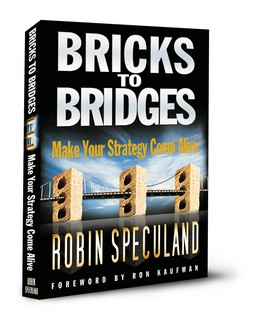
Category: Action/Thriller Publisher: Bridges Business Consultancy Int.
ISBN-10: 9810502710
Pages: 275
Copyright: September 27, 2005
ISBN-13: 9789810502713
Introduces why change management does not work for implementing strategy and provides a deatailed framework for syccess.
Created Your Strategy? Ready To Implement It? Expecting Tremendous Things? Great! But Wait... Most strategy implementation efforts don't work out; they fade along the way or simply fail to deliver expected results.
Just like an individual who plans to go on diet or intends to exercise, it's not the plan that makes the difference; it is implementing your plan that delivers effective results. Organizations have the same problem and need a powerful solution. This book shows you how to make your strategy come alive.
https://www.youtube.com/watch?v=2g296uVCJUY
Excerpt
Implementation Fundamentals
The Implementation Fundamentals are the basic guidelines to consider when implementing your strategy. They are divided into eight traditional and six new fundamentals. The eight traditional fundamentals draw on the lessons of bygone years and should sound familiar. The six new ones draw on research conducted by Bridges over a five year period. The research, conducted across South East Asia, identifies the state of strategy implementation according to individuals in both multinational and local companies who shared their experiences of putting different strategies in place.
Eight Traditional Fundamentals 1.Communicating the Vision 2.Identifying Obstacles 3.Creating a Sense of Urgency 4.Training 5.Identifying Change Agents 6.Rewarding and Recognizing 7.Setting and Celebrating Milestones 8.Monitoring Success
Six New Fundamentals 1.For the Right Results, Take the Right Action 2.Double the Effort 3.It’s not Rocket Science, It’s Discipline 4.Controlled Chaos! 5.Theory Promises: Success Sells 6.Constant Review
Eight Traditional Fundamentals
1. Communicating the Vision
For many organizations, implementing strategy starts with sharing the vision across the whole organization. This vision, a description of the future state of the organization, should act as the base on which the strategy is founded and inspire employees to achieve new heights. By leveraging it, leaders can speak positively about the future and provide a solid platform for sharing key activities. The vision is also a rallying call to galvanize staff. (Chapter 6 provides a framework on how your vision can be communicated effectively.) Bill Gates rallied the people at Microsoft around a vision of “a computer on every desk.” Today that may not seem like much of a challenge, but remember, Microsoft was founded more than 25 years ago at a time when most of us did not even know how to use a computer (and were hoping we wouldn’t have to learn!). Having fulfilled that vision, today, Microsoft’s vision1 is to “enable people and businesses throughout the world to realize their full potential”.
2. Identifying Objects
Project yourself into the future. The year you identified for your vision to become a reality has arrived! You are so successful, Fortune Magazine has put you on its front cover. Close your eyes for a moment, look at your cover and read the headline, then open your eyes again and write out the headline you saw. Now, while your mind is still in the future, reflect on all you had to overcome to achieve today’s tremendous results. Write down the main obstacles you encountered. Once you’ve completed your list, bring yourself back to the present and prioritize the obstacles. Now ask yourself, “What do I need to do today to overcome the obstacles I identified?” This simple exercise is a powerful tool to help leadership teams identify the strategies needed to achieve their desired results. Leaders prepare the organization for the journey ahead by identifying the expected obstacles. Bridges worked with a financial institution that wanted to counterattack an aggressive move in the market by its closest competitor. Its new strategy was based on creating value using an innovative e-commerce approach.
Before launching this strategy, team members came together from all over the region for one day, to discuss the details. A goal of the meeting was to identify the perceived obstacles, including lack of communication across the group, confusion about roles and responsibilities, budget concerns and client response. They then ranked these obstacles in order of their importance to make the strategy work and most importantly, identified a counter activity to overcome the obstacles. The planning didn’t stop there. As follow up, the leaders agreed to review the counter activity every week for the first three months and then every month after that. They wanted to ensure that the strategy was removing the obstacles as planned.
3. Creating a Sense of Urgency
“Why change?” is a question commonly heard by leaders preparing to implement their strategy. One effective response to pre-empt and overcome staff resistance is to create a sense of urgency about the change. (This is discussed in the Biz Case segment in Chapter 5.) The urgency may be driven by shrinking market share, poor customer satisfaction or poor productivity. The leader provides bestÐcase and worstÐcase scenarios to create a powerful contrast that will encourage staff to participate and adopt the new strategy. As an example, a property company in Hong Kong wanted to change its leadership style after the new CEO identified that the existing style wouldn’t be effective in the 21st Century. The company’s current results and financial projections were excellent and the CEO knew that any proposed changes would be questioned and challenged. After all, why fix what wasn’t broken? The CEO, however, conducted some customer research and was horrified to see the poor ratings and feedback customers gave the organization. He also noted the organization’s reputation for its lack of response to customer concerns and complaints. Paradoxically, this information provided the needed sense of urgency. The CEO drew a correlation between customer satisfaction and revenue, and demonstrated that customer satisfaction was a lead indicator of profits.
It takes you to a dark place in the company of two of New York's finest detectives as they go the extra mile to bring a sadistic serial killer to justice.
I have taken pride in writing this novel as so many people have the wrong impression on bikers because they dress in leather clothing which is to protect themselves in case of an accident. The majority of bikers are known Policemen, Firemen, Doctors,
Children will enjoy reading and hearing about the silly antics of a puppy still learning how to be a good listener. This story is about Riley, a cute, little, rescue puppy who gets into all sorts of predicaments.