
Kindle Edition
Download to your Nook (eBook)
Download from Smashwords (eBook)
Amazon
Amazon
Barnes & Noble
Category:
Self-Help
ISBN-10: 0998545902
Pages: 393
Copyright: 2017
ISBN-13: 9780998545905
Price: $9.99 (eBook)
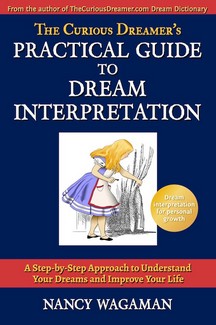
We all want to be better people and do better in our lives (well, most of us, anyway). Yet we consistently ignore one of our most powerful sources for personal transformation: our nightly dreams. One dream can change a dreamer's life. My new book shows readers how to interpret dreams and then use them to improve themselves and their lives, step by step. The Curious Dreamer’s Practical Guide to Dream Interpretation is "a valuable resource for dreamwork," according to Dr. Henry Reed ("Father of the Dreamwork Movement").
What's different about this dream book is its practical approach to both interpretation as well as dream follow-up. First, readers apply the “dream team” of analysis and intuition to explore dream meaning, choosing from 25 exploratory analysis techniques. They then select from 15 transformative techniques such as forgiveness, acceptance, and reframing to deal with issues brought up by the dream, facilitate healing, and follow up with appropriate action steps.
Pay attention to your dreams and they can change your life...if you can just figure out what they mean. Like a personal dream coach, this book walks you step-by-step through interpreting your dream, finding the value in it, and using it to make positive changes in your life. Choose from 40 powerful techniques to customize a robust interpretation experience.
Demystify Your Dreams
From the creator of The Curious Dreamer’s Dream Dictionary, this guide takes the mystery out of dream interpretation. You’ll learn:
- How to apply analysis and intuition to find dream meaning.
- How dreams point to areas of yourself and your life that need attention.
- How dreams reveal your hidden strengths, greatest joys, and opportunities you might otherwise miss.
- How to discover and transform limiting factors, such as self-defeating patterns and judgments.
- How to use what you learn from your dreams to heal, improve your relationship with yourself, and create more of what you want in your life.
Answer Important Dream Questions
You may be surprised by the answers to questions such as whether your dream is likely to come true, why a dream keeps recurring, why you dreamed about a former love interest, and how to deal with nightmares.
Unlock the Power of Your Dreams
Your dreams are telling you what you need to hear every night. This book teaches you to understand them and unlock their transformative power.
Excerpt
Dream interpretation begins with a subjective dream—a story. Then, in some mysterious way, you extract some meaning or message from the dream. “Something happens” and you suddenly understand the dream’s meaning. But how?
Taking the Mystery Out of Dream Interpretation
The process of translating dream symbolism into meaning remains myste-rious to many of us. Often it’s not even clear where to start when inter-preting a dream, especially when the dream doesn’t seem to make any sense. In this book I attempt to take the mystery out of the dream interpre-tation process by suggesting a practical approach, clearly presented with step-by-step instructions. However, before starting to use it, you’ll need to learn some essentials about dreams and dream interpretation. Here’s how I suggest you use this book to learn this practical approach most effectively:
1. Learn the dream fundamentals in “Part I: The Keys to Dream Inter-pretation” (p. 1). Key topics including the human consciousness, the roles of analysis and intuition, how to recognize the true meaning of a dream, dream types and what they reveal, which dreams to ignore, and how to enhance dream recall.
2. Follow the step-by-step dream interpretation process in “Part II: How to Interpret Dreams” (p. 71) (summarized in “Quick Reference,” p. 301), and then choose from the techniques in “Part III: Dream Analysis Toolkit” (p. 103) and “Part IV: Dream Action Toolkit” (p. 217) to customize your interpretation and follow-up process.
3. Plunge as deeply into your dream meaning as you wish. The frame-work presented here enables you to identify a dream’s basic meaning or to explore every juicy bit of symbolism.
4. All the while, keep this goal in mind: Find the value in each dream and use it to improve yourself and your life.
Lay the Foundation First
What you’ll learn in this first chapter will lay the foundation for all of your dream interpretation work later. Learning to interpret dreams is a bit like learning a new language, for which you first need to learn the pronuncia-tion of each letter, the meanings of common words, and the grammar rules before you can speak the language well. Likewise, before you can speak the language of dreams well, you need to understand how dreams tend to speak, how to recognize certain clues in dreams, how to get the most from your dream interpretation, and pitfalls to avoid. So, in this chapter I share insights about dreams that I wish I’d understood when I started interpret-ing my own dreams as a young person. I share these with you in the hope that you can hit the ground running instead of having to learn the hard way.
What Are Dreams?
There is no single agreed-upon answer about what dreams are or why we have them. Dreams have been described as desires fulfilled, deepest fears played out, playtime for the subconscious mind, a cleaning out of residues from the previous day, stories created by the dreamer to occupy sleep time, random firings at brain synapses, or explorations of nonphysical levels of existence, among other descriptions. Dreams may happen for a reason, or may not. Dream researchers continue to make intriguing discoveries about dreaming and about the brain during dreaming. However, although re-search has been nibbling away at the mysteries, much about dreams still remains beyond the reaches of science.
Clues from the Content of Dreams
The content of dreams suggests a lot about them, even if it doesn’t explain exactly why they occur. During dreams, the subconscious mind often seems to create its own version of a story from the dreamer’s waking life or mind. Sometimes a dream is a close-up snapshot of a recent real-life sit-uation, and other times a dream may revisit a long-lost memory or feeling, possibly pointing to some unfinished business from the past. Occasionally, a dream may chase you through the night, threatening you with your worst fear. So, the thread of similarity that runs through many dreams is that they often seem to be related to something that’s on your subcon-scious mind at the time of the dream.
Some dreams convey a clear sense of urgency or importance. Occasion-ally a dream practically hits you over the head to get your attention. An epic story line, larger-than-life character, or overwhelming emotion might grab you and refuse to let go. Other times, you might awaken from a dream with a strong sense that you need to pay attention to it. So, dreams also often contain cues conveying the relative importance of their subject matter.
Dreamers often report strong emotions during dreams—emotions inter¬preted as positive, such as courage or pride—or emotions interpreted as negative, such as fear, anger, or frustration. You may notice that you sometimes experience emotions even more deeply during the dream state than while awake. So, these strong dream emotions may indicate a subject matter that is particularly important to you or that you care about deeply—a situation or topic that triggers a big emotional response within you.
Dreams often portray either something desired or pleasant—or some-thing feared, disliked, or unpleasant. In other words, dreams tend to de-vote a lot of their content to creating desired experiences, such as positive relationships and having fun—and to undesired experiences, such as miss-ing an exam or forgetting to wear clothes outside the house. So, the nature of dream content may suggest that one role of dreams is to help us figure out how to create more desired and fewer undesired experiences in our waking lives.
A Practical Focus
While science continues to explore questions about the nature of dreams and why we dream, we dreamers are still pondering the meanings of the images that dance across our minds each night. I suggest a practical focus: rather than spending time wondering why you had a particular dream or where it came from, I suggest that your time is better spent finding the value in each dream. If you can find a way to make sense of your dreams so that you can use them in a positive and productive way, why wouldn’t you?
|