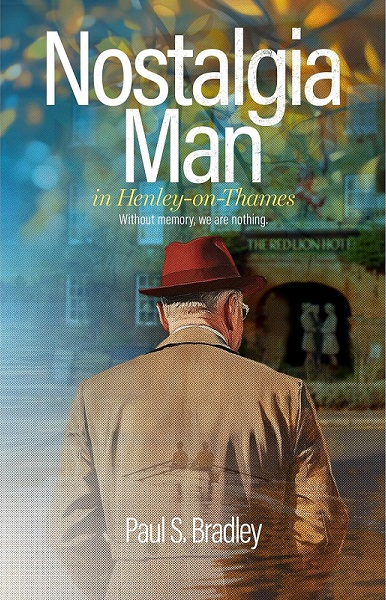
Determined to confront the hazy memories of his troubled youth, Oliver Matthews, a retired detective and confirmed bachelor, returns to the picturesque town of Henley-on-Thames for the first time in years.
An unexpected encounter rekindles the possibility of a lost love. However, this joyful reunion is jeopardised when old friends remind him of a mystery with personal implications. As Oliver delves deeper, he uncovers the disturbing truth behind why he abandoned his dearest friends. The weight and shame of his past mistakes create profound turmoil within him. He grapples with the haunting question: Is he the hero of his own story or the villain? This heartwarming journey of self-discovery and second chances explores the relevance of nostalgia. Without memory, we are nothing.
Excerpt
PROLOGUE
For as long as I can remember, but only when awake, if I hear or read the word April, a misty outline of a young woman appears in a deep corner of my mind, walking several yards in front of me. My arms are outstretched as I catch up with her, but before I can grab her shoulders, she screams and vanishes into thin air.
I agree, it’s weird. Or is it? Because as the years pass by, my memory plays an increasing number of deceptions. At seventy-six years of age, I still muddle through the shopping without a list but have no idea where this recurring daymare originates. Is it pure fantasy, wishful thinking, or maybe the remnants of a drunken event from my youth? Perhaps I’m psychic or inherited it from my forbears? Moreover, what does it mean?
I consider myself a reasonable, regular guy, don’t suffer from poor mental health, and as far as I remember, have never committed any heinous acts, so why does my mind wrestle with this convoluted phenomenon? Has my subconscious blocked out the answer, or did my neurons have their knickers in a twist? It would be nice to know one way or the other because, with no accurate memory of my life, I am nothing.
CHAPTER 1
2023
The future loomed ominously over me. The end was approaching. The uncertainty was when and how. Irrespective of current good health and sound mind, inevitably, it couldn’t last. At some point, frailty and loss of independence were inescapable. The prospect of death I wasn’t too worried about. What concerned me most was becoming a burden on others. The thought of some poor soul having to wipe my drooling spittle or dirty bum was humiliating. Far, far more terrifying was losing my marbles and kissing goodbye to memories. They are my life, which would have become pointless without them.
I could have allowed this heavy burden to weigh me down. I concluded that with such a short time remaining, I should fill it with joy, not negativity. For over seven decades, my solution for lifting spirits was to launch myself into something new. The diversion promoted a degree of sanity and purpose, which should postpone the inevitable depression or at least distract me from it.
I didn’t have a wife, children, or garden and, therefore, did not need a potting shed to escape to. Learning new things, such as a foreign language, the guitar, or quantum physics, was too late. The energy and time required would be disproportionate to the knowledge gained. I was a more than capable artist, but the thought of painting three landscapes a week to pass the time was tedious.
After exhaustive reflection, I decided the best way forward was to revisit what memory I had acquired. I could do it from the comfort of my armchair or when out walking and needed no specialist textbooks or professorial assistance.
I could have set off on this retrogressive journey when I retired as Detective Chief Superintendent of the Leicestershire Police. However, at sixty, I was still relishing the prospect of new challenges and adding more memorable moments to my ever-increasing bank. Plus, my regular Sunday morning fourball had other ideas. I accepted the secretary position for my much-loved indulgence, the local Golf Club. Sixteen years later, my patience with increasingly demanding members had all but diminished. My swing had degenerated so much it resembled a lumberjack cutting down trees. My scores were so bad that it was suggested that I use the ladies’ tees. Reluctantly, I accepted the not-so-subtle hint. With a heavy heart, I disposed of my trusty bats, binned the garish shorts, and left them to it.
What surprised me most about my newly retired status was that even though I could potter around and not do much, the days flew by relentlessly. Every five minutes, I ate breakfast and wished myself a Happy New Year once a month. Notwithstanding the ever-accelerating minutes, now I had time—plenty of time to think. It didn’t take a microsecond to appreciate that too much thinking can be dangerous.
Revisiting my childhood memories, I recalled the horror of losing my mother in a shop, the pain of breaking my arm on a swing, and the joy of boat rides on the Thames despite the disgusting sandwiches. I still grimaced at the guilt of breaking a window playing cricket in the school playground and burning baked beans at a cub-scouts cook-in. Best not to mention my first embarrassing attempt at kissing a girl on a family holiday in Cornwall. Her name was Wendy, or was it Sally?
Half an hour passed, and I failed to resolve her name, but it was an enjoyable experience. I eagerly anticipated more of the same for my teens, but it was not to be. The recurring vision returned with a vengeance.
It had popped up infrequently since my early twenties. Being busy had diluted its significance, but now that I was free of practically all responsibilities, it raised its ugly head more regularly. I found myself examining it from all angles.
Was it me with the outstretched hands? Was the woman an actual person I knew or representative of the fairer sex? Was I stalking her or approaching to ask her something? I had questions, questions, and more questions. The plethora of possible answers was overwhelming. What did it mean?
Which led me to the other matter.
On the evening of Sunday, the twenty-first of April 1968, something drove me from Henley-on-Thames, where I was born and spent the first twenty years of my life. I departed under a cloud the next day with no memory of events to hint at what transpired other than a vague sense of shame.
Even with the benefit of hindsight, I could never fathom why.
With so much thinking time on my hands, these churning elements from my youth evolved into a smouldering powder keg. I switched from one to the other so often they became foggy and confused. Were the two linked in some way or separate incidents? After several months of resisting, I conceded. I had to solve these riddles or risk losing my sanity. I ignored the adage, never go back, and opted to return to Henley. The answers must lie there.
I shared my intentions with the dwindling number of ancient friends who started referring to me as Nostalgia Man because the subject matter of my conversations had become so focussed on the past. I couldn’t disagree, but I pointed out that they also had ceased considering their shrinking futures. My solution was to remain silent about my worsening gout or suspicious mole and revisit my youth. They whined about artificial joint performance and bragged about how many tablets they consumed with their breakfast cup of tea. Sorry, but my still sharp as a razor inquiring mind remained thirsty for answers.
Notwithstanding, their advice was to let the past alone; digging it up again would bring heartache and disappointment.
I ignored them. The past was me; how could it be disappointing?
However, I knew returning to Henley would be a difficult and emotional rollercoaster of a journey. Common sense told me it would pass more smoothly with a degree of preparation to toughen up my mental muscle, so I decided to do what any modern adult would: go on a training course.
I spent several months re-experiencing the highlights of my life. Edinburgh for the Royal Military Tattoo, where the wailing pipers squeezing through the misty castle gate never failed to stir a tear. Chelsea Flower Show to treasure nature at its finest, Twickenham, where Harlequins lost to Leicester Tigers, Stratford on Avon to see Shakespeare’s Much Ado About Nothing, where for the first time I could appreciate what a brilliant comic our famous writer was. Harder, though, for this true patriot was Henry the Eighth’s stamping ground at Hampton Court, where my parents instilled in me a love of the royal family and introduced me to this island’s chequered heritage. But the most challenging assignment had been Last Night at the Proms. The awe-inspiring architecture at The Royal Albert Hall and straining to croak the high notes while singing Jerusalem had been too much; I’d blubbered like a baby. After returning home to Market Harborough from London, I declared myself ready for my life’s quest and booked my online ticket.
The train from Twyford ground to a halt at Henley-on-Thames. I struggled into my overcoat, placed my fedora hat over my bald pate, adjusted it precisely to the correct angle, grabbed my small case from the overhead rack, and, with some trepidation, joined the other passengers waiting for the sliding door to open.
As I approached the exit barrier for my first visit here in fifty-six years, my initial hesitation surged into panic. My emotions were in turmoil, and my pulse was thumping at a rate far exceeding my doctor’s comfort level. Was I doing the right thing coming back? Could such an ageing body handle the inevitable mental trauma?
The station had changed since I was there, with only a single platform remaining and the original Victorian ticket hall replaced by characterless 1980s architecture. Was this to be my sole disappointment? I hoped so.
With a population of under twelve thousand, Henley was a small but quintessentially English riverside town steeped in history. It was home to comfortably off middle classes, tourists, hi-tech engineering, ceramics, and the world-renowned Henley Royal Regatta.
The wheels of my case rumbled on the pavement as I headed into town. Outside the enduring Hobbs Marina, with over one hundred and fifty years of catering to boat trippers, I paused to look around. Floating on the river, lashed to their winter moorings, were vessels ranging from luxury gin palaces to small family-sized clinker-built rowing boats.
Alongside the riverbank were several new shops and cafes, and every other car was a Chelsea tractor instead of a beat-up Hillman Imp or souped-up Mini with a straight-through exhaust. Otherwise, it was how I remembered it.
Canadian geese and Mallard ducks glided regally by in the swirling muddy water as the five arches of the eighteenth-century Henley Bridge came into view. It was a chilly and damp December morning, with a stiff, piercing breeze blasting the few remaining autumnal leaves off the beech hedges. I couldn’t resist scrutinising the few passers-by of my age group, probably a tad too closely, searching for any resemblance to long-lost familiar faces. There were none, but I did receive a couple of cordial greetings and an oddball expression as they wrestled with their walking frames or shopping carts on the uneven pavement.
I paused outside the estate agent on the corner, which used to be Crispin’s Restaurant and later Tea Rooms, owned by old friends Rod and Edit Newbold. The building was the same, but the sign advertising clotted cream tea and scones in the window had been replaced by property details at eye-watering prices. I visualised Rod in his kitchen whites stirring the gravy for his renowned roast beef and Yorkshire while the smiling Edit dashed back and forth, taking orders and serving. It had been fifty-six years since I last saw them; what a waste of a great friendship. Had I done the right thing leaving Henley, how would life have been if I’d stayed?
On the opposite corner stood one of the most painted pubs in England, The Angel on the Bridge, a listed black timber frame and white-walled building that would never be permitted to alter anything. Distant memories of many a night there with my fellow Henley youth overindulging in local brewer Mr Brakspear’s finest ales hovered at the back of my mind. Notwithstanding, revisiting its cosy interiors and the riverside terrace was not why I was here.
It was improbable that my trip down memory lane would progress without assistance. I needed old mates to help dig into the past, but if, as I suspected, they had snuffed it already or dispersed around the globe, my mission was dead in the water. I would need to rely on good fortune or a rare coincidence to move forward, neither of which I was accustomed to. It’s why I never bothered with Lottery Tickets and relied on a dogged investigation to solve crimes rather than trust lady luck.
Suspecting that I was chasing wild geese, I trudged across the road with a heavy heart and stood outside my last-chance hotel.
The Red Lion Hotel was and remains today my favourite place on earth. Not because of its forty individually styled bedrooms, gracious red brick Georgian façade, or elegant interiors. That it was by the river was also irrelevant. I adored it because of the people I had met in its Riverside bar. At least three were beautiful women I had fallen madly in love with during 1967/8. These different relationships contributed to the man I became. My memories of them as people had stayed with me all my life as clearly as if it were yesterday. However, the nature of parting with the third and last was a complete blank.
Grace Leo was the designer of the hotel’s current adaptation on behalf of the Singapore-based investors who had joined a long line of distinguished owners. They had renamed my place, as I thought of it, Relais at the Red Lion, or in English, Coach House at The Red Lion, which is how it started life in 1732. This pleased me because to have ignored a lifetime of being known as The Red Lion and christening it The Green Jaguar, for example, would have been a travesty. As far I was concerned, they could have called it anything because, to me, and probably thousands of others, it would always be The Red Lion, the one by Henley Bridge. It was also a fantastic coincidence that the designer’s surname reflected its feline character. Could it possibly be an omen for a positive outcome?
I shivered with expectation as I surveyed my old haunt. It stood proudly between the riverbank and the parish church of St Mary the Virgin with its sixteenth-century tower. It was home to my grandparents’ memorial plaque and the final resting place for some of Dusty Springfield’s ashes, who spent her later years in Henley. Her powerful mezzo-soprano voice touched my soul, especially; I Only Want To Be With You. Whenever I heard it played on the radio, which was rare nowadays, it reminded me of Inge Lise, the first of the three women and the only true love of my life.
The red-painted statue of a rampant lion stood proudly before a billowing Union Jack over the hotel’s entrance archway. The three tall chimneys appeared as solid as ever, but other than a tasteful new sign and a restored Welsh slate roof, the three-floored redbrick building with evergreen ivy almost surrounding the windows had not changed one iota. I crossed the road and noticed a new plaque with intriguing text and an interesting mix of illustrations, portraits, photographs, maps, and diagrams adjacent to the main entrance.
I approached and read every word with avid interest. It was one of several around the town funded by Henley Archaeological and Historical Group and designed by long-time member Vivienne Greenwood. It contained a snippet of history I had failed to appreciate while living here. When James the First, the sixth of Scotland, became King of England in 1603, he commanded the emblem of Scotland, a Red Lion, to be displayed around his new Kingdom. Was this where the hotel name originated? If so, its link to the Royal family reinvigorated a sense of hope.
I strode through the same old glazed timber front door and into the lobby.
The reception desk wasn’t where it used to be, which threw me momentarily. I was relieved to spot it a few meters to the left. The walls were decorated in soft tones of contrasting beige and chocolate brown to compliment the dark timber. Large brass wall lamps added warmth and cosiness. The highly polished parquet flooring was still there, and behind the mahogany reception desk, subtly illuminated shelving displayed various ceramics. A young, uniformed woman sat behind the desk studying a laptop. Two traditional visitor armchairs faced her.
To the left of the reception was the old lounge, now the bar, separated from the lobby by Georgian windows. Several middle-aged men in suits were imbibing fancy cocktails and appreciating the low ceiling supported by timber beams. Rowing photos and artwork decorated the white walls. To the right of the lobby was the old bar, now painted white and converted into a chic café. A new passageway was where the reception desk used to be. It led to the Clipper Restaurant at the rear.
“My name is Matthews,” I told Leanne, the presentable young lady with a nametag and glasses handling reception. “I have a reservation for tonight and a special request.”
“How can I help you, Mr. Matthews?” she said.
“I frequented this hotel during the 1960s and have treasured memories of Room 181. Is it available?”
“I’m sorry, Mr. Matthews, but we don’t have a room with that number.”
“Perhaps if I describe its location, you might recognise it?”
“Go ahead, please.”
“It was on the middle floor at the back, overlooking what was then the car park. It wasn’t used much because smells from the kitchen below and car engines starting often generated complaints.”
“I know where you mean,” said Leanne. “It’s Room 118 and is available. Would you like it?”
“Yes, er, please,” I said, wondering how I could have confused such an important fact. It worried me. Perhaps other memories were equally as distorted. Leanne probably considered me a complete idiot.
She swiped my credit card and escorted me to Room 118 after I had signed the register.
“I’m ashamed to say I’ve staggered down this passageway a few times,” I said as Leanne pressed the call button of an elegant stainless-steel lift, another modification from the creaky old stairs of yesteryear. “The Riverside Bar at the end used to be one of the most popular watering holes for Henley’s youth.”
“It’s the function bar nowadays,” said Leanne. “We wouldn’t want to disturb discerning guests with rowdy teenagers.”
The lift doors closed, and we zoomed up to the first floor. Room 118 was crucial to my research. It was where my Henley days had abruptly ended on that fatal night. My expectations were high. I was sure that sleeping in its ghostly interior was bound to spur diminishing grey cells into action. From the lift, we walked along a creaky, turquoise-painted corridor through a glazed fire door and paused outside Room 118 while Leanne unlocked it. She breezed right in, but I hesitated on the threshold, full of doubt. Would the room hold the answers I was seeking? When I entered tentatively, I discovered, to my horror, that nothing was the same. My memory remained blank. I hoped the disappointment didn’t show on my face.
Leanne handed over the key, showed me how to operate the lights and air conditioning, and left me to it.
The carpet was burgundy with bold white and black stripes. The walls were painted in buttermilk and decorated with abstract art prints. The original Georgian timber sash windows were the same. They overlooked the rear of Chantry House, a fifteenth-century, lemon-coloured timber-framed building with squirrels scampering mischievously along the roof apex. The king-sized bed had a giant headboard. A Japanese-styled wardrobe provided more than adequate hanging space for my one clean shirt and underwear.
I pottered about a bit. Poking my nose into drawers and cupboards and had a pee in the luxury bathroom with a glazed shower and white marbled tiled walls and floor. Bathroom visits were something I was growing accustomed to, especially in the middle of the night. The room’s long, narrow, rectangular shape was the same, although it seemed smaller. But the smell was different. Gone were the musty old rugs and furniture riddled with woodworm. The new décor was clean, fresh, and pleasing, but it failed miserably to light any candles from the old days.
I reasoned that old friends would be unlikely to come to me, especially without warning, so I went out to explore former watering holes, wondering who I could track down.
The streets of Henley Centre, originally laid out during the thirteenth century, were a charming combination of Georgian and Victorian architecture. The older timber frame buildings tended to have white-painted facades and red roof tiles, many covered in moss.
My first port of call was our former Victorian home on Queen Street. It was a three-bedroom end-terrace house in red brick with beige brick corners and a grey slate roof. It was narrow but long, with a small, fenced garden at the rear. The sash windows were topped with cream-painted lintels. A three-foot-high red brick wall protected the house from the street, and the cream front door was set back under a recess. Other than a recent coat of paint, it was as it was. As I stood gawking at the façade, a flashback hit me.
Bodes well, I thought, as I visualised the next-door neighbour, Mr Woodford, repeating his habitual morning greeting to the dozen or so various-aged kids playing football in the street before school. Every weekday morning, on his way to the train station carrying his leather briefcase, he would say, “Ay oop, me duck,” having originated somewhere north of the imaginary divide near Watford. I wondered where those kids were now.
Family cars were rare back then, so the street was our playground. At weekends, we were thrown out on our return from Saturday morning cinema and told to bugger off until lunch.
In the 1950s, my dad was the first to have a car in our street. A green Jowett Javelin with a curved back. It came with his job, travelling around Oxfordshire and Buckinghamshire, where he sold steel to the many engineering works in the area. They produced parts for the British Car Industry spread around Oxford, Birmingham, and Coventry. My mother taught at the infant’s school, so Mrs Woodford minded me until I started there. Most women were stay-at-home mums, and it was accepted practice to help your neighbours. Their son, Barry, was my best mate until they moved away to Ipswich when we were about ten. Where did this old nonsense spring from? I thought, grinning to myself. My plan was working.
I decided to skip Gillot’s School, as it was a long way uphill, and I preferred to conserve energy for where old friends were likely to be, in one of the pubs. I did take a turn past The Henley College, where I had studied half an Arts degree, and noticed several new buildings, but none of these stirred anything from the past, so I began my search in earnest.
Henley used to be blessed with a disproportionately high number of pubs per populace, most of which I had known intimately: the pubs, not the people. But after a turn around New, Bell, and Hart Streets, I discovered many had vanished, having been converted into private houses or coffee shops. I knew where the old ones used to be but couldn’t recall their names. Those remaining had already decorated for Christmas. Twinkling fairy lights created a Dickensian ambience but without the snow. Many pubs had been built during the eighteenth century with timber-beamed ceilings. Nicotine-stained walls, horse brasses, and pewter tankards hanging over the bar created a cosy atmosphere to sit and chat with the friendly locals.
In the sixties, few pubs served more than nuts or crisps. Patrons ate at home then adjourned to their local for a convivial evening gossiping, debating the inadequacies of the local football team, in this case Reading FC, or arguing the finer points of political manifestos over a game of darts. The engaging community spirit was more unifying when compared to today’s divisive social media nonsense. They were also endearing places to meet actual potential partners rather than sorting through manufactured profiles on a dating app.
The Bull on Bell Street had survived this surgical reduction of traditional hostelries. Externally, it still resembled a private house with a gateway to stables at the rear. However, current owners had added substantial quantities of planting inside and out, including green-painted windows, and with the sparkling Christmas decorations, it was most inviting. It was much brighter and cleaner than I recall, and I appreciated no trace of the typical 1960s pub smell of stale beer and cigarette smoke. My inquiries to the bar person with an unusual accent yielded nought. It seemed that my besties, Ivan, Anita, Sonia, or John Francis, had vanished from this earth.
As my mind flashed back to youthful images of me with my dear friends, sharing a terrible joke around the window table, I had another regret attack. Why had I abandoned these beautiful people I had known since we were babies? Despite the absence of decades, these close bonds will forever be part of me. Whatever had happened on that fatal night to drive me away must have been terrible. What the hell had I done?
Ten pubs later, with no sign of old buddies, I was flagging. Even Norman Shannon and Keith had disappeared into the ether, whom I had always presumed part of the building fabric of the town. Norman, in particular, had been like an older brother. How would my life be now if he and the others formed part of it? Would I still have this annoying vision?
It was amazing that while most establishments had the same layout and appearance, the ambience of yesteryear had vanished. Gone was the jolly landlord with his repertoire of terrible jokes. Where was the camaraderie of a shared second home? These were no longer pubs but dining locations that also served drinks. I was beginning to feel that the past was a foreign country.
If I’d had an alcoholic drink in each of these establishments, I would by now be crawling on hands and knees, but on receipt of no news about my friends, I had left my card and moved on.
After yet another disappointing response to inquiries at the Little Angel, I called it a night. Luscombe’s, on Bell Street, was an intimate family restaurant I had discovered while meandering. I took a window seat providing panoramic views of Boots the Chemist and studied the menu. Following a succulent special of duck breast and a glass of Malbec, I returned to the Red Lion for a nightcap and chat with the hotel staff. Maybe they might know something. If not, I would give up and leave after breakfast, a journey wasted, a project failed. At least, I would gain some satisfaction for my attempt. I could live with that.
I perched on a stool by the bar and ordered mineral water from a young man with dark hair whose nametag described him as Antonio. After taking a sip of my drink, I asked.
“Would any staff remember the hotel from fifty-odd years ago?”
“Unlikely,” he said in accented English. “We are too young, and most are from other countries. I am from Spain, for example.”
“How about elderly regulars?”
“We are a hotel providing wedding receptions, conferences or retirement parties. People your age tend to stay home or go to their favourite pub, such as The Angel on The Bridge opposite. I see several senior citizens popping in and out at lunchtime. You should try there.”
“Thanks,” I said, feeling down.
I finished my drink and went upstairs. To my delight, it was a squeak-free, luxurious bed that didn’t sink in the middle as it had in my day. I switched off the light and settled into my usual dropping-off routine, sad about the lack of success but happy I was once again in the room haunting me for all these years.
It was rare for me to dream, let alone remember the content, but when I dropped off for the second time after the inevitable water closet break, some weird stuff started flashing before my eyes.
The first was a bright light outlining the shape of an angel with short blond hair. The second was a brief misty glow of a gelatinous woman. The third was a dark circle containing an old hag’s face with bloodshot eyes. Though I failed to interpret their significance, these ominous images kept rotating through my mind as I shaved and showered. I dressed and headed down to the Clipper Restaurant with a deep sense of foreboding.
Was the dream a message from the past or my subconscious attempt to fathom the mystery? I wondered as my pallid and tired reflection stared back at me in the lift mirror. Thankfully, my rumbling stomach was signalling attention. At my age, when food calls, an instant response is vital to maintaining an even temper. The diversion enabled me to shove the confusing garbage of the night to a distant recess in my brain.
The restaurant was a light and airy space where the kitchens used to be. To associate the hotel with the river, boating, and the famous Henley Royal Regatta, the designer had incorporated a clinker dinghy hanging over the central bench seating from the double-height ceiling. I sat near the window and enjoyed views of the terrace.
Having savoured exquisite Eggs Benedict, I looked around the room, reflecting on my failed visit over a pot of tea. It seemed unfair that my vibrant youth in Henley had left no legacy. There was not a trace of me or my mates anywhere. We were mere ghosts of the past haunting old buildings now used by a new generation.
After all those years of meaningful life, doing my bit for queen and country, I had surely earned myself the right to a place in posterity. I remembered something I learned back at college. Francis Bacon, the Irish-born painter, once said: “I suddenly realised, there it is – this is what life is like… existing for a second, [then] brushed off like flies on a wall… We are born, and we die, and there’s nothing else. We’re just part of animal life.”
Conversely, I considered the words of American Philosopher William James, who decreed, “The greatest purpose of life is to live it for something that will last longer than you.”
Which I considered arrogant and the sort of bullshit wealthy, educated people say who have never experienced a struggle to put bread on the table. Was I bothered if I died leaving nothing? No, because I’d be dead and couldn’t take a thing with me except my precious memory. This was why I returned to Henley to complete the missing blanks. I owed it to myself.
I thought back to the final night in April 1968.
I remember arriving at the Riverside bar and sinking a few pints to celebrate the first victory of our football team. The atmosphere had been electric. I tried to envisage who I was talking with. How had I ended up in Room 118? Was anybody with me? But my mind remained blank. I reverted to my police days and applied logic to the occasion. Why was all I recalled about the evening a deep sense of shame? What could I have possibly done to drive me away from my dearest friends and favourite place on earth? I suspected it had something to do with the fairer sex.
Whatever it was must have been dramatic.
Powerful enough to leave first thing the following day for Hartley Wintney in Hampshire to enrol at the police training college. My parents badgered me incessantly over breakfast and were mystified by my lack of explanation. But I couldn’t give them one because I didn’t know myself.
I completed my training and was posted to Nottingham as a bobby on the beat. Mum and Dad sold our house in Henley and headed north to be near me. They purchased a massive house off the Derby Road near the rugby club on the city’s west side. My dad became the area manager for the Dunlop Company, and my mum started at another infant’s school. They bugged me progressively less about the reasons for my departure and began a new campaign of blatant hints that I should marry and produce grandchildren. I didn’t have the heart to tell them I had vowed to drink little and remain celibate. I wasn’t aiming to become a hermit, but a desire for self-flagellation burned within me. I had to punish myself for whatever shameful deed I must have committed. It seemed the least I could do.
Despite a few close calls, I had lived a pure life. Consequently, our line of the Matthews tribe was about to disappear from this beautiful planet.
My decision not to reproduce had been a continual source of depression. I loved kids and enjoyed the patter of tiny feet on the rare occasions I visited parental colleagues at home. I’m sure I would have made a good father, but I had made my choice and clung pathetically to my decisions like the stubborn old fool I had become.
I nagged myself to stop mourning the life I had missed and celebrate the one I had. Shaking my head, my eyes filled with tears. While I couldn’t disagree with such logic, it didn’t prevent my sadness levels from plummeting to rock bottom. If only, I said to the empty restaurant, sniffed, and wiped my eyes with my fingers. This wasn’t healthy.
I peered around my surroundings, trying to spot something that might distract me from this downward spiral. The various mirrors hanging on the walls were intended to create spaciousness, but all I noticed were the numerous reflections of my miserable ageing features.
Seeing my face never ceased to confuse me. Every morning when I shaved, I saw this progressively older person staring back at me, yet the voice in my head never aged. I was still my parent’s boy.
This constant inner chatter occasionally manifested itself in lengthy diatribes or misty images. Logically, it ought to communicate with wisdom gained from the benefit of experience. So, why did it chastise me for not maximising my potential in love and life? Why did I still feel like a child demanding love and attention? After seventy-six years, I ought to have grown out of self-doubt. But the silent voice was relentless in its arguments and suggestions; it never left me alone.
I was too miserable, fat, or ugly for others to engage with me. It categorised women on my behalf into possibles, probables, or definites. It had an opinion on every aspect of my life, whether I asked for one or not. As I suffered through these nagging monologues, I could understand the usefulness of escapism through religion, hobbies, alcohol, substances, or anything to shut the damn thing up. Perhaps it was why I became obsessed with golf and solving crimes.
However, sometimes, it spoke with reason and positivity. Now, it interrupted me from nowhere and suggested that I play what-if games to distract me from wallowing in self-pity. For once, I couldn’t disagree; perhaps they would lift me out of this debilitating self-analysis.
What if one of my relationships in Room 118 had produced a mini-Matthews? Could this fantasy child be a member of the hotel staff? I glanced at the pretty dark-haired girl flitting between kitchen and servery. No matter how I appraised her, she bore no hint of family resemblance and was young enough to be my granddaughter.
I mulled over my relationships.
There had been three I could recall. Any offspring were improbable but possible. I thought long and hard about each girl and concluded that only one was a maternally minded miss. The odds on my paternal prospects were, therefore, remote. I shook my head, scolded myself for being pathetic, took my leave, and returned to Room 118.
I packed my case, used the facilities, and paused on my way out. I had a final look around, but what caught my eye was a repetition of the weird images from the strange dreams: a bright light, a misty blob, and a dark, menacing circle blinking at me from the walls. The images vanished when I shut the door behind me, leaving me shaken and crestfallen. I headed to the reception, parked my hat and coat on a lobby chair, and waited in line to check out.
While the receptionist discreetly handled a difference of opinion about room bar consumption with a bleary-eyed middle-aged man, it dawned on me how to reignite the events of that distant April night. I needed to relive those days.
The facts had to be buried somewhere deep in my subconscious. I dug some of them up when returning to the old family house. If going back had worked for my childhood, it could do the same for my youth, preferably on April 21, 1968.
I gazed out the hotel’s front window, wondering where to begin, and spotted someone leaving through the front door. He dashed through the downpour to climb into a waiting taxi. From the back, he was a sizeable athletic man in his fifties, with greying blond hair thinning on top. He paused to hand his luggage to the driver and, for a second, turned toward me.
My heart stopped momentarily.
His face was eerily familiar, particularly the ice-blue eyes.
I shuddered as if somebody had walked over my grave.
Surely, it couldn’t be. Could it?
Professional Reviews
BookLife Prize Review
Bradley weaves together an intricate and psychologically complex page-turner.
This unique mystery is a meditation on the nature of memory itself. As Oliver retraces a lost night from the past, it unfurls more questions, as well as hidden treasures.
Oliver is a fractured, multilayered protagonist who balances on a knife’s edge between hero and villain, keeping readers guessing until the conclusion.
The BookViral Review
Paul S. Bradley’s Nostalgia Man in Henley-on-Thames is a beautifully crafted story that delves into the power of memory, love, and unresolved mysteries. The novel follows Oliver Matthews, who returns to Henley-on-Thames, where he finds himself not only reconnecting with his past but also confronting its lingering questions and secrets. Henley-on-Thames, with its scenic riverbanks and echoes of the 1960s, becomes the perfect setting for Oliver’s exploration of lost love and hidden truths.
At the centre of Oliver’s journey are his relationships with three women from his past: Inge Lise, Sara, and Jenny. Each of these women held a significant place in his life, and each represents a different facet of his memories and youthful passions. As he reconnects with them—particularly with Inge Lise, whose relationship with him was filled with both affection and complexity—Oliver must grapple with how much he has changed and how much his love for these women has shaped him. Bradley masterfully weaves together these past relationships, creating a layered narrative that explores the many faces of love.
However, there is an unsettling mystery surrounding his relationships with Sara and Jenny. Both women played essential roles in his youth, yet parts of his memories of them are foggy, obscured by the passage of time and a peculiar gap in his recollections. This gap is tied to a mysterious figure, a “stalker”, who haunts Oliver’s memories and adds a layer of suspense to the story.
Inge Lise, with whom Oliver shares a particularly bittersweet bond, stands out as both a rekindled love interest and a reminder of the decisions he made in his youth. Meanwhile, Sara and Jenny’s roles are cloaked in ambiguity, inviting readers to question how they influenced Oliver’s life and what truths lie behind his fragmented memories of them. Bradley allows the suspense around Sara and Jenny to simmer quietly, drawing readers in as they, too, try to piece together the puzzle of Oliver’s past.
Bradley’s writing is rich with introspection and subtle suspense, balancing the warmth of nostalgia with the darker, unresolved elements of Oliver’s past. Through the lens of Oliver’s relationships and the mystery surrounding his memory gaps, Bradley explores themes of love, self-identity, and the ways in which people leave marks on one another’s lives—even when parts of those lives remain hidden or forgotten.
The Nostalgia Man in Henley-on-Thames is more than a simple romance; it’s a profound meditation on the allure of the past and the puzzles of memory. For readers who appreciate love stories intertwined with mystery and psychological depth, Bradley’s novel offers a compelling journey. Each character, setting, and revelation adds to the rich tapestry of Oliver’s life, creating a haunting, reflective story that lingers long after the final page. It is unreservedly recommended.
The Apple Tree Blossoms in The Fall, is the life journey of Carineh - a child, a teenager, a wife, a mother, but most of all a woman of purpose. From stories of her parents held-up by bandits; the white donkey gifted by Khomeini; her father's death f
Pieces of Eight is an eclectic collection of eight imaginative novellas/short stories. Themes represented in the work are science fiction, paranormal, psychological drama, humor, murder/revenge and astrological fulfillment. Pieces of Eight is the com
The bulk of the collection is eight short stories that are set in yesteryear. The compilation is filled out with four entertaining fantasy pieces and three poems.