
Kindle Edition
Amazon
Sam Smith books
Sam Smith books
Sam Smith
Category:
Mainstream
Publisher: samsmithbooks
Type: Fiction
Pages: 94
Copyright: January 12th 2023
ISBN-13: 9798373033978
Price: $2.99 (eBook)
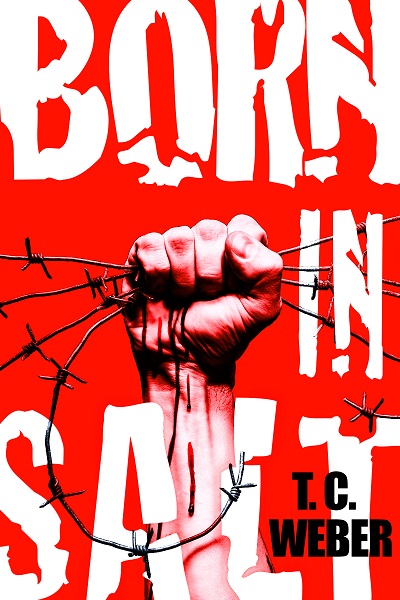
A group of men walk unchallenged out of a refugee holding centre in the UK. A public announcement declares one of the escaped to be a terrorist. They disperse.
Somewhere to the west of London a group of men wander unchallenged out of a refugee holding centre.
A refugee is a person who: ‘owing to a well-founded fear of being persecuted for reasons of race, religion, nationality, membership of a particular social group, or political opinion, is outside the country of his nationality, and is unable to or, owing to such fear, is unwilling to avail himself of the protection of that country’
This group of disparate individuals almost immediately disperse. The Seventh Man tells of their journies within the UK.
Excerpt
Five of us escaped the detention centre. I say escaped: it was more like curiosity took us through the corridors and we found ourselves outside.
What we then assumed had happened was that an electronics failure had caused – as in a fire drill – all of the doors to spring open. Although the opening was more of a hydraulics whisper than a twanging spring.
Not a lot happens in a detention centre. You wait on phone calls from your court-appointed legals or from your careworker team. And day follows day follows day.
So when the doors swished open we five looked to who might be coming through. The new arrival might be from someone's home, know the whereabouts of someone's family... Our unit had beds for six: we were five.
But no-one came, no staff looked in; and the door with its wire-mesh window remained open.
What I remember now is that not one of us spoke. An older man, a Syrian, had been about to make us tea. He was the only one standing. The television had been on, but it had been on since early, even the news was stale, and no-one had been that engaged with it.
We looked from the still open door to one another and, one by one, we began to get out of our chairs. Stepping past the Syrian we moved towards the open door. Four of us. The Syrian, broken out of his memorising of who wanted what tea, with a start decided to follow us.
First was the corridor that we had all walked down before – to meetings in the small side offices. All of their doors were open. At that point I think we were all walking forward almost unaware that we were walking.
The door at the end of the corridor was also open. We were now looking to one another in the part-hope that one of us might be able to say what had happened.
We had all been in this next corridor too, but escorted, told when to stop, when to wait. No staff appeared this evening to tell us to go back.
All was familiar but unfamiliar, like a sunlit street after a storm. Through these corridors was the way we'd come when being taken for court appearances, for interviews with officials. “Your identity has been confirmed.” By the officials that we had fled from.
Another door, a shorter corridor. In this corridor was where we became aware of noises from the floors above, shoutings, crashes. Up there somewhere was where the politicals and the mind-broken were kept.
The harsh noises had us hesitate, anticipate the appearance of staff. None came. It was the old Syrian pushed us on.
One more open door and we found ourselves hurrying towards the evening cool of outside.
“Run!”
Hands hit shoulders, and legs that had become used to wandering a single set of rooms stumbled into a foot-thumping-down gallop across a stretch of short green.
“Stop. Stop.”
Fingers clutched at shirtsleeves, sweater tops. “Walk.” So, catching our breaths, two abreast we part-stumbled, bumping into one another, along the pavement between parked cars and garden hedges.
I was near the back, looking all around, the cool outside air moving past my face and in around my neck. We were passing through a residential district, lights on in houses, some curtains unpulled, sides of television screens visible.
As I followed the others across the road – to avoid some people ahead getting out of a car – I glanced back to the high square block of the detention centre, all its windows lit. Beyond the Centre was the dark of the industrial estate.
I was not the only one who had looked back. The Ethiopian had stopped – beyond where the people had got of the car and gone into a house. “Lorries,” he signified the industrial estate.
From within the Centre we had listened to the diesel rumble of nearby lorries, had fantasised on ways we might escape.
I looked with him back along the road of parked cars. To go there would mean passing by the Centre.
“Too close.” I gripped his thin forearm, shook my head. “Find somewhere else. We need to get where people are. Or out of sight.”
The Ethiopian nodded his understanding. Walking on he rolled his shirtsleeves down, buttoned his cuffs.
With our detention fantasies fixated on the industrial estate we had none of us, on our escorted trips out, paid much attention to these residential streets.
“This way I think,” the short Libyan said. He claimed he was Libyan but his accent was wrong. One of the last to arrive he had on a Centre sweatshirt and jogging bottoms. Court appearances had allowed the rest of us to choose clothes from the laundry cupboard.
The street of cars and houses that the Libyan was taking us down had speed bumps. The Syrian pulled at his sleeve and waved a negative finger in his face, pointed back. The Libyan shook his still-clipped head and pointed forward.
It was this brief exchange that had me realise how conspicuous was our behaviour.
“We're five friends out for the evening,” I loudly announced to the early autumn evening. “Five friends.”
On our trips across to Croydon we had all commented on the mixed-race groupings we had seen on the pavements, outside cafés, the ease of their association.
Stepping by them I gave them all my biggest white teeth smile: “This way you say?” And I led us on.
As luck would have it where the road started to curve around was a footpath signpost pointing between garden fences. That took us through some trees to a, almost recognisable busier road.
“Shops along here. For sure,” the Syrian declared.
Cars passed both ways along this road. No parked cars. I saw a woman passenger looking at us.
“Five friends!” I shouted to my tense companions. The Syrian turned with a smile, gestured onwards.
“Talk to me,” I patted the Libyan's arm.
“About what?”
“Here for instance. You have somewhere to go here?”
“Scotland.” His clipped scalp twisted around, as if he was afraid of being overheard.
“Where in Scotland? A big place.”
“Hairsher.”
“Hairsher?”
“Near the coast.”
“Oh,” I said, “Ayrshire.” And I spelled it for him.
“Will need a lorry,” he said. “Or a train.”
We arrived at the row of shops. Only one shop. The four others were takeaways – a Chines, a curry house, a pizzeria and a Mexican. All except the Chinese were open.
The Syrian had paused in the door of the pizzeria. Some scruffily dressed teenage girls were grouped together by the counter. A small television was hung on the tiled wall. Outside was a rank of delivery moped. The clipped Libyan was covertly examining them.
The Syrian stepped into the pizzeria and said something to the larger, older man behind the counter. A younger man had been joking with the teenage girls while the large man had taken a phone call. Putting the phone down he had spoken sharply to the young man. That's when the Syrian had stepped in.
There was a rapid exchange of words between the Syrian and the large man. The flap in the counter was lifted and we five were beckoned through. One of the girls pulled a disappointed face.
We filed past the ovens and the stacks of flat cardboard boxes into a small kitchen at the back, stood there shoulder to shoulder.
“My brother said to wait here.” By brother the Syrian meant fellow countryman.
Three iron and plywood chairs were tucked under a small iron and plywood table. We waited. We weren't offered food, only tea. Were all Syrians obsessed by tea?
Waiting – for what none of us knew – we began discussing where we wanted to go. One of us wanted to get to family in Manchester, another to a friend in Liverpool. That left two of us uncertain. I noticed that the fake Libyan no longer mentioned lorries or trains. The quiet man from Chad suddenly announced that he had an actual brother already in the “West of the Country.” He hadn't told us any of this in the Centre. None of us there had been granted asylum, had been waiting to be sent back, once our appeals had failed.
The man from Chad declared that he was going to go overland. I told him that the West Country was a long way from where we were and that in open country drones would spot him, even in woodland. “They have infra-red sensors.”
“Lot of homeless here, my brother say. Why they bother with me?”
The large pizza man didn't allow an answer: “Go. Now. Out the back.” Pushing us aside he opened the back door and began shepherding us out. “TV news just said you six dangerous. Terrorists. Not to be approached.”
Six? Terrorists? We five looked around to one another wondering which one of us could be a terrorist. We all, probably because his story was the least credible, suspected the Libyan. In our journeys here though we had all assumed other identities, told different stories. Could be any one of us. Two had looked quickly away from me.
“You,” the pizza man closed his large fist on the Syrian's shirt, “go to this street.” I glimpsed Arabic script on a torn piece of cardboard. “Only you. You will be collected. Now go!” This big man, used to shoving people about, forcefully pointed past the empty upended pallets and plastic bins to an unlit back alley. He hurriedly said more – sounded like directions – to the Syrian. By which time I had left and, in panicked scattering, the Libyan and I had split off from the others.
I sort of knew, from my escorted trips out, the general direction to the centre of London, east from the Centre. What I was less sure of was that keeping company with a suspected terrorist was a good idea. Word has it that Border Force CCtv monitors look for groups, not solo travellers.
Just when I was wondering how to get shot of the Libyan without causing offence he stopped me. “I hang about here,” he said.
That took a moment to make sense: instinct was telling me to get as far away, to be as unconnected to the Centre as was possible. Realisation though had me laugh: “The mopeds.” One had passed us a few moments before.
“Rider got to leave outside. When delivery made. To a house. Then I take.”
“Good luck.”
We embraced. He crossed the road looking for a vantage point. I hastened eastward.
In half an hour I had crossed under a motorway and found myself among fields. A lone walker. This had me afraid. Motorway signs had told me I had to be heading north and these roads were taking me to the east.
I needed to be one of many in a city; and to be truly safe, unseen, I needed a tent city, the city within every city now. Always someone there to find me a cardboard pitch, supply me with a plastic shelter. Tent people, all with nothing, take pride in sharing the little nothing they have.
The road became semi-rural with streetlights, a rough sort of pavement. Occasional cars passed. Tense I kept waiting for the sound of a car drawing to a stop behind me, burst of a police siren, blue flicker of police lights.
I arrived at another estate of parked cars and garden hedges. Bedroom lights glowed behind curtains.
The one bus shelter was made of see-through perspex, would offer me no safe shelter. Front gardens were open, with high fences and high gates blocking the back gardens of even those houses said to be for sale.
The houses came to an end and I walked into the semi-dark of another country road, the sky-red glow of London to the left ahead.
I was still the sole walker, stopping and pressing myself into hedges, warily standing on soggy verges whenever a car came along. Tired I climbed a weed-grown gate into a small woodland, sat with my back to a tree, and slept.
When I heard the morning traffic reach a busy pitch I climbed back over the gate and continued my walk, striding out, arms swinging, to warm myself. Very soon it was one pavement giving way to another. Then there were sleepy, sometimes stationary, dogwalkers. Women wrapped around in dressing gowns waiting for their dog to finish sniffing. One heavy runner in black leggings had me stumble off a pavement edge. Then came single individuals dressed for the office and hurrying past me, dodging around me.
So it was that street by street I coalesced into the city, metropolis anonymity coming ever closer, furthermore holding out the promise of assured invisibility within a tent city. I reassured my flattened feet that to any disinterested onlooker I was but one other human being going about his business, and looking to create another new non-identity.
|