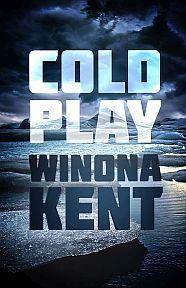
Forget The Love Boat. It's now. It's Alaska. And ship's entertainer Jason Davey hates that theme song. After the death of his makeup artist wife, musician Jason runs away to sea, joining the aging, much adored and soon-to-be-retired Star Sapphire. But a frightening shipboard incident and a psychic friend's dire warning shatter Jason's fragile sense of security. And when three passengers from Jason's past embark in Vancouver, the Sapphire's final cruise to Juneau, Skagway and Glacier Bay becomes a trial by fire and ice for Jason, his beloved ship, and everyone on board.
Jason Davey has literally run away to sea after the death of his makeup artist wife, finding work as a contract entertainer aboard a much-adored but soon-to-be retired cruise ship, the Star Sapphire.
But when three people from his past come aboard as passengers, Jason's routine week-long trip to Alaska becomes anything but.
First, a frightening, middle-of-the-night fire shatters his fragile sense of security and sets the rest of the crew on edge.
Then SaylerGurl, an anonymous and delusional stalker from Jason's Twitterlife, begins sending him taunting and threatening messages from somewhere on board.
Jason's wife was once employed by Diana Wyndham, a beautiful, aging and eccentric actress. Now Diana's occupying one of the ship's luxury suites, and it soon becomes murderously clear to Jason that she has more on her mind than her stuffed monkey.
And hard-drinking ex-rocker Rick Redding, in the stateroom beside Diana, may know more about Jason's secret pedigree than anyone suspects.
Guided by his "guardian angel" Jilly - who he only knows as a constructed personality on Twitter - Jason - along with everyone aboard his beloved ship - must survive a trial by fire and ice on the journey to Juneau, Skagway and Glacier Bay.
A detailed observer of life above and below decks, Jason narrates his - and the Sapphire's - story with drama, humour, and a touch of the supernatural. And with poignant and dangerous parallels to recent tragedies at sea, you'll rethink everything you thought you knew about a voyage to the glaciers.
Professional Reviews
Cold Play (Cruise Bruise)
When Winona Kent asked me to review her new book, Cold Play, I had that same feeling of dread when Patricia Kay's first book arrived, a fictional love story to bore me to death. Though when Kent contacted me, I knew up front it was going to be a fictional story about a cruise in Alaska and accepted the offer anyway. The decision was based on my first experience with Kay's two novels, which were pleasant surprises.
That feeling of dread aside, hope existed that maybe, just maybe, Cold Play would be as delightfully entertaining as Gentleman Companion One and Two. I was completely wrong.
As soon as I opened the cover of Cold Play, I began to stall between words. It seemed odd, the writing seemed off with incomplete sentences and phrases. Kent was deliberately stalling the reading and comprehension process, making me stop to think, to hover on the words. I didn't like it, at all and I was only on page two of the book. I wanted to put the book down, refuse to read any more. After all, it's no secret that I don't like fiction; I'm highly critical of love stories and novels that have no real life value. Yet here I am, on page two, my mind stopping and starting like a car being clutched for the first time by a teenage driver, trying to figure out, what in the hell this author is doing.
As I get to the bottom of page two, the last paragraph, everything changes. Kent has my attention, my full attention. I have work to do, real work on the computers in front of me. Yet, I know, I won't be able to put this book down until I've read the last page..
Kent starts the story off quickly with drama and action. It's the middle of the night, wee hours of the morning, nearly all the passengers are asleep in their cabins, when a musician aboard, Jason Davey, happens upon the smell of something burning.
While he wants to run, to save himself, he feels compelled as a result of his training to aid and assist with the reporting and containment of the fire, then to assist passengers, who are bewildered, squinting from the sudden exposure to light, wearing their pajamas which are still warm from being snuggled beneath the blankets on their cabin beds.
While the novel is fiction, the event is very real, as terrifying as it gets on a real cruise ship in the real world. Kent tells the story likes she's experienced it herself, with thoughts and actions melding to create the kind of excitement typically felt in a real life cruise ship fire. I wonder about her realism and decide to investigate her, as if this book review was a real incident at sea. What I uncovered stunned me, as it will you.
My first stop was a blog she updates rarely, with talk about her past, her education, her passion and failures. She talks about her life on Twitter and Facebook, about personas she's had, some good, some bad and some, well . . . crazy, by her own admission. From this, I began to put together a picture in my mind of who Canadian Winona Kent really is and how she came to write the book sitting on my desk right now.
Then I discover the most surprising thing I've seen in a long time, when it comes to novels and authors. Kent has gone above and beyond, no, far beyond, conventional marketing for Cold Play, she's created a website. While typical book websites are bland, all about me, yada, yada, yada unremarkable websites, Kent's website is ground-breaking.
She's created a cruise line and their cruise ship as if the cruise line was real, assembling everything a typical potential passenger would expect to see, and more. The only thing missing is the option to book the cruise online. The cruise line website, complete with company logo, is designed to create a complete image of StarSea Cruises' Star Sapphire, as if the reader had actually been aboard the ship. I found myself actually looking for the passenger ticket contract.
There is a deck plan diagram, a tour of the bridge, daily activity schedule and daily menus with photographs of the menus that look exactly like real cruise ship menus. No detail missed, there is also a bar drink menu. At this point, I'm thinking I'm on the cruise, living the dream; it's all very real. Leaving no detail out , that the avid cruiser would miss, there's a Captain's Log. That only scratches the surface of the length Kent has gone to make Star Sapphire real in the minds of her readers.
She presents the history of the ship, photographs of the cruise ship as she sailed in days gone by, color photographs of the public rooms and a cut-away diagram of the decks within. There is also a page for information related to the engine room and the internal workings of the ship.
The word "stunning", in no way begins to convey how I feel about Winona Kent's ability. She's an amazingly creative woman and author, who has gone to great lengths both in her writing and her companion cruise line website to make Cold Play as real as life itself. I find the use of the word "fiction" to describe her book, misleading.
There is a fine line between fiction and non-fiction. After reading Kent's blog and browsing the cruise line website, you'll come to see, that fine line is microscopic in size with the Cold Play experience. When the author can give the reader the illusion they're actually in the moment of a real event, they've accomplished a very special reading experience. If you love cruising, you will LOVE the Cold Play experience.
The first stop, when you decide to read Cold Play, should be the cruise line's website. Familiarize yourself with the ship, browsing each page, soaking in what the Star Sapphire has to offer her passengers. Spend an hour or so browsing the menus, the deck plans, the photographs, then open the cover to the book and enjoy.
Don't forget to let others know what a unique reading experience you've enjoyed, in hope that a sequel will be forth coming.
Bravo Winona Kent! Bravo!
About the Author
Winona Kent has an MFA in Creative Writing from the University of British Columbia, and is a graduate of Vancouver Film School's Writing for Film and Television Program. After a career that's included freelancing for magazines and newspapers, long and short fiction, screenplays and TV scripts, Winona has now returned to her first love, novels. She lives in Vancouver, Canada. Writing is Winona's passion. Cold Play is her third novel.
An Interview with Winona Kent
An Interview with Winona Kent, author of Cold Play
By Shannon Yarbrough on July 16, 2012
Tell us a little about Cold Play.
It’s a thriller set on a cruise ship in Alaska. Jason Davey has run away to sea after a personal tragedy and has found work as an entertainer on board this very old, very small ship, the Star Sapphire, a former ocean liner. Three passengers arrive who have impacted Jason in his past – SaylerGurl, a stalker from Jason’s online Twitterlife; Diana Wyndham, an aging, eccentric actress; and Des King, a tabloid reporter intent on uncovering the connection between Jason and Diana. SaylerGurl and Diana turn out to be quite dangerous and put Jason and the entire ship at peril. But in the end it’s a decision the ship – the Sapphire – makes which determines whether or not Jason – and everyone else – will survive.
What inspired you to write this book?
A couple of things. A ship I sailed on when I was young was broken up for scrap and I was sad about that. She’d had a long career, first as an ocean liner and then as Carnival Cruise Lines first ever cruise ship – and she was a beauty. She became the Sapphire in the novel. Also, like one of the characters, I lost a friend in a fire, and I needed to work that out of my system. And finally, I had Jason’s character in my mind and I wanted to give him a cracking good story. I think I did well on all counts!
What are you doing to market your book?
An online printing company offered me free business cards, so I had some printed up with the novel’s cover, and I’ve been distributing those. I created a book trailer on YouTube. I had a huge “virtual” launch party on Facebook, where I also have a page for Cold Play as well as my own FB profile. I tweet about it a lot on Twitter. I have a “virtual cruise” website set up where you can download deck plans and pretend you’re on the actual cruise to Alaska. And I approached book reviewers – like yourself – with my pitch. I wish I could do more, but I work full time in an unrelated job, so my online life – and the time I have to promote my writing – is unfortunately limited by that.
How have sales been? Where have you had the most success?
Sales have been better than I expected. I know most self-published novels don’t sell close to the number of copies traditionally published books do. It’s been an education! I set a target and I was halfway there within a week of launching Cold Play. I’m more than halfway there now. I’ve had the most success in the UK, but that’s not surprising as the characters are English and most of my Twitter friends and Facebook friends are in the UK.
How are readers/reviewers reacting to your book?
Universally, they’re telling me once they start reading, they can’t put it down. It’s a quick read, so most people can get through it in two days. I had a message from someone the other day who told me she loved it because her husband had died recently, and she loved the idea of a guardian angel watching over her. (My narrator, Jason, has a guardian angel named Jilly who plays a rather important part in the story.)
What was the biggest challenge you faced writing this book and how did you overcome it?
I think it was getting the story and the main character right. I originally wrote this novel about 10 years ago, when I had an agent, but he couldn’t interest any publishers in it. Then I went to Film School, and it became my first major screenwriting project. It was optioned and I worked on it with a producer for about a year. Over all that time the story kept changing. It finally all came together a couple of years ago when I was having what used to be known as a minor nervous breakdown. I was stressed beyond belief, and Cold Play became my therapy. The story – and the main character – came out of that. I think I overcame the challenge pretty well!
What are the future plans for you and this book?
I’m going to try additional publishing outlets (aside from just Amazon) and perhaps a little later I’ll do another big promo campaign for the novel, when I have some time off work again to really sit down and concentrate. I’d like to turn it back into a screenplay, but I know from past experience that trying to pitch any kind of script to Canadian, American or UK producers is very very tough without an agent. I’ve had two agents in the past, but sadly, neither is in the business anymore. And it’s very difficult to get a new one.
What is your next project?
My next project’s a time jump novel in which a young English woman accidentally travels back to 1825. She must ensure her great x 6 grandmother marries the right person, but it all looks rather grim as the man she’s supposed to marry is a vile French count obsessed with inventing the perfect flush toilet. I’m having a lot of fun with it.
Have you published anything else?
Yes. I had a short career as a freelance magazine and newspaper writer when I was younger, and I also wrote and published a few short stories in magazines and anthologies. My first novel, Skywatcher, was the finalist in a fiction competition, and was published in paperback in 1989. I self-published the sequel, The Cilla Rose Affair, in 2001 as a paperback, but I re-released it as an e-book in 2011, and I plan to republish it in paperback again sometime this year. I’m working on getting Skywatcher ready to release as an e-book as well. I also had a 7 year run as a screenwriter, and I had four scripts optioned, but none produced.
Any advice for other writers/indie authors out there?
By all means try the traditional route first. There are many advantages, not the least of which is the services of a good editor. But if you run into brick walls (as I did), self-publishing has never been easier. So far it’s cost me absolutely nothing but time. But be prepared to put in a lot of work to promote your novel. And please make sure it’s edited and proof-read to a professional standard. There’s a lot of bad press out there about self-published writers, some of it justified. And if what you’re asking people to read is badly written, or badly presented, you’ll just provide fuel for those fires. If you’re just starting out, you don’t know how good or bad your writing is unless someone with good critical skills tells you. Avail yourself of their advice. I’m a huge advocate of writing workshops for that reason.
Follow Cold_Fingers' tweets on a cruise North to Alaska July 5, 2012
By Larry Hnetka
Format:Kindle Edition|Amazon Verified Purchase
Cold Play is a fast-paced novel with great dialogue, characters and plot twists, tweets and turns. I've been on several cruises but not one to Alaska. The author's attention to detail is remarkable. The ship's layout, the crew, what goes on "below decks" and the "atmosphere" of being on a cruise were captured without the novel falling into the trap of being so detailed to make it a tedious read. It's not often that I read a book and end a chapter eager to read what happens next, but Cold Play was that type of novel. I'm not a "tweeter", but quickly picked up the Twitter jargon which added another interesting layer to the novel. For me, the most satisfying moment came early in the book when the narrator Jason Davey puts to rest the "Love Boat" connection and that silly theme song from the Love Boat TV series. You can ask Jason to sing it when you're in the TopDeck Lounge; hopefully he'll decline. As a previous reviewer said and I agree, Cold Play is a perfect beach book or heavens forbid, a book to take on your next cruise.
Jeff Martin, his friend, Hawk, and his dachshund dog are captured by Osage Indians. Eventually they escape and find their way home. Due to his unusual shape Adolphus is called a Spirit Dog.