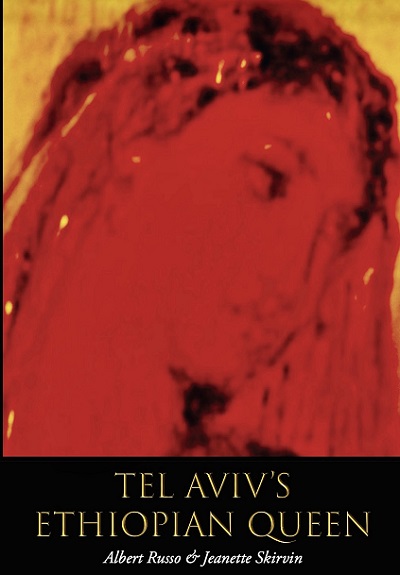
Ziva, a young Ethiopian Israeli who has a Ph D in Social science and psychology, takes care of difficult teenagers, whether they are Israeli or immigrants - illegal or not, including Palestinian adolescents who have been chased away by their parents from Gaza or the West Bank, because of their politics or their sexual orientation. Among the people Ziva looks after is Haniya, an undocumented Jordanian transgender aged 15 who rebels and flees the shelter. She meets drug dealers and a Palestinian terrorist with whom she falls in love. He will convince her to join the Hamas organization. The day she is about to commit the terror attack against Israeli guards on the border with Gaza, she comes face to face with an Ethiopian woman soldier who reminds her so much of Ziva, that she falls to the ground and opens her vest, showing her belt of explosives. She will be judged, go to a correctional institution for two years, and when she is out, the first thing she does is return to the shelter, a transformed person whose main purpose will be to help her companions become strong and responsible members of the Israeli society. Ziva is in a terrible quandary, since the Immigration authorities are unaware of her existence - she slipped into Israel through the border between Israel and Jordan and appeared in Eilat, the famous resort city facing the Red Sea. Then there is Ismael, an Arab Israeli youth, raped by his uncle, who leaves his family home, Immanuel, a young Jewish Orthodox, who is openly gay and also flees from his Jerusalem ghetto, and finally there is young Yael, a Jewish girl from India. While having a drink at a terrace in Sarona with her parents, two Palestinian terrorists mowed down 15 people, killing her parents and severely injuring her. These are the characters of the novel, with, last, but not least, Ziva’s lover, Clifford, an American computer engineer who has moved to Tel Aviv.
Jeanette Skirvin and Albert Russo are two-award-winning authors. Some of their work has appeared on the 6 continents, in a dozen languages.
Ziva, a young Ethiopian Israeli who has a Ph D in Social science and psychology, takes care of difficult teenagers, whether they are Israeli or immigrants - illegal or not, including Palestinian adolescents who have been chased away by their parents from Gaza or the West Bank, because of their politics ortheir sexual orientation. Among the people Ziva looks after is Haniya, an undocumented Jordanian transgender aged 15 who rebels and flees the shelter. She meets drug dealers and a Palestinian terrorist with whom she falls in love. He will convince her to join the Hamas organization. The day she is about to commit the terror attack against Israeli guards on the border with Gaza, she comes face to face with an Ethiopian woman soldier who reminds her so much of Ziva, that she falls to the ground and opens her vest, showing her belt of explosives. She will be judged, go to a correctional institution for two years, and when she is out, the first thing she does is return to the shelter, a transformed person whose main purpose will be to help her companions become strong and responsible members of the Israeli society. Ziva is in a terrible quandary, since the Immigration authorities are unaware of her existence - she slipped into Israel through the border between Israel and Jordan and appeared in Eilat, the famous resort city facing the Red Sea. Then there is Ismael, an Arab Israeli youth, raped by his uncle, who leaves his family home, Immanuel, a young Jewish Orthodox, who is openly gay and also flees from his Jerusalem ghetto, and finally there is young Yael, a Jewish girl from India. While having a drink at a terrace in Sarona with her parents, two Palestinian terrorists mowed down 15 people, killing her parents and severely injuring her. These are the characters of the novel, with, last, but not least, Ziva’s lover, Clifford, an American computer engineer who has moved to Tel Aviv.
Professional Reviews
by Martin Tucker
by Martin Tucker1
Compassion and forgiving, thoughtful humanism have been a mark of Albert Russo’s work in the past. He has written novels, short stories, poems, memoir and essays over the past 50 years, and always a graceful style is part of his presentation. His political writings have sometimes in distinction been shrill, the voice of an outraged man at human being’s extremism and inhumanity. Now he has, with his collaborator, Jeanette Skirvin, set his pen to a thriller kind of novel, novel indeed in its pathways to an understanding of political divides and partisan intrigues. Its range is dense in charting roads that lead from activism and terrorism to transcendence of peaceful compromise. Its
climaxes are far from sunny, for what Russo and Skirvin’s fiction offers is hope rather than fact, resolve rather than certitude. Yet these forever- surfacing qualities that distinguish the best of man/woman/kind reverberate from the pages with a force that is compelling. The novel is unusual as well in bringing marginalized characters into a popular genre, proving that the disabled can and do play awesome as well as suffering roles in war and in peace, in action and in observance. Humor has also been a mark of Russo’s writing, and there is some of that necessary quality here as well, though it is the humor of the survivor who knows identity is a progress as well as a birthplace. Throughout the novel, the characters must find room for tenants
of imagination and the reality of friendship beyond a control rent with the
strife of history. Provocation is here from the start. Read on, good reader.
by Martin Sinkoff
Albert Russo and Jeanette Skirvin have crafted an extraordinary novel. A masterful, exotic and erotic blend of poetry, psychology, history, food, politics and travelogue. The novel is impossible to classify or compare with
another nor the writers with others. Still, as I read this engrossing story I thought at times of Marcel Proust, at times of Andre Aciman, other times of Renaud Camus, Yotam Ottolenghi, Jan Morris, Walt Whitman and contemporary journalists too like Bret Stephens or Daniel Gordis. The story follows various characters, Ziva, after whom the book is named, an Ethiopian-Israeli who cares for children from disadvantaged backgrounds; Clifford, her boyfriend, a classically handsome Californian; Yael, Immanuel, Ismael and Haniya. Haniya’s story is one of the threads that unites the novel as it moves across continents and countries, in fact and in the minds and
memories of the characters.
Russo and Skirvin write each character with exquisite detail. The reader feels immediate intimacy with each of them – most especially with Ziva. After all, the novel is her story. And her humanity, her courage, her intelligence and her grasp of how her life fits in the sweep of history make the reader grateful to her and grateful to Russo and Skirvin for bringing her to life.
by David Alexander: The oranges of Hieronymus Bosch revisted
I envy those authors who can collaborate -- the last two collabs I tried ended in fistfights -- well, nearly, anyway. But Albert Russo and Jeanette Skirvin enjoy an authorial synergy that's significant and at times even remarkable, one that brings out the best of both authors and hones the outcome of their combined effort to a razor edge. Indeed, their styles mesh so well that even a longtime Russo fan like myself has trouble at times deciding the who-did-
whats and the who-said-whiches of the story.
I once read an introduction to Henry Miller's Tropic of Capricorn that referred to Miller as a "wisdom writer." I think this term is descriptive of Russo as well, and of Skirvin too, as they've together created a work of novelistic fiction that by all appearances owes little to trends set by others, but follows a course of its own determination to a Cinderella conclusion that brought a smile to my face and an ache to my heart, because this Cinderella, and her Prince Charming, were drawn from the flesh and blood of quavering existence and were anything but the mawkish stuff of fable.
Dramatis personae are Ziva Hamalka (literally, “Queen Ziva,”) a native Ethiopian from the region of Tigray who's emigrated to Israel and, á la Josephine Baker and her “Rainbow Tribe” in 1950’s France, administers a sanctuary for troubled youth at a place called “the center” in Tel Aviv, a residence also reminiscent of Jerusalem’s Spafford Children’s Center. Ziva (Zivette to friends and familiars) lives in the poorer part of South Tel Aviv, a fifteen minute bus ride from Bograshov Beach, a seaside refuge she uses to
3 David Alexander is the bestselling author of The King of West Brooklyn, Co-Co-Caleevio, Brooklynese and other novels, as well as poetry and short fiction, some of which have appeared recently in the journal Prosopesia, among many other reviews around the world.
13
chill out and regain her composure on her regular Saturday off-days; a place where she also sometimes brings her charges (“refugees” as one character thinks of them, “underage runners from terrible nightmares torturing their nights and days”) to help them also unwind.
Ziva's charity is inborn, innate. She's the product of the history, and member of a group, which, while black Africans among other black Africans, have long been persecuted because of their Jewish ancestry, and who've chosen to live in Israel or face potential genocide by the majority that rejects them as infidels or worse. Ziva is descended from the Secret Jews of Ethiopia, the Beta Israel, which means “The House of Israel” -- Jews believing themselves descended from King Solomon "Ha Melech Schlomo" and the Queen of Sheba in a line of descent stretching back some 3,000 years.
The refuge Ziva gives to her charges (or her “protégés” as she thinks of them), however, extends to all races, creeds and colors; it's a place where anyone from anywhere can turn to for hope and shelter, be they Arab, Jew or anything else; her doors are open to all, as is her heart.
Her companion, lover and steadfast supporter, is Clifford, an American "computer engineer" who grew up amidst his grandfather's orange groves east of L.A., in Riverside, California, among Mexican migrant farm workers from whom he learned their often recondite ways, and befriended their clan, earning the tacos, enchiladas, guacamole, salsa fresca, and other delicacies prepared by the women hired as kitchen hands, and going out into the field to join them at work.
Clifford is the quintessential, indeed archetypal, Californian; blond- haired, blue-eyed, from his description he could just as well be a brah-braying surfer -- but is he a nice Jewish boy? This we don't explicitly learn, but get the distinct impression that Cliff's religious background is ... well, let’s face it -- he's a goy, but a very nice one, not a pruster yink as grandma used to say (about me, generally).
Cliff’s smart, has money, and -- while he jets between Tel Aviv and destinations in the US his work demands of him -- he belongs to Ziva body and soul. He is a man of means both because of family holdings and the cutting edge technology that is his business and passion; his computer
14
expertise drives innovations in bioprinting, the biological analog of materials printing technology using machine-made cellular materials to “print” living tissue that can be used for medical implants. Russo and Skirvin are somewhat cloudy on the technical stuff, but this doesn't matter, as it’s not a system driver of this novel. (G.K. Chesterton often wrote that he didn't know or care about technical facts in the detective fiction he pioneered as long as the story worked: I agree.) And it’s also a good riff on techno fiction that adds to Clifford’s complexity as a character.
Ziva's charges -- those who've taken shelter from the storms of life under her protection and love -- are Yael, a girl of Indian (i.e., Desi or Southwest Asian) extraction; Haniyah, another girl from Jordan, who is of Arab descent, and two male youths, Ismael and Immanuel, one from al-Tira, an Arab town in the central district of Israel, the other a former Chassidic youth from the ultra-orthodox section of Mea Shearim, a neighborhood in Jerusalem's old quarter, whose denizens are the ultra-orthodox Jews characteristic of Brooklyn's Crown Heights or my old neighborhood, Borough Park.
Immanuel, notes Ziva, “was wandering for weeks and weeks before he found us." Aged thirteen-and-a-half when he entered the shelter, he’d already become addicted to drugs. His tale is told as one of the several backstories that buoy the running narrative and give it added depth and focus, but especially by many poems that form a kind of spine or backbone in the center of the novel, their largely erotic nature making them a kind of “Song of Solomon” hymnal to the joy and the conundrum of sex.
Like Ismael, Immanuel had been the target of gay advances by his familiars. However unlike Ismael, Immanuel (“Mani” to his fellow charges of Ziva’s) openly accepted a former fellow yeshiva student as a lover, only, like Ismael, to be cast away by family members discovering his “transgression.” Later, Immanuel confesses to Ismael that he loves him; but in the end it’s Yael, Ziva’s most beautiful girl “protégé,” who becomes Ismael’s life companion.
Clifford also has had brush contacts with the denizens of the demimonde. With childhood friend Acilino, and other children of the migrants, he indulged in group masturbation, only to discover “one month shy of his 14th
15
birthday,” that the adult males played their own version of this game deep within the shelter of the orange groves, where the migrant workers had group sex, praising the Lord and pleading the need because distanced from their mamasitas. Cliff's adult friend, Grant, also confesses gay character traits when he asks, over lunch at the posh gentleman's club they both frequent, "have you ever made love to a man?" The conversation continues in like vein after they decamp to a strip club to watch pole dancers work out on stage. These events surface in recollections sparked by conversations between Clifford and Ziva and seem to point at some existential conflict latent within Clifford’s psyche.
These experiences, common to virtually all characters in the novel, save Ziva (no lesbianism to speak off; Ziva is purely Ziva, i.e. “radiance, brilliance, light, brightness, light of God”), are different from my own and may certainly differ from those among general readers. Having said that, I hasten to add that according to a Kinsey Report update I've recently read (the report still considered a standard work on human sexuality), group masturbation for boys and its equivalent for girls is not only normal, but commonplace; and so are LGBT relationships -- and the Kinsey books originally appeared in the mid-sixties!
Therefore, and I hasten to add this as well, these scenes are integral to the narrative scheme and in keeping with the premise of the novel, which is, as I view it, the exploration of the psychic landscape and personal histories of its protagonists, with the conclusion drawn that superficial character traits -- traits so often imposed on all of us through stifling convention, political correctness and religious dogma (to name but a few of the usual suspects) -- define us in untrue ways; therefore to become who and what we are is always to defy those powerful yet artificial forces that are imposed upon us practically from the moment we are born, and almost always negatively; further, life’s paradoxes are only paradoxes until you peer beneath the often murky surface of things.
So what the novel implies is that to be a whole and entire human being it's necessary to never blindly accept what they try to tell or sell you, because to do so is to be warped and controlled and ultimately demolished and destroyed. Being from Brooklyn, and having grown up in a particular milieu,
16
where to be the school’s poet laureate (PS 164 in this case) is also to be the school’s champion street-fighter (the schoolyard of PS 164 in this case), the yang-bang reflections in Mailer's Prisoner of Sex are far closer to my own psychosexual anchorage than those of William S. Burroughs or Russo-Skirvin in "Ziva," yet "Ziva" is indisputably a masterful work of fiction, and is so because of its riveting and eloquent depictions of its characters, its stylish prose and its moving storyline.
The narrative moves mainly, chapter by chapter, and in first person, from Clifford's point of view to Ziva's. Both recount the story along a shared timeline. Each of their narrative voices are distinct, and their dialog -- inner and verbalized -- is true to words uttered or keystroked in real life dialog by voice or email or text messaging, tête-à-tête, or over the "smartphones" both communicate with to each other, no matter where on the planet either might find themselves at any given moment. These two main voices are interspersed throughout the novel with the already mentioned poems, which continue and help drive the narrative -- a good technique; indeed a Dos Passos "objective camera eye" snapshot that adds complexity to the narrative. The poetry comes from the pen of Immanuel and as such (for Immanuel's bisexuality is almost militant) is unabashedly erotic by and large.
Haniyah's single snapshot is a prose snapshot; its title The Spirit of Tar, a parable both dreamlike and metaphysical, speaking of Haniya's inner truth, her spirit sticky with tar collected from the road her life travels on as if it were a bicycle she rides. But Haniya's road, thanks to Ziva, doesn't lead to a dead end. While Ziva's charges come to her troubled, all of them successfully adapt, learn sometimes harsh, if vital, lessons about life, and most importantly, connect with their true selves to become non-dysfunctional human beings.
Clifford, starting out as lover, ultimately also becomes part of the nurture- over-nature equation that saves the childrens' lives as he becomes more and more involved with Ziva's mission – a helpmate/soulmate Josephine Baker could have used before the French government shut down her “center” and callously scattered her “Rainbow Tribe” to the winds.
17
Seeing the talents latent in Ziva's youthful protégés, Clifford hits on the idea of doing YouTube podcasts to help motivate and challenge them. Yael's culinary talents become the basis for the “Yael's Kitchen” podcast, while Immanuel's makeup and haircutting skills lead to a beauty podcast featuring him as well. Aside from generating large numbers of YouTube views, the experiences change the wayward kids into accomplished men and women – emergent professionals all. Haniya, who disappeared from Ziva's shelter as the story began and was arrested with a Palestinian terrorist in the process of launching an attack on a kibbutz, becomes perhaps the most successful of the lot as her budding journalistic talents burgeon to the extent that she ultimately becomes a star TV newsanchor.
Whatever their chaotic and troubled origins, Ziva's charges achieve success, change for the better, grow and mature, but so does she, thanks to fortune and more help from the redoubtable Clifford, when a sizeable sum from the sale of his grandfather's orange groves to developers appears in his bank account. In the midst of a romantic dinner at a posh restaurant, Clifford surprises Ziva with a life-changing bequest. Unlike Josephine Baker’s, Ziva's story ends happily, with she and her charges established in a spacious villa paid for by huge proceeds from the sale.
With the windfall Clifford buys a villa in Florentin, a chic neighborhood in Tel Aviv for Ziva to house her charges, old and new. When he hands her the key at dinner, the gesture brings her to tears as a result, and later, leads to the ultimate dénouement -- Ziva announces to Clifford that she'll bear his child, presumably untying some existential knots in his psyche that date back to revelations in the depths of the orange groves; and let us not forget that oranges, of old dubbed the fruit of the gods, verily the oranges of Hieronymus Bosch, and which in the Bible signified fertility, beauty and the sweets of eternity, have a symbolic meaning that pervades the entire book, just as their ambrosial fragrance pervades the air.
Cinderella story? Well, what if it is? I for one could use one these days, and this is as good as it gets. "Ziva" is indisputably the fictional equivalent of manna from heaven and is so because of its riveting and eloquent depictions of its characters, its stylish prose and its moving storyline, one that, while focusing on Ziva and her charges, also gives us a sense of what the Israeli, or
18
at least the Tel Aviv and Jerusalem “street” is actually like, as opposed to the glossy if empty vacation brochure version, affording us a taste of the lowdown, the real deal, where Chassidic youths throw stones at secular women on Shabbas and Ethiopian gangs fight each other in the gutters of South Tel Aviv.
In this and other ways "Ziva" flies on its own wings above the competition as a uniquely crafted work of fiction, one that owes little to easy comparisons or trendy Amazon landing-page book cover promotions. Simply put, it’s a book to read by two authors to watch.
Those are but two recommendations that make this novel a very important one indeed.
3 WAY MIRROR is about a lost identity as experienced by a twenty-eight-year old who thinks he's Charles Randall, until strange events suggest otherwise.
Celts and Kings: The story behind the mystifying disappearance of the Celtic Earls in 1607. The story of a lost love and Celtic Spirituality.
The story of a forbidden love going back 400 years.
The story steeped in Irish history, Ce