Kindle Edition
Amazon
Category:
History
Publisher: iUniverse
ISBN-10: 1475940122
Type: Non-Fiction
Pages: 180
Copyright: Oct 15, 2012
ISBN-13: 978475940121
Price: $3.99 (eBook)
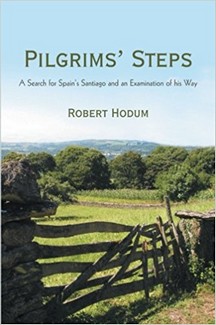
Travel Spain's ancient pilgrimage route in search of St. James the Greater, the enigmatic Santiago de Compostela in Pilgrim's Steps: An Examination of Spain's Santiago and His Way.
The Way embodies the fulfillment of a pilgrimage route tied to sacred terrain shared by prehistoric man, ancient Bronze Age peoples, early Christians, pilgrims of the Middle Ages, and today's faithful. To do pilgrimage to Compostela is to be part of all of this. The Way's valleys and hills, tree enshrouded paths and streams continue to connect humanity with the celestial divide and return us to ourselves as we find place in the fulfillment here on Earth. Santiago's sacred route takes humanity to a threshold veiled by a mosaic of lore and myth. It invites us to a more intimate solidarity with our past, and with ourselves. The waters of his mountain streams and verdant hillocks dispel the disquiet of our world, whispering to us that we are finally home.
Pilgrim's Steps explores the life and times of Spain's enigmatic patron saint, St. James the Greater. This in-depth examination of the history of Spain's pilgrimage route to Santiago de Compostela highlights the biography of the saint and examines his relationships with the major figures of the New Testament. Pilgrim Step's focuses on the ancient peoples of Galicia and their cultures that contributed to the pilgrimage tradition of the Way.
Those who walk St. James' pilgrimage route continue an ancient ritual that has touched the lives of millions down through the ages. Come walk Santiago's Way with this book in hand and delve into the history, legends and folktales of Spain's mysterious Galicia and the nation's most fascinating personage.
Pilgrims’ Steps: A Search for Spain’s Santiago offers an interpretation of the history behind the shrine, its roots in pre-Christian spiritual activity and symbology, and their historical namesake, St. James the Greater. It also provides personal reflections for those who carry this book along its sun-bleached routes and tree-enshrouded paths as well as for those who might never rise to that occasion.
Excerpt
The search for the mythic and historical Santiago de Compostela requires a sounding of the legendary depths of his ritual pathway that spans dozens of centuries, numerous cultures, and their various faiths. Countless pilgrims have shared the sacred venue and its parallel star field, The Milky Way, over the course of millennia.
This route was traversed long before humankind had a conscious understanding of the importance of pilgrimage. Migratory herds hunted by Neanderthal populations that inhabited the northwestern stretches of the Iberian Peninsula may have run the route from the ocean’s coastline to the Mediterranean Sea. Small groups of Cro-Magnon hunters may have journeyed east along the pathway to grottos in the Pyrenean region of southeastern France for annual spring hunting rituals.
An abundance of monolithic architecture near the pathway signifies the importance of the Way’s terrain and its star fields in the cosmology of the Bronze Age populations in northern Spain. Its terminus, the Atlantic, brought ancient man to the threshold between his terra cognita and the challenge and mystery of the great expanse of ocean.
Celtic tribes who settled in this region in the 7th century BC named the watery expanse of the Atlantic the Land of the Dead. The Romans watched with mysterium tremendum as the light of the setting sun disappeared beneath its waves, building temples and cemeteries facing the landless extension to the west. Decimo July Brutus, Roman legionary, observed that the setting sun made a hissing sound similar to an iron when it is tempered in a forge. The Moors denominated it the Terrible Sea.
Although this route was known as el Camino de Santiago in the 12th and 13th centuries, pre-Christian populations walked it for millennia in search of spiritual enlightenment. Named the Route of Stars, the ancient pathway led out of the Pyrenees from southern France, along the coastline of the Bay of Biscay, through natural settings considered sacred by the Celtic tribes of this region, past today's Christian shrine in Compostela, and culminated at the rocky bluffs of Finisterre, overlooking the expanse of the Atlantic Ocean. Spain's ancient Pathway of Light or Route of the Stars, Via Lactea, dedicated to the Celtic sun deity Lugh, led to spiritual illumination and ritualized death and rebirth.
The history of St. James contains narratives, which emerge from an ancient historical reality and find voice in legendary accounts based on popular histories and cross-cultural lore. The Way embodies the fulfillment of a pilgrimage route tied to sacred terrain shared by prehistoric man, ancient Bronze Age peoples, early Christians, pilgrims of the Middle Ages, and today's faithful.
To do pilgrimage to Compostela is to be a part of all of this. The Way’s valleys and hills, tree enshrouded paths and streams continue to connect humanity with the celestial divide and return us to ourselves as we find a place in the firmament here on Earth
|