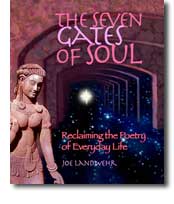
Category: Vision/Metaphysical Publisher: Ancient Tower Press
Type: Non-Fiction
Pages: 470
Copyright: August 1, 2004
ISBN-13: 9780974762609
6000-year history of ideas about the soul, exploring concepts from religion, philosophy, science, psychology and astrology
Like many who have come before me, and many who will come after, I always intuitively believed that I was born for a reason. I am here not just as a biochemical convergence of routine happenstance, but as part of a conscious design. Whose conscious design has never been a question with easy answers, but I cannot help but notice its presence everywhere. I marvel at the fact that the Earth is just the right distance from the Sun, and has all the necessary ingredients – a breathable atmosphere, accessible water, a moderate temperature, and more – to support organic life. I am awed by the fact that day follows night, and season follows season, in predictable rhythm. It amazes me to notice that every detail of this wondrous creation – from the tiniest pebble on the beach to the infinity of stars overheard – seems to play its part in an exquisite mosaic that is always changing, yet always whole. Systems of river tributaries, the circulatory system of a human body, and the network of veins in a leaf echo each other in one of many discernible patterns that unite all of nature into an integrated masterpiece of ingenious creation. While some might take such simple observations for granted, or assign them to chance, I have always held them in an aura of sacred revelation.
I won’t pretend to understand this revelation, nor even that I think it is understandable with any degree of certainty, but I do celebrate the irresistible invitation it extends. For at the heart of this invitation is the implication that I, too, have my place and my purpose within the outworking of conscious design that is everywhere around me. This part of me that partakes of the creative intelligence at work throughout the universe has traditionally been called the “soul,” and so that is what I will call it in this book. That I apparently possess a soul that is somehow mine, yet also connects me to something much larger, older and wiser, I take to be the greatest miracle of all.
continued at http://www.ancient-tower-press.com/gates.intro.html
Excerpt
How we talk about soul matters. For the soul can be trapped by words as easily as it can be set free. The words we choose must have the transparency to reveal multiple dimensions. They must invoke the creative imagination to see beyond the words themselves into the essence of soul-full experiences that cannot be captured by them. No language in existence does this better than poetry, and any language – astrological or otherwise – that intends to speak to the soul, must necessarily be poetic. The poetic art lies in using words to slip between the cracks of language, into the depths of meaning and mystery. And for all our fishtailing around in the realm of words, it is ultimately into this wordless place that we are going. Words that have solidified into precise associations cannot take us there, but words shaped poetically can at least bring the ancient tower into kaldeidoscopic view.
Professional Reviews
The Mountain Astrologer
The Seven Gates of Soul: Reclaiming the Poetry of Everyday Life by Joe Landwehr, Ancient Tower Press, 1904 North 5th Street, Abilene, TX 79603, 2004. Paper—458 pp.—$29.95 (ISBN 0-9747626-0-1). Available from: www.ancient-tower-press.com
Astrologer Joe Landwehr has written an expansive narrative exploring the idea of the soul as understood in various cultures over the course of six millennia. His theme is obviously ambitious, with an intent to “introduce a more open-ended approach to the understanding of soul that does not depend upon any particular system, or philosophical perspective.” To this end, Landwehr painstakingly explores religion, psychology, philosophy, and science to identify the presuppositions and biases that influence our understanding of the soul's true nature. He then establishes a philosophical footing so that the practice of astrology can enter into the broader cultural discussion of the soul.
The basic premise of astrology — that there is “a discernible relationship between the evolving cosmic order (the macrocosm) and the journey of the individual soul (the microcosm)” — places astrology in a unique position to contribute to the dialogue about the soul. This author is passionate about what he considers the prejudices and limitations within much of current astrological practice. Therefore, he first puts astrology through a similar deconstruction as he does for the previously mentioned disciplines and then proposes that the practice of astrology move toward what he calls "astropoetics." The idea here is essentially to shift away from the mechanistic, predictive model of astrology, with its “rational decoding of symbols," and focus instead on "using the symbols as an intuitive point of entry into the spiritual essence of embodiment." Landwehr suggests that a more intuitive and experiential approach will fundamentally support a more direct experience of the soul.
The book’s title, The Seven Gates of Soul, refers to the myth of the Mesopotamian goddess Inanna and her descent into the Underworld, the metaphor that forms a loose structure for the book. The author includes an index and an extensive list of works cited; both are of great value in a work of this scope.
Joe Landwehr writes that astrology is “not just about making sense of life, although at its best, it is that. It is also about learning to see with the kind of peripheral vision that allows the shimmering, invisible Essence at the heart of the embodied life to coalesce into a pattern, release another aha! experience into the cerebral cortex, and then disperse for another round of unknowing.” He is a creative and imaginative thinker and has given us a rich treatment of a complex subject.
Geoffrey Cornelius’s groundbreaking book, The Moment of Astrology (1994), opened a wide-ranging and sophisticated discussion among astrologers about the philosophical foundations of our art. Although Joe Landwehr’s The Seven Gates of Soul is not directly related to that book, it is a welcome addition to the growing body of work in recent years that aims to question assumptions held by contemporary astrologers and to inspire us to consider astrology in the wider cultural and spiritual context. As author Thomas Moore states, on the back cover of this book, "It’s about time astrology was given its place in the history of thought."
— reviewed by Mary Plumb
International Astrologer
International Astrologer
Winter/Spring 2005
reviewed by Erin Sullivan
This is a huge book. I don’t mean its dimensions or weight in pounds, but vast, encompassing and a complete philosophy in itself. It is not a daunting book to read, but is a very good read in itself. Its intent is clear throughout, but we visit many times past and many thoughts from the ages.
It is a teaching book, not just a treatise. Woven throughout the entire book are techniques, interpretations, astrological ideas and descriptions of how to, and when to, and what to do with planets, signs and houses. So, for the student, it is excellent, and for the initiated, equally so.
Mr. Landwehr clearly has been thinking for a very long time about astrology, philosophy and the moral and theological issues that have vexed humanity from the beginning of intellectual time. Not only that, he also concerns himself with the issues that went before intellectual time; times when there was no Cartesian divide, no chasm between nature and culture, body and soul. Not to say that the author is without mind, but rather, has an excellent relationship with mind and is able to write very well about soul/mind interaction.
His work in this book is extensive, and in the reading, expansive. From “participation mystique” – the time of total involvement between human and its environment – through post-Newtonian science, Landwehr explores the vast realm of the historical and practical aspects of astrology and philosophy.
Never a fan of Ptolemy, I found his statement in his Chapter, “Taking Astrology into the Realm of Soul,” on page 333 deserving of standing ovation:
“If astrology is to serve as a template for a language of soul, it must sever itself from the Ptolemaic mindset, which is bound by rules dictating what is good and what is bad. From the soul’s perspective, good is what facilitates growth, and any chart will do that, provided we have the eyes to see it that way, and the will to actualize its potential. The chart must not be read as the interplay of benefic and malefic influences...”
You may already ascribe to that world-view, but this book is not a rant on soul and spiritual astrology, but one which has a “both/and” intent. It intends for the reader to fully understand how astrology developed over time and in the varying ethos and various breakthroughs and troughs that have occurred.
He wants to “shed the rational literalism of science” (Chapter Five) but also, in doing so, he himself is super-rational. It is very interesting to read such literary work, which in its thesis says it will help us become more integrated and soulful, while being in itself an intellectual treatise! This is not a criticism, but an observation.
I have always felt that a good astrologer whether in practice or observation has to be capable both of Magical and Critical thinking. Thinking magically and critically is the highest form of being able to not only know the wisdom of the stars, but also to be able to calculate them!
Highly recommended.
BookReview.com
BookReview.com Review
February, 2005
reviewed by Jacquelin Archer
Those interested in spirituality and the soul as related to history, astrology, psychology, science and organized religion will find this book easy to understand and read. This self published book is well organized and well-cited. I appreciated the thoroughness of the research, bibliography and index.
When I was handed this book to read by a friend of mine, my first thought was, oh my, this will take me forever to read with all the other professional astrology reading I do. As I opened to the first page where Ray Charles’s definition of the Soul was quoted, I knew my time, assuredly, would be well spent.
It was hard to catalog this book for the review . Mr. Landwehr carefully analyzed the path of Soul through the many disciplines we use in common day living. The Soul takes a journey through the seven gates that Inanna traveled in the Sumerian myth as he analyzes the Soul’s role in Science, Psychology, History , Astrology and organized religion. He not only analyzes but he has the bravery to suggest active changes to return society to ancient wisdom and our own personal spirituality focused on being soul driven rather than personality driven.
Because the author comes from a professional astrology background, he did relate astrology to much of the material in the book. Needless to say, that delighted this reader. The point made that we map our own way, and not the natal chart, is well taken. He suggests that astrologers divorce the predictive practice and come more to the soul centered work as astrology can be utilized as empowering self-discovery tool. I snickered when he declaratively points out that if we haven’t convinced the scientists we are a scientific practice by now, we probably never will. We should just stop trying and move on where the energy is more productive to building world community. The author has created a new way of looking at life he has termed as astropoetics. I quote: “astropoetics strives toward and understanding of how the human predicament is thoroughly infused by presence of Spirit”.
Most important of all, reading this book has had a lasting impact on how I viewed my own astrological consulting practice. I look forward to meeting the author at the International Society for Astrological Research in Chicago this August.
A way to use your mind for silent communication. Speaking about the methods in the book I have used since a young age.
21st Century learning. I also have a GoFundMe page to ask for funds so I can research with other people and add their experiences
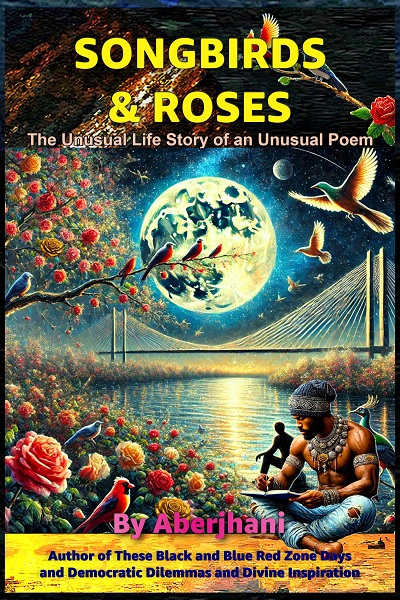
The captivating music of birds and the enchanting beauty of roses have, each in their own right, inspired people around the world for as long as anyone can remember. How the two combine with the challenges faced by a struggling writer in Georgia to c