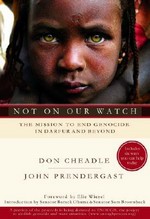
This book by Don Cheadle, the person who portrayed Paul Rusesabagina in the movie Hotel Rwanda, writes to encourage people to take action to stop genocides around the world.
Excerpt
Not on Our Watch: The Mission to End Genocide in Darfur and Beyond
Don Cheadle & John Prendergast
C. 2007
ISBN: 10: 1 4013 0335 8 or (13: 978 1 4013 0335 8)
Hyperion Books
www.HyperionBooks.com
New York, NY
252 pages, $14.95
Brutality against helpless people has shocked the world many times during the past century. One would think, by now, with world organizations like the United Nations and large blocks of well-meaning people in every country, that such atrocities would no longer occur. But no! Genocide is right now occurring in Darfur.
Author Don Cheadle starred in the movie “Hotel Rwanda,” in which he portrayed Paul Rusesabagina, the real-life hotel manager who saved over one thousand people from death in history’s most violent genocide (800,000 people killed in 100 days). Cheadle teamed up with author Paul Prendergast, a career activist against regimes committing such crimes, to write this documentary “Not on Our Watch.” These authors urge a grass-roots movement to pressure governments to finally put a stop to such blatant crimes against humanity.
Cheadle, moved by the character of the person he portrayed, and impressed when he finally met that person, Paul Rusesabagina and his wife Tatiana, realizing the agony they experienced in 1994 during the genocide in Rwanda, decided maybe he should do something to help prevent atrocities like this from ever happening again. In 2004, he teamed up with John Prendergast for a speaking tour and visits to Darfur to see first-hand what is happening there. Their book “Not on Our Watch” will both shock and sadden you.
Intervention is a big commitment, and intervention can backfire on you, as we all know from the political second-guessing following the U.S. intervention against Saddam Hussein. Governments, including The United Nations, are wary of getting involved. They’ll do something that seems safe for them, like political censures and humanitarian aid. While helpful, these efforts do not get at the root cause: regimes that use genocide as a tactic against populations they want to control or eradicate.
The authors point out that a three-pronged approach is needed: protection, punishment, and peacemaking. Protection of the victims, even if it entails some military intervention; punishment of the perpetrators by political pressure, economic isolation, and ultimate accountability and punishment by an UN sponsored world court; and peacemaking by encouraging the warring parties to a peaceful settlement of their differences and assisting them in rebuilding the war torn areas. This sounds easy to say, but we all know how difficult it is to implement. What can we, as individuals, do to promote this progress? The answer is the main theme of “Not on Our Watch.”
Darfur is on our watch since we are alive during this genocide. We can pressure our governments to take constructive action. Since our government officials depend on our votes to remain in office, we can let them know that we don’t like what’s going on in Darfur, and we’re “mad as hell” that they aren’t doing anything about it. The authors quote Senator Paul Simon saying that if every member of House and Senate got 100 letters about Rwanda, the United States would have acted differently during the Rwandan genocide.
The authors describe several incidents where grass root pressure on politicians encouraged them to take action where, ordinarily, they would not have taken action. This book is both a documentary on what is happening in Darfur (and what happened in similar atrocities in other parts of the world) and a guide to what we, as individuals, can do to help. The authors describe six strategies for effective change: raise awareness, raise funds, write letters, call for divestment, join an organization, and lobby the government.
If you saw the movie “Hotel Rwanda” and wondered what would you have done had you been there, this book will explain what anyone can do no matter where they are.
Maurice A. Williams May 21, 2007
http://www.geocities.com/mauricewms2003
These song lyrics and art are tales, tides and twinkling lights - tunes telling stories of warmth and sun, city and sand, paths that lead, and the coins we can keep in the Karma Bank. Spirit's been bypassed for sorrow, dreaming of a better tomorrow .
The Harvest of Souls Crossover is a story that is exciting, vigorous, and full of suspense about the fight of good and evil in two realms, the light and dark world. The Howdy Family is determined to defeat the world of darkness, led by the seemingly