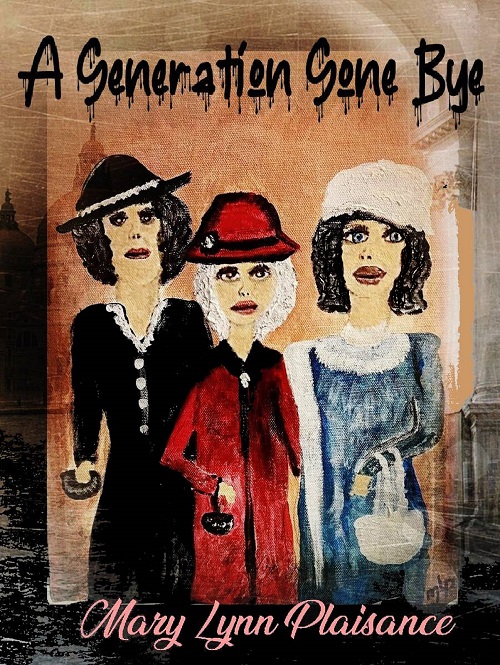
Category: Drama Publisher: Publish America
ISBN-10: 1591294428
Type: Fiction
Pages: 179
Copyright: 2002
WHEN SHADOWS FELL dramatizes the struggles of a young American woman as she chooses to express her ideals by joining the Communist Party in the early 1950s at the height of McCarthyism. Chapter 1 appears below.
The book is available at Amazon.com and Barnes and Noble.
CHAPTER 1 February 1950 "Is it time, is it time?" my four-year-old daughter, Beth, asked every few minutes. It was the day before her brother David's seventh birthday, and we were eagerly awaiting his return from school to shop for party favors. Finally, hearing David's hurried footsteps on the porch, she whooped, "He's here." But something was wrong. Without a greeting, David rushed past us and moments later I heard choking and strangling sounds coming from the bathroom. I ran to him, Beth at my heels. He was hugging the toilet, gasping for air while vomit shot out of his mouth and nose. Finally, after one last spurt, he stood on unsteady legs, rinsed his mouth at the sink, then slid down to the cold tiled floor, shivering. I wrapped a towel around his shoulders and wiped his brow with a warm rag. "Can we go now, Ma, can we?" Beth nagged. "Can't you see he's sick? Dave, when did this start?" "In the drop drill," he said, looking at me with eyes as startled as those of a trapped animal. Beth and I eased down to the floor on either side of him. "Mis Turkle told us about the drills--told us we'd have one today--but she didn't say when. I kept watching the clock, waiting--wondering what it would be like--then, just before school let out, it went off...louder than a fire siren...clang, clang....louder, louder...it never stopped...I covered my ears..." Beth's eyes grew wide. "Miss Turkle kept screaming--you there by the windows, drop...those kids curled up into balls under their desks...and you there, by the door, follow me to the cellar, to the cellar...that was my group...under the pipes, farther under...hot pipes...she hollered. And the alarm kept clanging. I thought the bombs were dropping." "I hate Miss Turkle," Beth yelled, jumping up and bolting from the room. I tried not to react until I saw my hands clutching the washrag as if it were a lifeline. I felt like howling, shrieking at the teachers. Why did they terrify children? They must know there's no protection against atom bombs. They must have seen the same pictures of Hiroshima and Nagasaki that I had--of burning buildings splintering and collapsing...arms and legs flying alongside debris...seared heads and empty eye sockets...a lover holding a headless corpse in his arms. But I didn't scream. I rocked David in my arms instead, as I did when he was an infant. I was sovereign then, sure I could shelter him from any danger. David pulled back from me and looked into my eyes. "I'm not going to school anymore Mom. I can't." "You can and you have to." "But--" "I'll do something, talk to the principal, your teachers, others, tell them to stop those drills." My words lacked conviction, but I cold see they had an effect, for the color returned to David's face and a shine to his deep brown eyes. '"Let's buy yellow clown hats for the party, okay?" he said. Just twenty four hours later, David was as carefree as a puppy racing around the yard with his six birthday guests all shaking noise makers or blowing bubbles in the air. He and his guests approached the chocolate fudge marble cake with the sae vigor, gobbling it down nearly as quickly as I served it. The high point of the party, however, wasn't the cake or noisemakers, but would come later when Mel took the children to Kiddie Land. Between slurps of ice cream they repeatedly asked when Mel would arrive. Eventually, they tired of waiting and one of David's friends, Archie Jablowski, whipped out a cap pistol and started chasing the kids across the grassy front lawn. Using fingers and sticks, the others joined the war. "Pow, pow, gotcha," Archie yelled dashing after Beth. Her pigtails flying, Beth streaked across the lawn like it was greased. "Fall down, you're dead," Archie commanded. Beth darted into the next yard, laughing as she outran him. Archie than shot a cap at the neighbor's Collie. The dog crouched, yelped, and scampered off. David and another boy tackled Archie to the ground; others, hopping from foot to foot, cheered them on. "Stop it," I shouted. The children looked at me for a moement and then resumed their game. I leapt to my feet and went after Archie. He dashed into a neighbor's yard, I close behind and the others following me. Archie jumped a hedge, scratching himself on the prickly branches. Should I turn back? No, I wasn't going to let that obnoxioius kid outdo me. Suddenly I felt absurd. I'd become part of their game. There has to be a better way to handle this, I told myself. All at once, Archie dropped the gun to the gound and, along with others, ran to the curb. Mel had just pulled up in his 1939 Nash. The car was too small for his six-foot frame and he sidled out, legs first, followed by his lanky, slouch-shouldered torso. He grinned at the children, a lopsided smile that curved upwards on the right side of his face like someone with a partial paralysis. Then he walked over to me, standing beside the chipped redwood picnic table, and bent nearly in half to brush my lips with a kiss, his breath sweet with the flavor of cherry life savers. "Mel, they're playing war games and I didn't know how to stop them." He squeezed my shoulder. "Don't blow it up, babe. They're just kids." "But Mel--" David and Beth were by Mel's side. "Come on, Dad, let's go, it's getting late," David said. Beth tugged at Mel's pant leg and he let himself be pulled towards the car, looking back at me and opening his hands in a gesture of helplessness. The other children, their faces sweaty, their jeans grass-stained, gathered at the car, waiting. "Don't forgt Barney's coming to dinner," I reminded Mel. I'd called my father by his first name ever since mother died and I took on her chores. I looked at the sticky mess on the picnic table and decided I'd clean up later. The day was brillian; the sun cast beams across the lawn and lit the underside of the fluted leaves on the Chinese elm. I went over to the elm and slid down into the hollow at its base. I loved that tree--not only because of its rich foliage and the shade it offered, but because it was a mark of distinction. Otherwise our lot resembled every other on Cherrywood Avenue--pale stuccoed houses with strollers and three-wheelers on the small front lawns and tall palms lining the street. My gaze traveled up and down the block, to women sitting on stoops or lawns watching their children play--one little girl vainly trying to balance a hula hoop on her narrow hips, a boy towing large wooden blocks in a wagon that was too small to hold them. I couldn't count the times Barney had urged us to buy a larger, ranch-style house; he even offered to loan us money for a down payment, but I loved living close enough to neighbors to smell their bacon frying and lean out the window to shoot the breeze. I loosened the waist button on my cranberry-colored peddle pushers, pulled my pink cotton shirt free, and nestled against the tree. I favored bright colors, a protest against my mother always dressing me in navy blue to hide the dirt. I closed my eyes, appreciating the warm breeze caressing my cheek and the magic of a Los Angeles winter. So different from Chicago where I grew up. Here children run around in shirtsleeves year-round. A dream come true. The dream took root after we married and Mel left for army duty. I'd spend endless hours mooning about our future. We'd have two children, a boy and a girl, inseparable and adoring, the boy patiently reading to his kid sister, the girl patiently watching her brother piece puzzles together. They'd stand up for each other and confide their secrets. And when they were troubled they'd come to Mel and me for comfort. I never imagined any trouble more serious than a falling out with a playmate, surely not an ashen-faced David shivering and huddling under the pipes in the school cellar or tearing around the yard playing war games. I felt a tension pressing on my heart. I wanted it to lift. I checked my watch--nearly six; Barney was due. I had just carried the remains of the birthday cake into the kitchen when i heard the quick, light step of my neighbor, Frank Barker, back from a long day at the studio. Frank was a movie actor, usually playing character parts. His appearance fit tht role with his dark curly hair, flashing black eyes, a crescent shaped scar high on his right cheek, and animation in every movement--even seated Frank wiggled his foot or tapped his fingers on the arm of a chair. Frank was a Communist and agitated everyone within hearing except his wife Mollie and Mel, both of whom he considered hopelessly passive. His zeal came naturally. His parents were "hellfire and brimstone" preachers, and though he grew to hate their beliefs he adopted their rousing style. "Sorry I couldn't get home in time for the party. How did it go?" he asked as he sat down at the table and began munching on a piece of cake I'd put out for him. Dropping into a chair across from him I put my hands to the sides of my head and moaned. "Someone hurt?" "They played war games--'bang, bang, gotcha, fall down, you're dead.'" "You stopped them, right?" "I tried, but I lost the moment." Frank jumped up, waving his arms in the air. "Zelda, you dont have many moments to lose. You've seen the paper. They making H-bombs now." "I'm scared Frank, really scared." "Scared enough to do something?" "It's so big. What in heaven's name could I do?" Frank moved his lips but the roar of a diesel-powered truck drowned his words. "What did you say?" He sat down again and peered into my eyes. "I said, if you want to make a difference, Zelda, join the Party." I looked around for a cigarette. Smoking helped me think, and I wanted to find the words to make Frank understand. "You know I've always had a soft spot for the underdog, ever since I was a kid during the Great Depression seeing breadlines stretch around several blocks and an endless stream of unshaven men with laceless shoes begging at the back door for a sandwich or a nickel. Mother was dead by then and I was running the house on eight dollars a week, but i'd buy day-old bread and squeeze out enough leftovers to make snacks. And at night, I'd dream about a world where there was no hunger, no rich and poor, where everything was shared. Frank smiled, thinking I was going to accept his invitation. "I can't join anything now. It would take too much time away from home. Remember Frank, my mother died when I was eleven and ..." I bunched my face against tears..."it's something you never get used to. You're reminded every single day...coming in from school--no warm smells in the kitchen, no soup pot simering on the stove, no swishing sounds of a mop on a floor, a silence so loud it would make me want to shout, 'anyone home?' Instead I'd turn the radio on full blast so I could hear it all over the apartment. Then I'd do mama's work, cleaning, making a shopping list, fixing dinner, and checking the kitchen clock every few minutes hoping it was time for Barney's arrival. I won't do that to my kids, sentence them to coming home to a house as silent as mist, day after day, year after year. Maybe later..." "Later you say, later you'll consider the Party?" "I don't know about that. The Party, it's so exteme, it's off the map to people I know." Frank leaned toward me and used his hands for emphasis. "Zelda, you forget that until recently people flocked to the Party, nearly a million, and thousands more supported us. You forget that just five years ago, we were bound to the Soviets in the great anti-fascist crusade." He drew in a deep breath for emphasis like a preacher about to deliver a sermon. 'History is on our side. First Russia, now China. Socialism's spreading like a fire gone wild, and the capitalists are shitting in their britches. That's why they're out to destroy us along with every other dissident." I began twising a strand of hair around my index finger, something I did absently when I was agitated. "Stop fiddling with your hair," he teased. "And you stop jiggling your foot," I answered, feeling the tension between us ease. He put his hand on my shoulder. "I get so wound up and I know I'm a pain in the ass. But I also know i've found the right path, and geez, Zeldaa, you're like a sister and I want you by my side.
Professional Reviews
When Shadows Fell
Book Review
When Shadows Fell by Dorothy M. Jones
Reviewed by Vince Ivory
"I pledge allegiance...," she began, looking around the room to see who joined in the oath of patriotism and who didn't. That scene (at a childcare center) could have happened yesterday, involving our preoccupation with the threat of terrorism and Bush's TIPS program for spying on our friends and neighbors. The scene from "When Shadows Fell" actually refers back half a century to the preoccupation of the time, communism, and the atmosphere of fear and suspicion collectively known as the McCarthy Era.
"When Shadows Fell," by Dorothy M. Jones, is a fact-based novel whose central character was a member of the Communist Party (CP) in the 1950s. Published this year, the semi-utobiographical work provides an insight into this period in our history. It is told by a woman who struggled not only with her own ideals as they fit into her work with the CP, but also how she reconciled her political work with complex personal relationships. The effect is to put a truly human face on activism.
This is a story which juxtaposes children playing with children playing war and a child's birthday with the bizarre "drop drills" in which students were made to prepare for a Soviet nuclear attack by hiding under their desks. Balancing the personal and the political means that while it's important to teach your children to tell the truth, an exception must be made when FBI agents show up at the door.
The book also traces the organic growth from social concerns to radical analyses, like the organic growth from informal gatherings at restaurants to joining the Party. It revisits the discussions of whether FDR had been a great friend to working people, or just another Democrat. The lessons of the 1940s and 50s take on greater importance as we face similar issues today.
As we speak out for free speech and against the "war on terrorism," we remember the opposition to the Korean War and the House Unamerican Activities Committee. As we read of the TIPS program and racial profiling, we remember the Hollywood black lists."Are you now, or have you ever been...?"
Rovella is a beautiful woman with a cold heart whom blames herself for an unfortunate old family secret that is literally ruining her life. This secret impedes a gorgeous woman from having happiness in her childhood, and throughout her life. Dark sec