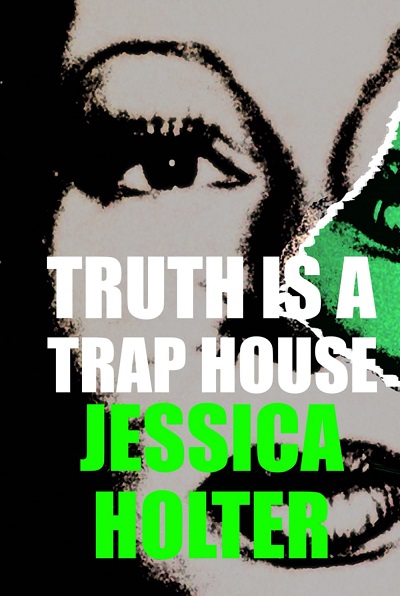
Kindle Edition
Category:
Poetry
Publisher: Coffy Books
Type: Fiction
Pages: 344
Copyright: May 3, 2024
ISBN-13: 9798884703056
Price: FREE! (eBook)
Step inside the enigmatic trap house built by Ghetto Girl Blue, where Jessica Holter serves tall tales, tell-alls, and historical remixes over an icy-cold blend of poetry and prose.
Welcome to the Enigmatic Trap House
Step inside the enigmatic trap house built by Ghetto Girl Blue, where Jessica Holter serves tall tales, tell-alls, and historical remixes over an icy-cold blend of poetry and prose. As a poet and journalist, Holter’s powerful words cut through the noise, exposing raw truths. The imagery painted between the pages of Truth is a Trap House is both vivid and haunting, channeling the collective pain and frustration of generations into a searing indictment. The juxtaposition of privilege, war, and disregard for humanity is stark. Black Codes, legacy, and the relentless love of money compromise our humanity, resonating deeply.
The throat-gripping poem “Dear Broken White Man” encapsulates the essence of the book—Was it worth it? The question hangs heavy in the air, demanding introspection. Truth is a Trap House confronts uncomfortable realities head-on, refusing to shy away from the darkness. It’s a call to reckon with history, question our roles, and seek redemption.
Prepare to be stirred, provoked, and transported to the author’s cryptic housewarming party, where wild characters grace the VIP list. Brace yourself; reality unravels with modern conspiracies, TikTok whimsy, pimping trickery, and logical acrobatics, jumping like a crackhead from room to room. In every corner, you’ll encounter the complexities of human communication—the struggle to discern truth from fiction, feeling the pressure to suspend disbelief.
Holter’s canvas extends far beyond the walls of her celebrated Punany Project. In this 300-page collection, the writer stitches together threads of Christianity, military maneuvers, political intrigue, and forgotten histories to create a decades-overdue literary convention of Black American inner standing.
Truth is a Trap House isn’t merely a book; it’s an invitation—an exploration of the unspoken and the controversial. It’s a conversation starter, a spark for debate, and a treasure trove of sensual delights.
About the Author: In 1995, she shocked the world of Spoken-Word speakeasies by creating The Punany Project, adding exotic dance and theatrics to create a controversial live performance filmed by HBO Real Sex producers in her Oakland-born effort to raise AIDS awareness in the Black Community. Now the First Lady of Urban Erotic Poetry, author of Verbal Penetration, Secret of the Pearl, Black Love American Style, and The Punany Experience is back with Truth is a Trap House, amending the constitution of everything you thought you knew about this audacious author, artist, and journalist, also known as Ghetto Girl Blue.
Excerpt
My Heart Cried for Sister
1976
Giving up, she sang, was not easy,
Sister was a sweaty fraction
of what she had been,
gum popping, sass talking
when the movie Sparkle
found her after church
where she led parishioners
to our Precious Lord.
I wasn’t old enough to be in
Oakland’s 99-cent Roxy Theater
with rats scurrying beneath the seats,
watching her crawl into Satin’s fists,
draped in the fur, he stripped
from his last chick.
Makeup could cover her bloody sacrifice
for the big time,
Powdering her insides,
to cover bruises for her adoring audience,
My heart cried for Sister.
Like some strange social research,
how would a 7-year-old girl react to
this sad and musically intoxicating film
about a vulnerable, beautiful woman
chasing dreams only to lose them
to dangerous men.
Sister was giving her man
something he could feel,
hooked on his love, sweet drug
Satin, something like Satin,
the darkest man in the film,
The villain.
Supplying freedom from her earthly hell,
The casket.
But the dream lived on through Sparkle
baby sister and enabler,
with a song in her heart
for Stix, a grown man
sticking it to the 15-year-old,
on rooftops and seedy motels
with cashmere bouquet soap,
while writing designs to guide her career
a goal, we would learn in the end
the green-eyed, high-toned man
was willing to die for.
The industry
was using the big screen
for a new kind of minstrelsy,
programming the community
with imagery of success,
we sought desperately,
and serving it with poison,
But I did not know this,
I was only 7.
1977
In real life,
Drug consumption in Oakland
and every other city
where Sister’s song and plight
crawled onto the big screen,
reached an all-time high.
Meanwhile, in Sherman Oaks
B.D. Vine, LTD found a model
who resembled Sister
down to the flower in her hair
to sell us a complete
snow refining system
for straining fine powder
straight into the bottle
without losing a single rock
“Nice and neat, Tout de Suite.”
The Blue Lady “has the sparkle,”
said another magazine advertisement
for organic Mannite Conoscenti
weighing on a scale propped
against a blue panty backdrop
between a model’s legs.
With the effervescence and
solubility of the real thing,
you, too, can live high
and die glamorously.
1987
Cocaine was no longer
a rich man’s high
the Black community
was rock hard for the
free-base-pipe.
A drug dealer’s girlfriend,
and a high school journalist by then,
on location at Seminary & Bromley,
I watch him bag rocks
and count money
in a trade’s apartment.
Looking closely,
I could see the new mother
was once Sparkle-Beautiful
Sister-Fine.
Breasts exposed,
she sat on the floor
leaning against
a big black bag of trash
that cradled a baby
small enough to
fit in one hand
Barely audible,
he shared his story,
Hooked on the same
love, sweet drug
as his faded mother.
Jessica Holter
#TruthisaTrapHouse
|