Category: Women Publisher: One People Press
ISBN-10: 0991354516
Type: Fiction
Pages: 169
Copyright: January 11, 2014
ISBN-13: 9780991354511
Price: $2.99 (eBook)
A Collection of Extraordinary Short Stories about Love and Loss
Following the success of Paula Margulies’ acclaimed novel, Coyote Heart, comes this collection of extraordinary stories about love, loss, and the secrets that bind family members together. In Face Value: Collected Stories, Margulies explores the themes of compassion, regret, loneliness, loyalty to family, and the search for true love. Tender and haunting, with brilliant touches of humor and magical realism, these stories will claim a place in the hearts of readers everywhere.
Editor's Choice Award Winner, 20th Annual San Diego State Writers' Conference
2014 Next Generation Indie Book Awards Finalist, Short Story/Fiction
2014 National Indie Excellence Book Awards Finalist, Short Stories
Excerpt
Bird Song
M
y father sits at the window, a book opened in his lap, his hands resting on the pages. His lips move as if he’s whispering, but there is no sound. He wears a plaid flannel shirt, the cuffs and collar frayed, the gray and brown fabric worn soft with age. The shirt is his favorite, one that my mother bought him for his birthday many years ago.
He assumes this position every day, his chair in front of the window facing west toward the canyon. Although he’s healthy and active for his seventy-one years, my mother’s death has anchored him to his seat. The view is mostly scrub grass and low-lying bushes, but he doesn’t seem to see any of it. His eyes stare blankly out beyond the hillsides to the ocean, which is not far from here. His hair is thin, the white and gray strands brushed gently, like long blades of grass, across his scalp. He fingers the pages of his book, a tattered copy of Don Quixote, and tilts his head, as if his neck has grown tired. I bring him chamomile tea and a plate of cherries, dark and round, piled like stones.
Eat, Dad.
What? Oh, he says. Yes.
The food goes untouched, and after an hour, I remove the plate and cup and bring them to the kitchen, then return and open the window so that he can enjoy some fresh air. The May breeze feels cool on my face, which is tingly and hot from my morning walk. I often experience hot flashes like this one. At night, I wake from vivid dreams, my body soaked in sweat, my hands shaking. I toss the covers and sit up, take deep breaths, and then wait for the moment to pass. When it does, I shiver and pull the blankets back over me.
Today, the air from the window cools me quickly and carries the sounds of birds twittering as they call to each other outside. I step back and ask if there is anything else he needs.
He looks at me as if I’m a stranger.
No, Elsie. Thank you.
He stares out the window, studying the scenery whose green hues will soon fade into shades of gold and brown.
We live in a two story condo off of Mercy Road in a suburb of San Diego. The building lies close to Highway 15, where cars rush by in a low-level hum. I work at home, typing invoices for physicians. I took this job last year when my mother became ill. For six months she was sick, after finding herself suddenly unable to breathe one day when she climbed the stairs. The fluid in her lungs turned out to be the first sign of an advanced case of cancer. Her doctor ordered chemotherapy and radiation treatments, but the cancer had already spread to her liver. In the end, it settled in her bones, and then wasted no time working its way up her spine and into her brain.
I run my hand across my dad’s shoulder and turn to leave the room when I hear a rustling sound. Something small and dark jets past my head, a few inches from my nose. There is a loud thump as the flying object slams into the wall opposite the window.
Oh! my father says. What was that?
My heart is pounding in my chest as I reach for the tiny mass of feathers lying crumpled on the floor below the wall.
It’s a bird, Dad. It seems to have knocked itself out.
The bird’s body is soft and light in my hand. I check it for injuries, but notice nothing unusual in the faintly streaked brown feathers, the pale white lines on its wings and tail. Its eyes remain closed in tiny slits.
Looks like some type of sparrow, my father says.
He rouses himself from his chair and squints at the bird in my hands, as if examining a specimen in a science lab.
What should I do with it? I ask.
Well, if it didn’t break its neck, it’ll come to, he says. Maybe you can find a box to put it in.
I cradle the bird in my palm, holding it carefully against my breast as I hurry down the stairs. Peering through the darkness of our attached garage, I locate a box that used to hold some my mother’s medical supplies. After dumping small lengths of tubing, gauze pads, and syringes on the garage floor, I place the bird inside. There’s plenty of space for air between the top flaps, so I close them and carry it back into the house. I set the box on the kitchen table and take a deep breath. My father comes around the corner, having made his way down the stairs.
What are you going to do when it wakes up? he asks.
I gaze down at the box, the lid closed. There’s no movement inside.
Keep it, I say.
Keep it? my father responds. How? We don’t have a cage.
I’ll go get one. You watch it while I’m gone.
But what if it rouses itself before you come back? His voice trembles.
Just keep the top flaps closed until I come home.
I grab my purse and head out the door.
At the pet store, there’s an empty parking spot right in front of the entrance. Inside, the aisles are brightly lit, and the air is thick with the musty smell of vitamins and fur. At the check-out counter, a sales clerk leans forward, leafing through a small catalog. He’s tall and thin, with a light spattering of acne across his cheeks and neck.
I’m looking for a bird cage, I say.
Aisle five, on the left, he answers.
I head in the general direction he points and find a number of cages. I’ve never owned a bird before, but I guess that it would want as much space as possible. I pick out a medium-sized cage, with white food and water cups, and a black plastic bottom with a pull-out tray. After perusing the items on the shelves nearby, I select a bag of seed, then hesitate, uncertain what else I might need. An older man in a red vest appears in the aisle next to me.
Is there anything I can help you with? he asks. His eyes are olive green and his smile is kind.
I’m looking for supplies for a bird.
What type is it?
I’m not sure—it’s small and brown. It flew into our house today and took a good thump against the wall. I think it might be injured.
Might be a wren or a house finch, he says. Here’s some food that will be good for either one.
He pulls a packet of yellow and red rainbow mix from the shelves, along with a second bag containing thick clusters of tiny brown seeds.
This is millet, he says. Give the bird half a sprig each day.
He hands me a small nest, made of brown twigs and sporting two metal prongs for hanging in the cage, and places a package of a white cuttlebone in my hands.
If your bird doesn’t have much coloring, it’s probably a female, he says. She’ll need the cuttlebone for calcium.
He grabs a couple of short branches with metal hinges on the ends, which he says to place at different heights in the cage to give the bird more roosting spots. After selecting a large bag of bedding pellets, he leads me back to the check-out stand.
This should do it, he says, as he rings the items up. Your bird will want to bathe in its water dish, so be sure to change it every day.
I carry my purchases to the car and rush home in the weak May sunlight. When I walk in the door, I find my father standing in the entryway, one hand holding down the top flaps of the box, a gentle thumping noise coming from inside.
I hold up the cage and dump the bag with the other supplies on the floor.
Quick, dad says, shoving the box toward me. Take it.
How do I get it in the cage? I ask.
I guess you need to catch it.
With my hands? I can hear the incredulity in my own voice. Handling the bird when it was injured was nothing. But the thought of holding a live bird makes me break into a light sweat.
Go on, he says, pushing the box toward me again.
I carry the cage into the kitchen, my father shuffling behind me. I set the cage on the table and pull the door open, then turn and take the box from him.
What if it gets out? How would we catch it?
He seems to consider this for a moment.
Here, he says. He reaches down along the side of the refrigerator and pulls out a paper grocery bag. You open the box and if it flies out, I’ll capture it in this bag. He holds the open bag over the top of the box, the paper rustling from the shakiness of his hands.
I set the box on the table next to the cage and slowly lift the edges of the top flaps. The bird cowers in one corner, looking up at me and blinking its tiny eyes. Holding one of the flaps closed, I stick my hand inside and reach for the bird, which thrashes frantically and throws itself from side to side as it eludes my grasp.
Damn it, I say.
My cheeks are hot and flushed, and I can feel moisture breaking out on my back as I reach around and chase the bird with my hand. It flits about wildly, emitting a soft cheeping sound, its wings brushing my hand and wrist as it flutters away from me. My father hovers over us, the grocery bag stretched open in his hands. After a few seconds, I stop and give the bird a moment to settle down. It pauses in one corner, quivering and fluffing its wings at its sides. I make a quick grab for it, and it flies up against my hand. My fingers close and gently trap the tiny body. I can feel the small round head and beak, the soft feathers stroking my skin as it struggles to free itself. The bird’s heart beats wildly against my palm.
Look out, Dad, I say.
He drops the bag and steps back, and I shove my entire hand inside the cage and release the bird. It clings to the back bars and then flies madly back and forth before landing on the cage’s central perch.
You did it, my father says. His face is stretched in a broad smile.
My mouth is dry, and my hands are shaking. I can still feel the flutter of wings against my palm.
Let’s give it some food and water, I say.
Every time I reach inside the cage, the bird panics and throws itself back and forth against the wire mesh. Dad watches as I attach the additional roosts and fill the food and water bowls. I hang the tiny nest in the far right corner and clip the cuttlebone onto one side. My dad opens the millet bag and hands me a sprig. I cut it in half with our kitchen scissors and lay it across the bottom tray.
The bird huddles on the center perch, turning its tiny head and watching me out of one eye.
What are you going to call it? my father asks.
I’m not sure, I say. I need some time to get to know it first.
The bird cocks its head as if it’s listening, then settles itself, gazing blankly at me through the thin bars of the cage.
Dad takes a seat at the table and watches the bird.
Do you think it will adapt to living in a cage? he asks.
I don’t know.
It’s kind of plain looking, he adds.
The man at the pet store says it’s probably a female.
Not as pretty as the males, are they? He stands up and stretches, then heads back up the stairs, probably to read Cervantes and study the canyon view.
The bird hops about on its perch, keeping one eye trained on me at all times.
Well, I tell it, if you were looking for company, you came to the right place. Not much going on around here except sitting and staring.
The bird flits over to the nest and inspects it for a moment before settling back onto the main perch.
But it wasn’t always like this, I whisper.
I can’t tell if it’s heard me, as it tucks its head under its wing and falls asleep.
In the morning, when I come downstairs, my father is sitting at the table in front of the bird cage.
It’s not eating, he says.
The brown bundle of feathers hunkers on the center perch, studying us from eyes like tiny glass beads.
You mean she’s not eating, I say.
My father looks at me as if he doesn’t understand.
It’s a female house finch, I explain. I searched it on the Internet.
Well, she doesn’t like the food.
Maybe she just needs some time to adjust, I say.
We leave the house later that morning. Dad and I cruise along in my Prius to the hospital in La Jolla, where he goes to grief counseling once a week. Today he seems alert, running his hand over his hair and turning to look at me from the passenger’s seat.
I don’t want to go to this meeting anymore, he says.
Why not?
It’s all women there. I don’t like being the only man.
I smile at him and try to keep my voice light.
Well, maybe that’s a good thing, I say. Maybe one of them will take a shine to you.
When he doesn’t respond, twisting his head to gaze out the window, I realize that I’ve made a mistake. He isn’t ready to acknowledge that there could be someone other than my mother in his life.
I’m sorry, Dad, I say. I was only joking.
For a moment he says nothing, then turns to me when we stop at a traffic light.
Do you think it was wrong that we didn’t sit Shiva for her?
I glance at him just as the light changes.
Why would it be? I ask. She wasn’t the one who was Jewish. I don’t think it would have mattered to her.
But still, he says. It doesn’t seem right.
He hunches a bit in his seat, wearing his guilt like a tallit.
I reach over and place my hand on his.
It’s all right, Dad. We gave her a nice service. It was fine.
My father says nothing.
When we get to the parking structure, I find a spot on the ground floor, pull in, and shut off the ignition. My dad makes no move to get out of his seat.
Do you have any regrets, Elsie? he asks.
What? I’m so surprised by the question, I don’t know how to answer it.
Do you have any regrets? he says again. You know, about your life and all?
I listen to the ticking of the car engine, then turn the ignition key just enough to get the air conditioning fan to come on.
You mean about Ryan? I ask.
My father nods.
Yeah, I guess so, I say.
I’ve always wondered why you didn’t say yes, my father says.
It wasn’t meant to be, Dad. I glance down at my lap and study my hands.
Why not?
I shrug. I don’t know, I say. It just wasn’t.
I look up at the hospital sidewalk and notice a couple of older ladies, their brown sweaters pulled tight over their shoulders, making their way into the building.
You’re going to be late, I say.
I don’t want to go, he answers.
Come on; it’s only an hour. I’ll meet you right here at eleven-thirty.
He reluctantly climbs out of the car and shuffles to the sidewalk. I watch as he takes his time entering the building, moving as slowly as possible to eat up a few of the minutes he has to spend inside.
I reach in the back for a book and step outside. Usually, I buy a croissant and coffee at the food cart in front of the clinic and find a shady spot to wait until my father’s meeting is over. But the mention of Ryan has made me restless, so I follow the walkway around the building and out to the wooden steps that lead down to the beach. There is a slight mist on the horizon and the cloud cover, not completely burned off, hangs sullen and gray over the water. I pull off my shoes when I reach the bottom step and let the cool sand caress my feet. Striking out toward the south, where the Scripps pier appears wavy and faint in the distance, I wander along at the water’s edge, the chilly surf periodically washing over my ankles. The air is sharp with the smell of salt and rotting seaweed, and the seagulls’ cries seem forlorn as they soar above my head.
It was on a beach just like this, near Corfu, that I told Ryan about my mother’s cancer.
It was on a beach just like this that Ryan asked me to marry him.
I breathe deeply, taking in the salt air as if it were a steam vaporizer and letting it wash out of me, carrying my sorrow up into the clouds.
Come with me to Morocco, he’d said.
I can’t.
Please, Els, he said.
I have to go, I told him. My mother’s dying.
I’m dying, he said, pulling me close, cupping my face in his hands. Please, he repeated. Please, please, please. His breath, warm on my cheek, smelled of cinnamon and tobacco.
I pushed him away and walked on ahead of him, my arms wrapped tight around my chest, my feet kicking the white pebbles that coated the shore.
He caught up with me, pulling me to his side.
Stay one more day, he said.
I can’t, I answered.
That afternoon, I boarded a bus back to Athens and caught a flight to Rome. He wrote to me a week later and said that he was going to Israel to shoot some photographs for the network. I didn’t write back, and though I see his name in the news—in Chiapas, in Afghanistan, in Fallujah—I don’t think of him very often. At least, I try not to.
I glance at my watch: eleven fifteen, time to head back and meet my father. I hurry along the shore, splashing through the foamy surf that washes over my feet. The stairs are hard beneath my bare soles, and when I round the corner of the sidewalk toward the clinic, the wet sand feels gritty on the concrete.
Even though it’s after eleven-thirty, my father is not yet outside. I buy a croissant at the food cart and find an empty bench, but the pastry doesn’t interest me. I pick it apart with my fingers, pulling at the buttery layers as if I’m peeling an onion. When my father emerges from the building, he is walking with an older woman, tiny and gray, a man’s beige cardigan hanging from her shoulders. She lifts her face up to his, and he bends his head down to catch something she says. He chuckles, then waves goodbye.
When he sees me, he ambles over to my side, then stops and stares at the tattered pieces of dough scattered next to my shoes on the bench.
You’re murdering that croissant, he says.
I wasn’t hungry, I reply. You want it?
No, he says. Let’s go.
I toss the scraps to the ground, and a circle of pigeons quickly forms around us, chuckling and cooing, dipping their gray heads forward as they tussle over the last few crumbs.
My dad hums a tuneless ditty as we head back to the car. I twirl a small feather mindlessly between my fingers, the sand still clinging to my bare feet.
Professional Reviews
Engrossing stories, unforgettable characters
Format: Kindle Edition Verified Purchase
I love short story collections, in no small part because I have little time to get involved in an entire book, especially when I may put it down for weeks at a time. These stories, however, would not let me go. I couldn't stop at one or two; I had to read the whole collection in one sitting. Ms. Margulies makes excellent use of the form, as the collection offers a wide variety of stories, characters, relationships, and circumstances. Each story briefly opens a window into a character's life, and in just a few short pages we know each of them probably better than we know most of our friends. My world has been broadened through them, and I
For lovers of fresh literary voices and of human nature
If you've ever been curious about what happens behind your neighbor's closed doors, you will enjoy this rich collection of short stories.
Ms. Margulies paints intimate portraits that make ordinary events extraordinary, and vice versa. The two things I particularly enjoyed about this collection were:
1. The variety of characters and how the author is able to embody a 17-year-old runaway, middle aged shut-in, senior in the throws of existential angst, and others believably.
2. While some pieces are very raw, they are not voyeuristic. The characters are each treated with a dignity that makes them likable regardless of their sometimes compromising circumstances.
If you are a lover of fresh literary voices and/or of human nature, brew up a cup of your favorite hot beverage and get ready to snuggle up for a very satisfying read.
Deft details, stories that resonate
With deft details, Paula Margulies draws readers inside a unique world in each story in her collection, Face Value. Her stories center on transitional moments in life, and do so delicately with echoing themes that stay with you well after you are done reading. Like Marilinda Greenwood in the story, "Have You Seen Me?" we become fundamentally interested in the lost and lonely. Each task a character tackles, each choice in their lives, resonates. Margulies weaves tales that strike at the heart of human struggle.
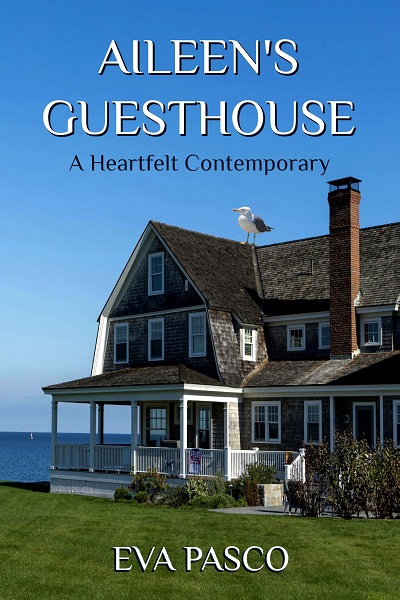
(Charlestown, Rhode Island) - Welcome to AILEEN’S GUESTHOUSE where locals and lodgers have more in common than first meets the eye. And, there's plenty of blame to go around.
(Charlestown, Rhode Island) - Welcome to AILEEN’S GUESTHOUSE where locals and lodgers have more in common than first meets the eye. And, there's plenty of blame to go around.