Category: Literary Criticism Publisher: Modern History Press
ISBN-10: 1615991387
Pages: 315
Copyright: Sept 2012
ISBN-13: 9781615991389
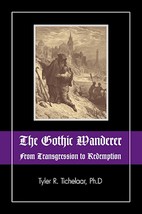
From the horrors of sixteenth century Italian castles to twenty-first century plagues, from the French Revolution to the liberation of Libya, Tyler R. Tichelaar takes readers on far more than a journey through literary history.
From the horrors of sixteenth century Italian castles to twenty-first century plagues, from the French Revolution to the liberation of Libya, Tyler R. Tichelaar takes readers on far more than a journey through literary history. The Gothic Wanderer is an exploration of man’s deepest fears, his efforts to rise above them for the last two centuries, and how he may be on the brink finally of succeeding. Whether it’s seeking immortal life, the fabulous philosopher’s stone that will change lead into gold, or human blood as a vampire, or coping with more common “transgressions” like being a woman in a patriarchal society, being a Jew in a Christian land, or simply being addicted to gambling, the Gothic wanderer’s journey toward damnation or redemption is never dull and always enlightening.
Tichelaar examines the figure of the Gothic wanderer in such well-known Gothic novels as The Mysteries of Udolpho, Frankenstein, and Dracula, as well as lesser known works like Fanny Burney’s The Wanderer, Mary Shelley’s The Last Man, and Edward Bulwer-Lytton’s Zanoni. He also finds surprising Gothic elements in classics like Dickens’ A Tale of Two Cities and Edgar Rice Burroughs’ Tarzan of the Apes. From Matthew Lewis’ The Monk to Stephenie Meyer’s Twilight, Tichelaar explores a literary tradition whose characters reflect our greatest fears and deepest hopes. Readers will find here the revelation that not only are we all Gothic wanderers—but we are so only by our own choosing.
Excerpt
The classic Gothic novel is stocked with villains, swooning heroines, rescuing heroes and banditti, but there is no character quite as compelling as that of the eternal wanderer. The idea of an individual outliving generations and witnessing important events throughout history has always been intriguing. Ranging even further than Woody Allen’s Zelig, who keeps popping up at key historical moments during the twentieth century, he can boast with the best and the worst of them: “I was there.” Just like the wanderer, this book takes a chronological path to span centuries, step by step, chapter by chapter. Having entered Gothic literature in the form of
the Wandering Jew in Matthew Lewis’s The Monk, this figure, as Tyler R.
Tichelaar shows, continues to wander into other novels in various guises from the Rosicrucian sage, through the Female Everywoman, to those of Bram Stoker and Stephenie Meyers’ vampires.