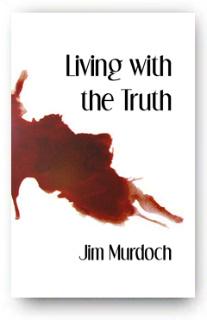
Category: Drama Publisher: Fandango Virtual
ISBN-10: 0955063612
Type: Fiction
Pages: 192
Copyright: May 8, 2008
ISBN-13: 9780955063619
An old bookseller gets to spend two days with the personification of truth.
Picture, for a moment, Jonathan Payne, probably the last person in the world you would expect to be the lead character in anybody's novel, a faded old bookseller nearing the end of a wasted life. We meet him alone in his flat in a seaside town in the north of England just waiting on Death to knock at his front door.
But life has something else in store for poor Jonathan. Instead of Death he gets to spend an infuriating two days with the personification of truth who opens Jonathan's eyes to not only what his life has become but what it might have been. He discovers what he's missed out on, what other people are really thinking and the true nature of the universe which, as you might imagine, is nothing like he would have ever expected it to be.
By the end of the book, having learned far more about himself than he ever wanted to know, Jonathan discovers that it's usually never too late to start again. Only sometimes it is.
Excerpt
The story so far ...
Not a great deal has happened so far. We've seen Jonathan get up and learned a bit about the kind of man he is, an isolated and fairly miserable person. At the very end of Chapter 1 he sees a man in the yard outside his flat and this sends him into a panic.
Chapter Two
In the yard below, as out of place as a nun in a brothel, stood a man. Jonathan squinted through the net curtain. A man in a suit. Standing in a place he ought not to. No way should a man be standing there. Not at this time. Come to think of it, not at any time. That was not a place where men stood. Jonathan's mind searched itself for further possible permutations but he seemed to have covered the essentials. And what was he up to there? No good, no doubt. Surely not just standing. There were far more interesting places he could stand if he had a particular inkling to stand about for no good reason. He looked like a policeman; Jonathan had a thing about policemen; they were one of only two things in this life that could cause genuine paranoia in the man. Didn't this man realise the upset he could cause people? He must tell him. Mind you, that's a bit drastic. And what must he tell him? Why not to stand there? But why not? Good question.
Jonathan stood himself in an absolute frenzy of immobility, trapped in his own thoughts, like Robbie the Robot in Forbidden Planet. The man stood and Jonathan stood. Then the coffee percolator had the effrontery to butt in and when he glanced again the man was gone. Suddenly freed from this logic loop he checked again going right over to the window to peer out as far as possible but the man seemed to have vanished.
And then the doorbell rang.
Jonathan's legs gave way. He slumped onto the nearest stool and ran his fingers through his hair — what was left of it. He was sweating. It must be the man. That man. The man he'd never seen before. Why was he here? What did he want? His mind was a reeling blackness. He felt short of breath, and his heart was palpitating. Or was it the coffee percolator?
Nothing happened. He must have gone. Should he check? Yes, that would be wise. So he peeked, in his own home, in his own castle, slowly round the door of the kitchen and into the hall. No shadow behind the crazy glass. Nothing. Merely the sound of his own heart competing with the percolator in the kitchen and coming off not bad at that. The main thing was that there seemed to be nothing to get in a state about. No sir.
Shame on you, doddery old fool getting.
So coffee was drunk and his suit donned and an appropriate tie selected — after appropriate deliberation. Breakfast was prepared and eaten, and his heart settled into its normal Tuesday rhythm — which was none too different from any other day actually — till he chanced to glance out of the kitchen window again. The man had returned, framed in translucent nylon, to exactly the same spot and everything was as before. Except that he was in possession of a bottle of milk. Specifically, Jonathan's bottle of milk; it had a gold top. He always got gold top delivered. What did he think he was doing with his milk? Oh this was too much. And what was he doing looking up here?
To be sure, the man with the milk was looking up at Jonathan's kitchen window. Not staring. Not peering. Not even squinting. Just looking. People are allowed to look. There's no rule against that. No rules about looking at all were there? Not as far as he could remember. A cat can look at a queen. But there ought to be rules about misappropriating a man's gold top - not that Jonathan had actually paid for it — but the money was in the saucer on the window sill. And that wasn't the point anyway. What was the point?
The point was he was moving. The man with Jonathan's pinta was moving. He was climbing the stairs at the back. He was walking down the side of the flat. He could hear the sound of his shoes creak like a warn out argument and he remembered an old rhyme:
One step, two step, three step, four —
The boogeyman is at your door.
And he could hear his bell being rung once more.
Now Jonathan, get a grip. Men come to the door all the time. No they don't. But they could. Yes they could. And now one has. Maybe you've forgotten to take your library books back. So what do you do? You open the door.
The bell binged but where was the bong? There should be a bong. There was always a bong. It stands to reason: bing bong, bing bong. He must be still holding the bell. Uh oh! Suddenly Jonathan discovered himself in the hall. He would rather have discovered penicillin or a beautiful, mysterious women in his bed when he woke up. Sheer funk had a firm grip on him. He hadn't, of course, meant to be in the hall. He hadn't thought it that far through. But here he was surrounded by hall. And there was that man — or, to be fair, his silhouette against the crazy glass with the sun behind him. But no bong.
When did this hall get to be so flamin' long? he thought as he edged his way towards the door. Fumbling with the chain like a woman's bra strap, all of a sudden he felt very exposed. But then his flies were undone. And it's not the done thing to meet strange men first thing in the morning with your flies undone. Whether or not they have your milk hostage is beside the point. So he hastily buttoned himself up and with a weary heave opened the door to Destiny. Only it wasn't.
Wait a minute, didn't he know this man? This man standing — well, leaning actually — bold as brass, leaning against his doorbell, cradling Jonathan's gold top in his free arm. He knew him. He was sure of it. But where from?
"Mr Payne?" began the man, to which answer came there none. "Mr Payne? Mr Jonathan Payne?" He sounded like a policeman too. This did not bode well. He nodded numbly. "Excellent!" — Bong! "Do you mind if I come in a minute?"
And he was in, before you could say, "Now hang on a darned cotton pickin' minute," which would not have been Jonathan's first choice of something to say at that juncture. He was in, gold top and all, like a character from a Monty Python sketch, but not like the angel of death. He was in the kitchen and if you concentrated, the sound of him pouring himself a cup of coffee could almost be made out.
"Got any Java in?" came a disembodied voice from the bowels of Jonathan's flat.
Jonathan had somehow found the wherewithal to actually close the door. "Er, all I have is Java, I'm afraid." Why was he apologising for goodness sake?
"Ah, yes. Sorry. Should've known that. Just joshing actually. You know they make it from these great big yellow beans?"
Yellow beans? Was it his imagination or did he sound like Eric Idle now?
"I'm sorry but, er, how can I help you, Mister..?" Why was he still standing in the hall?
"Truth. Mister Truth. Or you can call me 'The' if you like. Or even plain ol' Truth. Or is that a magazine? It's much the same to me." And with that Truth popped his head round the door jamb, clicked his heels, doffed an imaginary cap and grinned mischievously before disappearing back into the kitchen. It was a strange way to start any conversation and indeed it was to be a strange conversation. Dazed and confused, Jonathan wandered into the kitchen, not really having taken in the full import of what he had been told.
"Now," started Jonathan putting on his best I-mean-business voice, "Look here..." Such a clichéd thing to say.
"Yes, Jonathan, yes," came the all-knowing response, "What do I want? What do any of us want? To be happy? To put together a little nest egg for a rainy day? To get our end away, eh?"
"This is absurd."
"Ah but (and I quote) 'better to be absurd than not to exist at all' - R.D. Laing: The Politics of Experience - you got up to page thirty-three before jacking it in. But what do I really, really want? Well nothing - in as much as anything can actually be nothing - truth has no purpose in itself. Well as much purpose as a mountain — it's just there. And I'm here. All for you." With that he took a mouthful of coffee, "Ooo, hot."
For me? For me? What's he mean, for me? I never asked him here. This is preposterous. I don't want him here. How can he be the truth? The truth's not real, well, not this real! "Now, now, now! Don't go and get all inhospitable on me. Remember what Holmes said in The Beryl Coronet: 'It is an old maxim of mine' (that's Holmes talking here) 'that whenever you have excluded the impossible, whatever remains, however improbable, must be the truth' and there you have it: the evidence is here before you and you may question me to your little heart's content to determine the validity of my credentials. And if you care to start by checking that quotation you can find it on page seventy-three of your Complete Sherlock Holmes — second shelf to the right beside the fire. As always. Whatever you wish, sahib." At which he bowed in true Indian fashion.
"I wish you'd go."
"Yes, well, if wishes were horses they'd all stampede and trample you underfoot. Wishes don't come true old chap. You know that as well as the next man."
Jonathan did indeed. For most of what passed for his adolescence he had worn the mantle of the idle dreamer and it was a role to which he found himself uncommonly well suited. He'd hated Billy Liar when he first read it but didn't like to pass comment; it's not good to be found to be too knowledgeable on certain subjects. And The Secret Life of Walter Mitty made him grue. He'd never cared much for Danny Kaye in any case. Too Jewish. Or was it Polish? It didn't matter. Now here he was. Here, indeed, with a total stranger claiming to be the personification of Truth. Truth in a business suit - what a ridiculous concept. For all that, there was something uncomfortably real about all of this. And why did he look so familiar? He'd have to ask.
Meanwhile Truth was busying himself arbitrarily picking up things from around the kitchen, whatever caught his attention. This drove Jonathan mad. He didn't like people in his house, touching his stuff, moving things from here to there where they didn't belong, for no good reason, wrecking the private harmony of the room. The house was an extension of himself: he felt interfered with. What a gruesome metaphor.
At that particular moment Truth was engrossed in the back of the corn flakes box.
"Y'know," he began absentmindedly, and then continued with more conviction, "Well, of course you know! You used to have a set of model cars exactly like these. Mind you, the quality was better in them days. Your dad gave you an awful leathering for losing the Bentley down a drain, didn't he?" And he flicked the packet round for a second to show Jonathan the offer he'd missed. "You do realise that breakfast is the most important meal of the day? Coffee and corn flakes? You really should take better care of yourself, you know."
He knew, about breakfast, but how did this fellow know about the cars? He must've been at school with him. That was it.
"I know you now: you're Billy Wiggett aren't you?"
"Billy Wiggett? What kind of name's that to conjure with? No, 'fraid not. Bill's out in North Africa at the moment, believe it or not, slaving over some godforsaken engineering project and he hasn't had a decent drink in two years now. And, anyway, he went bald. I should be insulted. And he's twice my age."
All right. He wasn't Billy. It was only a guess and a pretty stupid one at that now he thought about it. Maybe it was his son. He'd be about that age by now. Assuming he'd ever had a family. Nevertheless he must have known you from somewhere along the line. You know that. Test him. Didn't he say to ask him questions? Yes. Then again, maybe not.
"Look, I'm afraid you've caught me at a very bad time — I'm actually on my way out to work — so if you could possibly excuse me. You know how it is. Perhaps another time." Good: he was on the offensive.
"Have a good 'Number Three' this morning did we?" Truth threw a perfect googly, catching him off-balance and leaving him standing there with his mouth flapping, "That is what you call them isn't it? You got the idea from a joke about farts. Look, you don't need to come all coy with me, I know all about your little proclivities, your five-finger shuffles and your right hand jives. What was it ol' Diogenes used to say to me? That's it: 'I only wish to high heaven I could satisfy my hunger when my stomach barks for food simply by rubbing it. 'Hey, I like a man with the bottle to get the obligatory sex scene over early in the day. Everything by the numbers, eh, Johnny boy? And you never liked being called that either did you?"
He bodyswerved amazement but was bowled over by shock and horror.
"Eh, did you?"
No, no, no. No. Things like this only happened in books or in films This was reality. (Was he losing his mind)? What did he want? What did he want? Why didn't he ask him?
"What do you want?" he pleaded. Or was it yelled. Or perhaps there isn't a convenient word to acoustically define how, precisely, the words came out. His bottom lip was trembling. His mouth was dry. "What do you want?" Again. "What do you want?"
"Whoa boy. Whoa. You look as if you've been ridden hard and put away wet. Calm down. Don't get yourself in such a tizzy. I don't want anything. Well, apart from your attention — and I think you're all ears now. I've got everything. Everything anyone would want to know about you, that is. And some. Mind you wouldn't that be pitiably few? No. I've taken on corporeality — as is my wont now and again — to present you with a chance that so few people get (I mean there is only one Truth and one can't be everywhere at once even if one does happen to be lumbered with knowing what's happening everywhere at once) and you did seem such a deserving case. So make the most of me." With that he tipped the remains of his cup into the sink, swilled it under the hot tap (only the immerser was off and the water was cold), turned it upside down squarely on the draining board and marched into the hall. "It's not as if you've only got three wishes or anything. Mmm, nice — so ... hallway." Was he rooting around in the cupboard? "You do realised you've never used the little round whadjit for your Hoover since the day you got it?"
"I never knew what it was for."
"Neither did the designers but it looked good in the box. Spare bedroom's in here isn't it?"
Jonathan didn't see fit to answer. What was there to answer? If he was Truth — and the evidence to date was impressive — then he would know full well it was.
What was he going to do? He'd have to leave for work soon.
Professional Reviews
Stephen Bennett
It can be difficult to face up to the truth, and many people avoid it at all costs, but it's difficult to avoid when the anthropomorphic personification of truth decides he is going to hang out with you for a few days.
This is the premise of Jim Murdoch's debut novel "Living With The Truth".
Jonathan Payne is an ageing bookseller who has all but withdrawn from the world when, one Tuesday morning, a young man turns up on his doorstep, introduces himself as, "Truth. Mister Truth. Or you can call me 'The' if you like. Or even plain ol' Truth," and makes himself comfortable as Jonathan's companion. Jonathan is initially overwhelmed by this stranger's effrontery and doesn't believe he is who he claims to be; but then the stranger demonstrates an uncanny knowledge of Jonathan's private life, his dysfunctional family, his lamentable love life, what books are on his shelf and where, his favourite type of coffee and the fact that every time he sees an attractive young woman on the street he habitually thinks, "It's not fair."
Truth's presence is a bane at first as he openly discusses the embarassing minutae of Jonathan's personal life in public and scrutinises aspects of his character that he has avoided confronting for years. Over time, though, Jonathan's strange new companion forces him to realise that many of his perceptions of people and events in his life are or were mostly superficial, that if he had been less self-absorbed and a little more communicative then he would have had a deeper understanding of their feelings and motivations. He also learns, however, that the truth is that a deeper understanding of those close to him may not have necessarily improved his relationships with them: knowledge can be both a blessing and a burden.
Truth himself is a mischievous character who fluctuates between tactlessly discussing taboo subjects out loud, such as Jonathan's masturbatory habits and pornographic preferences, and humouring people's secret aspirations - thanks to Truth, Jonathan is astonished to learn about his estranged sister's creative side. Truth, however, makes no distinctions between good and bad - there is only the truth: "I am not hampered by pity or anything like that. She does her job and let me do mine." This abstract-concept-made-flesh is not a new idea, one thinks of DEATH from Terry Pratchett's Discworld novels or Neil Gaiman's Sandman (indeed, there is a sly wink to Gaiman's creation at one point) - but Murdoch's novel is less a fantasy story than a down-to-earth examination of facing up to the reality of untapped potential and failure. Despite that, the book is very funny and Murdoch tackles his heavy theme with a lightness of touch that, although uncomfortably honest at times, retains a mostly positive outlook.
Jim Murdoch's debut is an intelligent, funny and moving novel that many people would enjoy.
Cheryl Anne Gardner
Jonathan Payne is waiting on Death. Not because he wishes to die, but because he feels it’s long overdue. That is how our story begins. Jonathan is the owner of a small, almost antique, bookstore. His mother long passed, gifted with a tidy inheritance, Jonathan is a bachelor by choice. If it weren’t for the laundry list of failed sexual excursions, he would be hermit. He seems to have reached a point where all the illusion, or delusion, of life has lost its lustre.
Jonathan Payne is a man who preferred to “doodle in the margins” of his life rather than writing his great Opus, and admittedly, he is satisfied with the state of his affairs. Yes, this story is chalk full of anecdotal truths and realizations that the protagonist is well aware of but too tired to care about. This book begins at the end really, the end of a futile journey where the only enlightenment is that the journeyman is not only aware of the futility but has accepted it. Payne is a morose soul. And here we have the thrust of the story, Payne will be forced into enlightenment, will be forced to reject the futility, and that force comes by way of a strange man in a business suit who calls himself Mr. Truth and is as campy and without decorum as a know-it-all can get.
Now, altercations with the grim reaper, or truth, or agent of (insert applicable subjective principle here), or whatever you need to call it, are common—too common—but it’s the flavour of the prose that drives this story: glib dipped in eloquence and then rolled in a coating of irony. Everyone can relate to Jonathan Payne. How often have we said, “It just is what it is.” We have all said that from time to time when confronted with futility, and we have all resigned ourselves to the fact that we were too tired to try to make it anything more than what it is, and so we take a whatever, who cares attitude. How often do we slap a bit of delusion on things in order to make them bearable? We are all compulsive liars to an extent, and we lie to ourselves most of all. Deception and delusion, a disposition to which Jonathan Payne is perfectly suited, and like many, it is his preferred milieu. Well, until Mr. Truth gives him a swift kick in the ole bollix. Mr. Truth is here to stay for a while, a little holiday perhaps, and he knows everything about Jonathan, from his idle musings to his not so idle sexual proclivities. And Jonathan is going to know everything as well, in a way and with a depth he has been avoiding all of his life. This is the moment where Jonathan will actually confront himself, for better or worse, and in some scenes the confrontation is hilarious and absurd, in others, deeply moving. Mr. Truth might seem a bit snarky and heavy handed at first glance, but in reality, he has a light and sensitive touch … not to mention that he is one of the most endearing antagonists I have come across.
I like to pick a line that generally sums up a book, that is if one stands out. In this book my choice would be: “We’re only as sick as our secrets. It’s a fact of life, what we fear tends to control us which means everyone has a religion—with a small g, if you like—a way of looking at yourself in relation to the big picture.”
Conceptually, and in tone and texture, the story is wonderful, for those who enjoy literary works of the dark and penitent, peppered with sarcasm variety, which I do. It reminded me a little in style to Christopher Moore’s A Dirty Job, with the added flavour of local dialect. However, there are some editorial issues I had a difficult time ignoring, which made the reading experience, on occasion, a bit trying
Kay Sexton
There's a terrible problem that strikes any writer who tries to convey their reality to others, it's the dilemma of qualia, or — to be less philosophical about it — the 'thingness' of things. Can I tell what you taste when you eat buttered toast? No. Can I adequately depict to you the colour of the Atlantic in a force five wind? No. Not to the level that I can be sure what you taste or you can be certain what I see.
And so it is that when I tried to express the way Jim Murdoch's novel, Living with the Truth, struck me, I had an immediate 'quale' or thingness and an equally immediate sense that my thingness wasn't going to be universal enough to convey its essential nature to everybody else. And yet it is still the best way I've found to pin down the nature of this novel and it is this: cross a novel by Barbara Pym with one by Tom Robbins (preferably Jitterbug Perfume) and that's the essential nature of 'Living with the Truth' ... and so, as a reviewer, I probably fail totally.
Let me try and unpick it a little. What I'm trying to convey is that this is a comedy of manners, but with a surrealist bent. It explores the innate nature of the Western European male (a bit more melancholy in Scandinavia, a bit more boisterous in Italy, but generally that same mixture of bemusement at the female of the species, disappointment with life in general and a low-key adaptability that conceals the misery of a stale life) in a highly introspective domestic fashion (a la Pym) but with the interlocutor who provokes the introspection turning out to be the literal embodiment of The Truth (a la Robbins). Thus the elegant phrase 'No one was smoking, but the smell of stale tobacco hung in the air like a tactless comment at a dinner party' which could have come straight from the mistress of domestic observation, prefaces a lecture, from Truth, on the limitations of humanity in having only five senses and four dimensions.
One issue I had with the early part of the novel was that I sometimes struggled to work out which 'he' was being referred to, the protagonist, Jonathan Payne or his antagonist, the ineffable, and frequently insufferable, Truth, and that did lead to a bit of to-ing and fro-ing while I worked out who was saying (or doing) what to whom. It wasn't bad enough to become tedious though, and once Jonathan and Truth get out and about (which they do in a very Pymian or Pymesque domestic fashion) it became easier to keep track of them.
In all, this is one of those novels that bookshops must hate: not 'hard' enough to be spec fic, not 'weird' enough to be fantasy, too realistic for the humour section and yet too humorous to shelve easily with the lit fic. And that, I suspect is going to prove to be its charm; for those who do read it, it's a singular take on the world, and it will either resonate with you or leave you cold. Qualia again, you see. But I can recommend that you try it — if you like distinctive fiction that rings no bells and blows no whistles but creeps up on you with its absurdities, this book will satisfy you, as it did me.
A page-turning novel about a relationship between best friends that is interrupted because of betrayal , deceit, sexual promiscuity and pregnancy happens!