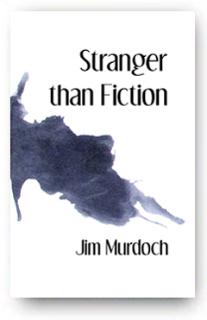
Category: Drama Publisher: Fandango Virtual
ISBN-10: 0955063620
Pages: 188
Copyright: Aug 4, 2009
ISBN-13: 9780955063626
The sequel to Living with the Truth. There are always more truths to be revealed.
The whole book takes place in a landscape generated by Jonathan's memories of his past life. Everyone and everything is as he remembers it, not necessarily the way it was. In this pseudo-reality he has to face his mother and father, his past (presented as a film) and a conference made up of various Jonathans from alternative realities. Oh, and he gets to visit Truth's home plane, where he gets to meet some of the other Powers who have had a hand in messing up life as he knew it.
The book ends with a final confrontation with the love of his life where he learns that you don't always need to get answers.
Excerpt
Jonathan Payne woke with a crick in the back of his neck. He was lying, as was his wont, in the foetal position in what felt like his bed and what would look like his bedroom when he finally got around to opening his eyes. He might've listened to the early morning birds twittering outside, only there didn't appear to be any. Not being much of a bird lover―at least not the feathered variety―this didn't trouble him overly much. As he started to come to he found himself becoming aware of music, no instruments, no lyrics, simply voices in the distance. Where might they be coming from? No, it didn't matter.
Nothing much mattered really. Not now. Two days earlier, perhaps, but that was before, before the personification of Truth had waltzed through his front door and his life decided to take a nose-dive down the lavvy-pan, before he'd learned that there was life on other planets, that fish have a spiritual side, that he'd managed to get his one true love's name wrong, that there was a God, that his postman was a latent gay, that the little old lady who worked in the Indian carry-out had four nipples and that his sister was just about the world's worst undiscovered actress. It had been an eventful couple of days. But on the whole he was handling things well, somewhat well. Well, as well as could be expected under the circumstances. Well, he wasn't actually handling anything. There was no hands-on contact as such. That was not his way. Things were on hold―he'd get round to them in time. There was always time. Far more than he imagined.
Beds are places of great security, safety zones where monsters, real and imagined, are disallowed entry. They are places of respite from the game. And today, Jonathan didn't feel like playing. Not with anything.
Jonathan was not a morning kind of fellow it has to be said. Afternoons had nothing spectacular going for them it's true, but mornings really sucked. And this particular morning was destined to be the acid pip at the bottom of the packet. A blind man a hundred paces off and facing in the opposite direction could've told him that. Jonathan wasn't thinking much about any of that. When he found himself wrapped up in his warm bed, he reverted to an infant who just lived for the moment. There was no tomorrow. The concept was totally alien. He only knew the now and just now Jonathan felt sore. He ached. His neck hurt. Based on his own peculiar brand of existentialism―I'm in pain therefore I am―he determined that he still existed, a fact to which he attached no enthusiasm, just a reluctant acknowledgement. He unwound by a procedure which he was fairly sure would not have been recommended in the user's instructions for his model; his bones creaked unsympathetically and something in his neck gave an audible crack but at least it felt a little better after it had. He felt hungry. But before that, a detour to the bathroom. He somehow manoeuvred himself into a sitting position and struggled into his old dressing gown. He looked like a cuddly Buddha. A dishevelled, unwashed, unshaved, unkempt and moustachioed one at that. As per usual it took longer than it should have for his brain to communicate it desires to his bladder and for longer than he cared to think about it he stood there limply watching his reflection in the still, calm waters of the toilet bowl.
Why was making water such a chore these days? He remembered the urinogenital prowess of his tender years competing with other boys to see who could pee the highest up a wall. Or over it in the case of Simon Spinks. He remembered the steam of the boys' latrine in winter and that rich acidic odour that somehow failed to offend their unrefined nostrils even if it did, on occasion, catch in their throats. He remembered someone peeing into a milk bottle in the street for a dare and then leaving it sitting there in the middle of the pavement. Life's like peeing―once you've started you've got to keep going till you're done. He remembered his sister interrupting him in mid flow behind the garden shed and his mother making him wash out his trousers himself. Oh the shame of it! Mary had wanted to know why she didn't have "an aiming tube" too―such an appropriate euphemism, he'd always thought―but their mother had circumvented the issue with her usual consummate skill and the matter never raised its ugly head again. If only his sister had realised how poor the original design had been and that men did not refer to their genitalia as if they had minds of their own for no good reason. Why was it when he pointed the blasted thing in one direction the stream, if he was lucky enough to have only one to contend with, went some other―invariably on the carpet? It was for this reason he avoided giving in to the call of nature-unless it was virtually screaming in his ear―if he was outdoors. And he would always seek out a cubicle, if at all possible, even if he only needed a Number One. He couldn't think when the last time was he had used public facilities let alone relieved himself out in the open. (Now what was so criminal about that? It was the most natural thing in the world.) It had been a while back for sure, a good long while. For a moment or two he tried to think but it wasn't happening. Thankfully something else was. And about time too.
He thought too much. Anyone else would never think to think about things like this. But he wasn't anyone else, a fact he regretted at some point most days. Other people just did things and accepted the consequences in a bland Newtonian sort of way. If they were good consequences then all the better. He had to peel away at things, paring away the superficial answers to get to the kernel of meaning at the centre only to toss it away like any other pip. Something made him dig. Something else made him reject what he found. Somewhere in all of this mulling over life he found he had finished peeing and so tucked himself away and turned to face the washbasin. He was on autopilot. The shaving mirror reflected as best it could through a thin layer of dust, dander and stray hairs. He saw the face but he didn't recognise what he saw. Oh, it was him well enough but, for all the time he had lived with these features he'd still not become comfortable with them. At best you might say he'd become resigned to his looks but he always thought he should look different. For an instant his reflection flickered and he would've sworn blind he caught a glimpse of John Wayne. Nah, couldn't have been. He washed, shaved and watched the soapy ablution spiral away down the plughole, an event that always gave him a suspicion of pleasure.
His bladder empty, his face clean and substantially free of stubble, he found his way into the kitchen. His ear was itchy and he tried scratching it but, having been blessed with fingers the shape of pork sausages, he was having little joy. The wrong end of a teaspoon provided the needed relief. His mother had told him never to put anything smaller than his elbow into his ear but she wasn't there so what did he care? Then why did he even think of it? The percolator had been filled and was bubbling away cheerfully but he was alone. The kitchen was so spic-and-span you'd think it was an exhibit in some futuristic museum: the average home of your average home owner at the end of your average, common-or-garden twentieth century. No one was in the living room or in the spare bedroom. A weird sense of artificiality was hanging over him but he hadn't quite worked out that was what he was feeling. Truth, it has to be said, was a larger than life individual and it would be impossible to miss him. For all that he didn't imagine the Truth he'd managed to get to know to be the kind of being much taken with lurking in linen cupboards preparing to pounce out on unsuspecting booksellers so he assumed the being had left him to his own devices and gone off to turn some other poor wretch's life on its head. So why did he feel a sense of loss? It wasn't as if he'd just given up a baby or anything. He poured himself a coffee and a man-sized bowl of corn flakes. After second thoughts though he tipped the half back in the packet. He felt brighter than usual, though still not that bright.
The dry flakes lay in their bowl awaiting their lacteal baptism; a quiet quasi-religious ritual. Lacking a more formal conviction, his spiritual needs were often filled by moments like this, if not entirely satisfied.
His sixth spoonful was slipping down his throat and, while he was trying to ensure that his seventh contained the correct number of flakes in direct proportion to the milk on his spoon, it was then that he spotted the note. On the side of the fridge, fixed at an awkward angle by a "Home Sweet Home" magnet he didn't recall owning, was a note, neatly folded, with his name in beautiful italics slap bang in the middle of it. Suddenly he found himself in a ghetto of indecision.
He ate his seventh spoonful, managing to chew it the compulsory umpteen times, and then an eighth and, as the law of diminishing returns was being strictly applied here, the ninth was an achievement, but the mere thought of a tenth―even though ten is a round number and symbolic of completeness―was too much. He heaved himself to his feet and fetched the note. Something told him to sit down before he read it.
"My Dear Jonathan," the note began―even his writing was infuriatingly perky. It was from Truth. Who else? He could almost hear the fake Jewish accent: it sounded like Fagin. "I trust you are well and hope you are seated. If not then you should be." This did not bode well. Nothing to do with Truth did as far as Jonathan's experiences went, limited though they were. "This may come as a great surprise to you," the note continued, "but when you went to bed last night you died. Not indigestion, I'm afraid. Well, actually, indigestion too. Yes, I know it's a bit of an anticlimax but so's sex during the four minute warning." Jonathan put the note down. The 'death' bit didn't register at first; he didn't feel especially dead, but what the heck, if this was the worst it got then he could cope. After another coffee, anyway. What choice did he have? So he left the note, refilled his cup, supped the half nearly scalding the back of his throat, then read the rest. He felt remarkably numb. Perhaps he was in shock?
No, shock must feel worse than this. It must. Mustn't it?
"My apologies for not being there to welcome you to the afterlife but I will catch you later. I know you, you old Stoic, it takes more than a terminal identity crisis to faze you. Anyway, you'll have to make this transition on your own. It makes puberty a dawdle I can tell you. See you when your wings are dry. Truth."
The coffee warmed him like a smug memory. So, he was dead. Life was not that hot anyway. But what now? Oh, well, he thought, every day's an adventure waiting to happen, but it wasn't a very convincing thought. And he had never been one for adventures. God, I sound like Bilbo Baggins! With that he scratched his groin in a thoroughly undignified and unhobbitlike fashion. Itchy groins and cricks in necks? Now this wasn't really what he expected Heaven to be like. If it was Heaven. Now that was a thought: it could just as well be Hell. Or Limbo. Wherever it was his hosts had taken pains to make it homely: a raindrop on a hot stone at least. With that he got dressed. He didn't feel too comfortable wherever he was without his trousers on. Or clean underpants come to think of it. It seemed the right and proper thing to do in any case.
So what did he think about death? Nothing very much. It was one of those things that had always been there. Like China or pi or the ultimate chat up line. It was something to do with other people. Other people died. He'd been to their funerals. When he was eight he'd learned that the white bits that came off him in the bath were actually flakes of dead him. Being a peculiarly morbid child―he'd wanted to visit a crematorium for his next birthday rather than the zoo―at that age the idea that he might be dying from the inside out fascinated him. "In the midst of life we are in death" and all that. There seemed a certain poetry to the whole concept which he couldn't quite frame in his imagination. But, like some sort of dark sunset, the beauty of it appealed to him.
Of course, to his mother, being a religious woman, death's place in the grand scheme of things was also a subject of a macabre fascination. In particular the idea that being dead was not really being dead, it was a passing on to some other state of existence, a better one...with harps; she liked harps. Jonathan asked her if there was a heaven for dandruff but was told not to ask such stupid questions.
At a very early age he had also taken note of the fact that the awareness of death, of the unknown, was something that had a marked effect on certain people. In the main though he witnessed lives devoted to self-indulgence and wringing the most out of the moment, because "tomorrow they were all going to die" he supposed. Well now he jolly well had. And so far death made about as much sense as his entire life had. It was simply a thing to be got through because it couldn't be got round.
He selected a favourite dark grey number, a secure suit, sombre, smart in its day but past its best. Still, it fitted him well, if he didn't fasten the jacket, and he felt comfortable in it. He was not prone to fastening jackets in any case so the restriction was lost on him. Nothing great, nothing monumental had ever happened in it, so it was overdue.
Now what?
The kitchen clock said it was half-eight. He should be setting off for work. Now that was a thing. He was dead―he didn't have to work any more―so he washed up the breakfast dishes, dried them, put them by, folded the dish-towel over the radiator like his mother used to, all of which exhausted seven minutes from start to finish. There was no point waiting on Truth turning up. Who was to say when he might fit Jonathan into his busy itinerary. No, he would go and see if his book shop was still there wherever it was he was.
As he opened the front door the music he had heard earlier caught his attention again. He had assumed it was Mrs Hadley's radio and hadn't given it a second thought, but on stepping out onto the landing he realised it wasn't. It was cold out, but not a fresh Autumnal cold. It felt like a coal cellar. No, even that wasn't it. He didn't have the words for it, but it wasn't right. At the side of the door, in its little crate, was his milk. Now that was a surprise. He wondered who the milkman was. Benny Hill crossed his mind but he wasn't amused by the thought. Anyway he left the bottle―it wouldn't turn in this temperature―and headed off down the steps into the yard. He surprised himself by the details he found himself noticing, the worn steps, the chipped paint on the rail, the loose bricks on the top of the wall. And here he had never considered himself one for the minutiae of life. That word again.
He took the same route he always had being a creature of crippling habit, down the same streets, past the same tedious rows of houses and shops. A dim sun hung in the sky, just a bit out of focus, a smudge of light. Light travels at 186,000 miles per second which, for some reason, he knew was 300,000 kilometres per second; he wondered why. He also wondered why, if light travelled so goddamned fast it didn't blow the back of your head out when it hit your retina unless the 96 million mile trek from the sun had worn it out. Maybe that was it. What business was it of his in any case? Dead or not he was still glad it didn't. Where did he get half these thoughts from? There was no one about, no wildlife, not even the sound of traffic in the distance―just that eerie music which he was starting to tire of a little. He had never been a great lover of boy sopranos and it seemed like this choir was made up of them. The lower registers were very poorly supported anyway. Ah, well, one man's meat...
He didn't feel right though. He didn't feel as if he belonged. True, he hadn't felt that when he was alive but this was a different kind of not belonging, a kind of feeling that suggested he would never belong here. Jonathan was like someone Kafka might have dreamed up on a cold night in Prague while coughing up his guts in his sick-bed: a character perpetually at odds, if not completely estranged, from the humdrum elements of his own existence. Predictably Jonathan wasn't fond of Kafka's work. There wasn't enough plot for his tastes and never enough characters. Or maybe the whole ambience of his work just came too close to home for comfort.
He may not have given Kafka the time of day but that didn't mean he didn't have a love of books. It was one of the few things you could say that he did love with any degree of certainty but you certainly couldn't say he loved all books. Books were like women, some had wonderful covers with nothing inside, others had their dust jackets hanging off in shreds yet held such riches; there were thick tomes, slim volumes, hardbacks, paperbacks, first editions. He gave way to the unique pleasure of holding each one in his hands but only special ones were actually read; the rest were for looking at. And there was nothing like a well stacked bookcase. Apart from a well stacked woman.
The shop was where he'd left it. His key still fitted and the bell still worked. As did the gas fire and the kettle. The fusty smell was strangely reassuring too, comforting. So, without actually thinking about it, he flipped round the sign to show that his establishment was open for business, put on the kettle, hung up his jacket and, being a fully paid up member of the why-stand-when-you-can-sit? school of thought, took his seat in the back shop. There was no furniture more charming than books. This was a safe haven. One of his parcels lay beside the door. He'd not noticed it when he'd opened up and it had been pushed up against a pile of horror books. Oh panic, panic! He hurried over to get it. He couldn't stand the idea that any of his magazines might've been creased. He hated creases, in books especially. Which is why he'd begun stocking bookmarks. It was the only item he'd ever consented to sell that wasn't second-hand-the kind with pithy sayings usually by Anon. This was his little effort at changing the reading habits of those Philistines who turned down the corners of pages―especially the dirty bits. Fortunately the packet seemed undamaged. He chose not to open it and slipped it into the desk drawer. It didn't seem appropriate―looking at dirty pictures―not until he found out just where he was exactly. And that reticence bothered him. When he was alive it was safe not to believe in God and stuff. Now, he'd probably have to face Him and answer for his sins―all fifty-seven varieties. He bet that was where Truth was right then―handing in his project report and looking for a gold star for it. He was wrong. Oh boy was he wrong. Truth, as bright as a button, was in the process of tripping down Pinter Street at that very moment whistling along to the heavenly music but a semi-tone off key. What did he care?
Jonathan had about four minutes more peace left to enjoy if only he knew it.
Professional Reviews
Guy Fraser-Sampson
This is the first time that I have reviewed the same author twice, apart only from Philip K. Dick, and both he and Jim Murdoch are very fine writers indeed.
Regular visitors to this blog will remember that I gave his Living with the Truth (reviewed December 2008) rave notices as it was quite the most stylish, thoughtful and downright original novel I had read for a long time. I remember wondering at the time how Murdoch was going to follow it though, not least because there was talk of a sequel yet the hero (using the word only in its literary sense - there is nothing heroic about Jonathan Payne) actually died at the end of it.
Constructing a whole new novel around a character who died in a previous one may seem a tall order, yet Murdoch pulls it off brilliantly. The universe, it appears, has ground to a halt, and not for the first time either. God is seriously hacked off by this, and Truth and his colleagues are under strict orders to track back through an infinite number of chains of events try to find out what went wrong, so that the same mistake can be avoided in future. I will not spoil the plot by describing things any further.
This highly imaginative device allows Murdoch to work all manners of conjuring tricks, even appearing himself at one point, and with a respectful nod to Puckoon to boot. He even contrives yet another twist at the end, which leaves the way open for a third novel in the sequence, which I very much hope he will write.
Like its predecessor (no pun intended), the book is shot through with wry humour and off-hand allusions to all manner of people from Kafka to Einstein. I particularly liked this, which is followed, believe it or not, by a reference to Frankie Howard:
Everyone is unprepared for the future. It is undiscovered, but do we discover it or does it find us, yelling "No, not yet! It's not time. I'm not ready. Come back tomorrow."? Everyone knows, though, that tomorrow never comes, and that's where they keep all the jam.
Another wonderful moment was the discovery that Truth's counterpart, Reality, knocks back a regular cocktail of mind-altering drugs. Truth goes on to explain that there is actually no such thing as absolute reality, but only the concoction of perceptions and expectations with which we surround ourselves. In effect, we each create our own "reality". Just like writing a novel, really.
It is difficult to describe Murdoch's prose and do it full justice. You really have to experience it for yourself, and I sincerely hope you will. Go out and buy Stranger than Fiction. You won't be disappointed.
Kay Sexton
Jim Murdoch's new novel, Stranger than Fiction. I really enjoyed this, and Jim's profoundly idiosyncratic view of the world is always fascinating. I tried to come up with one of those pithy one-liners that you are supposed to use to encapsulate a project for the movie industry (which is popularly supposed not to be able to cope with more than a sentence of information at a time) and what I decided on was Alan Bennett meets Douglas Adams! The characters from Jim's previous novel are resurrected, having died at the end of the last one, in a manner not unreminiscent (is that a word?) of Eoin Colfer's continuation of the work of said Douglas Adams. I loved it. Jim's novel, I mean, not Eoin's — haven't read that and probably won't — I'm not sure why I don't like writers picking up the work of deceased literary stars and taking it on, but I don't.
Sam Sattler
I have never been much of a fan of sequels; just don't trust them because nine times out of ten they disappoint me. But it is that one-in-ten chance that a sequel will prove to be the equal, or better, of an original book or movie that stops me from giving up on them completely. So, despite the fact that it has probably doomed me to nine disappointing sequels in-a-row, I am happy to report that "Stranger than Fiction," Jim Murdoch's follow-up to "Living with the Truth," is a treat.
When I closed the pages of "Living with the Truth," Jonathan Payne was a dead man. Jonathan, owner of a rather shabby little bookshop specializing in used books, had been visited by the personification of Truth and he had been made to take a long, hard look at the consequences of the choices made over his lifetime. Jonathan's life was one of missed opportunities but, although he learned much about himself from Truth, he was left with little time to do much with his new understanding.
Well, it seems that Jonathan has not been the only one to fail at this thing called life. Not for the first time, God is unhappy with what he sees in the universe and He is just about ready to pull the plug on it again. He is losing patience with the whole project and is about ready to tackle something new. But, before he gives up, God has decided to perform a super-audit to determine why his universe has failed so miserably this time. Truth and his co-workers (Destiny, Reality, etc.) are assigned to interview every person who has ever lived in order to avoid their mistakes next time around.
Jonathan, with Truth by his side, gets to meet some important people from his past, including his mother, his father, and the only real girlfriend he ever had. Truth and Jonathan wander around in Jonathan's past, both learning from the encounters what went wrong and what might have been done differently. The conclusion that Jonathan comes to, though it may have surprised Truth, is one the reader will admire him for reaching.
Stranger than Fiction might be served up with humour and filled with bizarre situations but, at its core, it is a moral tale and Murdoch's deceptively simple prose is perfect for the story he tells. One of my favourite passages comes early on in the book and describes Jonathan's love of books (after all, he is a bookseller):
It was one of the few things you could say that he did love with any degree of certainty but you certainly couldn't say he loved all books. Books were like women, some had wonderful covers with nothing inside, others had their dust jackets hanging off in shreds yet held such riches; there were thick tomes, slim volumes, hardbacks, paperbacks, first editions. He gave way to the unique pleasure of holding each one in his hands but only special ones were actually read; the rest were for looking at. And there was nothing like a well-stacked bookcase. Apart from a well stacked woman.
How perfect a way to describe a man's love of books is that?
I was happy to find that Stranger than Fiction ends in a way that leaves the door wide open for a sequel to the sequel. I don't know what the odds are about the success of such efforts because my sample is too small to make a judgment. I'm willing to take a chance on this one, though.