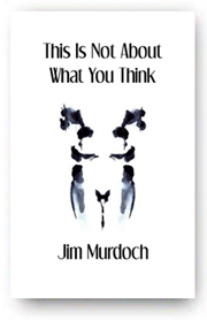
A collection of poems spanning over thirty years arranged in such a way that they present a kind of seven ages of man. But what man?
I have been writing poetry for some 35 years. A long time. A lot of poetry.
In all that time I've never published even a chapbook. The reason? It sounds perverse but I could never find enough poems that I felt went together. I made endless lists but I always gave up thinking that if I just hung on for a bit that there would be enough. One can only keep that up for so long and so now — finally — I've managed to arrange some 80 poems into a sequence that pleases me.
After all these years the solution was obvious — a life. But not my own.
The seven sections of this book, when read in the sequence in which they are presented, show snapshots from childhood through to old age. Some of these are things that happened to me, others are things I've seen happen, that might have happened. This might be someone's life but not mine.
Excerpt
Introduction
No poem is ever about what you think it is. You're always required to read in between the lines and so it's up to each reader to provide his or her context and meaning generally from dipping into their own experiences. This is true of other art forms but it is especially true of poetry. The mind demands order so we try to make sense out of the words in front of us. We decide who's talking and about what.
Collections bring additional problems because we feel a need to connect the poems; we look for common threads, a story when there is none. There is no story to this collection but you will find yourself looking for one. Even if the poems had not been arranged in the order they have been you would still see that they chart a life from childhood through to old age but it is not my life nor the life of anyone I know or know of.
What is the purpose of poetry: to communicate or to record? It can be both. My poetry is actually written primarily to exorcise, to get a specific thought or feeling out of my head so I can examine it before dealing with and then discarding it. The writing process is more important to me than the finished product. Once written I understand myself a little more. I may still be carrying around the same baggage but it's packed a little more neatly.
This doesn't mean every poem I write is autobiographical. They are my reactions to certain subjects, some which I have experienced first hand, some which I've witnessed others experience, others which I've read or heard about and a few which I've simply imagined. But they're my take on all of these. I am a writer; my natural response to life is to write about it. I wrote the poem about the stillbirth the day I heard about it; 'Making Do', a poem about my own mother, I completed years after her death.
None of my poems are very long. I've long held the belief that writers should say what they have to say and get off the page. So I try to do exactly that. This has resulted in an aphoristic style of writing which I happen to like. It also means they're not particularly well suited for reading aloud which is fine because they were never written to be read out loud even though I occasionally do read them to myself to ensure that they flow properly.
If my poems are throwaways why publish them? Because it's green. Just because I've finished thinking my thoughts doesn't mean that someone else won't be able to make use of them. They may make something of them that I never intended or imagined. And that's fine. You have my permission to make every poem in this collection your own. They are your own. You've paid good money for them. I hope you think it was money well spent.
Jim Murdoch
May 2010
Deconstructing Jimmy
I missed out on a lot growing up:
stilts, a pogo-stick,
skates — ice and roller — underage sex.
There were things I had: a family,
an education
but it was the wrong family and
they skipped all the useful stuff at school.
Whenever I have needed something
it was never there:
the capital of Peru or the
TV remote, the exact bus fare
or just reasons why.
"You can't miss what you've never had, son."
Is that so? I think you've missed the point.
Advice to Children
People will fail you.
It's a fact of life —
they'll let you down.
But not always.
And that's the worst of it —
sometimes they don't.
But most times it's hard to tell.
Marks
My dad used to give me marks out of ten:
homework — seven out of ten,
the dishes — eight out of ten.
Anything less than a five
came with a clip on the ear.
Marks is merely another word for scars.
I have those too, the ones you
can see and the ones you can't.
I'd give my childhood a three.
That's me being generous.
Dad's no longer here and so I have to
mark myself. Is that what you
were waiting to hear, doctor?
What do you think this poem
might be worth? Maybe an eight?
Father Figure
This is the floor beside my bed
where I kneel to talk to God.
If I press my ear to the floor.
I can hear Him talk to Mum.
About me. It is always me.
I know what God looks like.
He looks just like my dad.
I heard him tell my mum:
"In this house I am God."
I heard that through the floor.
Now I only pretend to pray
because I don't want my dad
to really hear the things I think.
Now he's not sure I'm so bad.
I don't want him to know I am.
I just want my dad to love me.
Making Do
My mother made do almost every day of her life.
There wasn't that much to the dish. To tell you the truth,
Mum could make do
with almost nothing at all.
She'd put on the pot and just let it simmer for hours.
And all of my life so far I've tried to do the same
but I find mine
always leaves a bitter taste.
I wish I knew what her secret ingredient was.
Red Tape and the Meaning of Life
Things have to be done in a certain way
otherwise the universe won't make sense
which is why the milk goes in the coffee
after the hot "but not boiling" water
and only Superman (who isn't real)
gets to wear his Y-fronts on the outside.
This means there are lots of rules to follow
to protect us even when they don't work.
It's not the universe's fault if we
can't remember simple things like not to
trip over cracks in the pavement.
Tools
"Just because you have a hammer
it doesn't make you a joiner."
My father had his way with words.
So I took a handful of nails
and boarded up my heart
against him and against the world.
And safe on the inside I yelled:
"Screw you!"
but he was never one for puns.
Mene, Mene, Tekel, Upharsin
The bedroom wall was paper
thin. I heard every single
word as if scrawled across it.
Later when things died down I
could still envision each word
ripped into the wallpaper.
It was as if they had been
screaming at each other in
some strange foreign tongue. Nothing
made sense bar the anger though
there was no one there to give
meaning to it. Only me.
Untitled
In my last year at school
I spent much time
in Central Library
thumbing though
encyclopaedias of modern art
and photography year books
looking for naked women.
Somehow their art
never reached me —
only their nudity.
True Love II
My father had a heart transplant.
Years ago, before I was born,
doctors took
out his broken heart
and gave him a machine instead.
The strange thing about this machine
was it was
powered by sadness.
Of course he was always just Dad,
but, when I discovered the truth,
at first I
hated the sadness
then I became thankful for it
because as long as I could see
him be sad
he would be with me.
And so I made it my job to
make him the saddest dad in the
whole wide world.
What else could I do?
Dreamer
There was no hole in my youth
for "the real me" to crawl out,
only flaws to put pressure on
and finally rip apart.
I sometimes still sleep
in the empty shell at night.
Advice to Children V
People are rarely
what they say they are
and never what they think
they are.
Or would like to be.
The first lies we tell
are generally to
ourselves.
Unbrokenness
There exists within physical things
the potential to be broken.
It is only a matter of time
and of unforeseen circumstances.
These things can be repaired, replaced
or buried and forgotten about.
Nothing can ever be unbroken.
Professional Reviews
Colin Will
I've been reading, with great interest, Jim Murdoch's new poetry collection, This Is Not About What You Think. It's a well-produced book, published by Fandango Virtual. As Jim says in his introduction 'None of my poems are very long. I've long held the belief that writers should say and get off the page'. Refreshing and honest, and that also describes Jim's poetry.
He's what I would describe as a 'personal' poet, not that the poems are necessarily autobiographical, but that they are based on his personal experience, or so I assume (correct me if I'm wrong Jim!). Advice to Children is an engaging mini-sequence which pops up in several places, there are poems on his own childhood, his parents, his adult life and loves. There is that distance however, as implied by the title, that leaves enough room for the imagination. And he approaches these subjects with an objectivity which could never be mistaken for detachment. He cares about people, and it shows. There are occasional literary nods, to Larkin, to Erica Jong and to William Carlos Williams among others. The book is in seven sections, but the section marks are not rigid compartments — subjects come and go between sections. Intriguingly, and unusually, Jim's Appendix lists the date of composition of the poems in the collection, showing that they span a long period from 1979 to the present.
This is a fine collection by a thoughtful, subtle and perceptive writer, and it deserves to be widely read.
Kass Schoenhals
This is Jim Murdoch. He's Scottish. He's intelligent. When you read stuff he's written and understand it, you feel intelligent too.
I can't even begin to pretend that I know how to review a book, but what I can tell you is why I enjoyed this collection of poems.
Jim writes how you wish you could write, but not so much that the jealousy prevents you from laughing at the things you wish you'd said, like, "I'd give my childhood a three. That's me being generous." This is from his poem, 'Marks.'
His poems follow a thoughtful progression with 'Advice to Children' interspersed throughout - things you probably are happy to read now, but glad you didn't have to hear when you were a child. This, from 'Imaginary Friends:' "People leave; it's what they do..."
As you read along, you will be struck by his wit and adeptness. You'll be thinking, "Oh, there's so much humor here. This is a fun book." But at page 39, your breath will catch in your throat. The poem 'Still Birth' will make you realize this man can not only be glib, but he has a depth of feeling that transcends gender barriers. Then you will go back and reread his poems with new eyes.
A major theme in Jim's life is THE TRUTH. You will see it here. In his poem 'Shadowplay,' he says, "What are lies but truths gone rotten and secrets lie in that no man's land between the two." Man, I wish I'd written that, because I think it's so true. The major theme of his blog and novel, Living with the Truth is found in 'Old Flames In the Rain.'
"...and the truth about lies
is we can't live without them.
Not even the white ones."
The title of this collection is ironic because Jim gives you permission right away to make of these poems something he never intended or imagined so it pretty much is about what you think.
Brent Robison
Poems of Self-Examination: Wry, Poignant, Philosophical
Jim Murdoch has been writing poetry for over thirty years. He's working on his fifth novel, and has published three. He's an active blogger. I became aware of him through the POD People blog, where both his novels were praised, then I became even more interested in his work when I read his mixed review of Yann Martel's Beatrice and Virgil, where he made this simple statement: "I like books that make me think." I found it significant that he did not say, "I like books that keep me up all night turning pages." The latter seems to be the prevailing quality standard today, but not for me.
In This Is Not About What You Think, Murdoch uses the title to jump right into the philosophical realms that turn me on. His title is both paradox and wordplay. "This" may refer to... everything. The world. He's making the point that nothing is as it seems; that your reality and mine are separate because each of us is a centre of a different perceived universe. Reality is perception, which is another way of saying that the objective existence we assume for the dazzling multiplicity of things labelled "reality" simply doesn't exist.
At the same time, the title's "This" refers to the book itself, its content, so the phrase can mean both "These poems are not about what you the reader decide they're about," and "These poems are not about your thoughts" (which is to say, they are about Jim's thoughts, not the reader's). Each of which suggest its opposite: that indeed, the poems, once in the hands of a reader, must be primarily about whatever the reader brings to them, since the writer's part of the dialogue is finished. He can say no more.
This shimmering mirage of multiple meanings, along with the cover image of a Rorschach-style mirrored inkblot (suggesting to me a female body, so what does that mean?), speak to me of the big conundrum: This thing that some of us try to capture with the word "nonduality"-realization of the ultimate indivisibility of All-can never be captured with a word because the job of words is to separate one thing from another. So, contrary to conventional wisdom, when we make statements that seem elusive and duplicitous-that seem to carry their own negations-we approach as close to truth as language will ever allow. Questions, not answers, are true.
My approach to the content of the book follows the same tack: the poems that resonate with an ambiguity that suggests multi-dimensionality, that undermines assumed reality, are the ones that shine for me. The title poem opens with this stanza:
Every name and place has been changed,
what we did and why-all changed,
the dates and times, how we really felt,
the reasons we wouldn't stay away,
everything slightly altered, twisted,...
The accuracy of memory and story is called into question, and after asking whether it all should make sense, the poem ends,
...It's a pretty good question.
I just don't have any pretty good answers left
so this will have to do for now.
This rather perfectly captures the marvellous actuality of life in a universe so vast and mysterious that the wisest approach is surrender: it doesn't make sense, I can't explain it, this will have to do for now. It's another way of saying: what is, is. Whatever happens, happens inevitably. This is a profound undercutting of our cherished belief in free will, the human need to feel that the decisions we make actually change the world. But we can't really know, because what is, is. No deity need be implied; just a simple universal law. With that acceptance, a great burden is lifted. Murdoch confirms the philosophy with this couplet that closes the poem "Shadowplay":
No, I don't believe in destiny
but I do in inevitability.
The poem "Background Silence" works on two levels. Its context in the book tells us that it's a poem about death, set in a hospital. With that reading, it delivers a bleak chill.
Background Silence
The silence was always there
behind the
sounds of monitors and pumps
just as
emptiness was always there
behind the
well wishes and smiles and lies
just as
the blankness was always there
behind the
words on every card you read
because
there is always something to
block our view
of the nothingness that is
coming.
But I prefer to see past, or through, the death poem here to another poem that lies underneath. Silence... emptiness... blankness... nothingness... these are words that for many readers may be frightening or dispiriting, devoid of life, and perhaps that was Murdoch's intent. But another segment of readers, myself included, find those words liberating, spacious, more life- than death-oriented. After all, without a ground there is no figure. Without a dark sky, we see no stars. For me this poem, while observing death, simultaneously expresses the truth that, in this realm of duality, of so many "things," our view of the vastness beyond is too often blocked. Perhaps it is by looking at a loved one's death that most of us catch a glimpse of the unified field in which all life and death play out.
How poetry should be interpreted is an ongoing debate, and I confess that my particular view risks a protest from the poet. For the reader's sake, I don't want to mis-characterize this book. The collection as a whole is without a doubt more an exploration of psychology than of philosophy. Murdoch shows a skill for economically capturing family and relationship truths that are much bigger than a few words on a page, like a charcoal sketch captures a gesture. Here's a portrait of one person that deftly reverberates into other lives:
Making Do
My mother made do almost every day of her life.
There wasn't much to the dish. To tell you the truth,
Mum could make do
with almost nothing at all.
She'd put on the pot and just let it simmer for hours.
And all of my life so far I've tried to do the same
but I find mine
always leaves a bitter taste.
I wish I knew what her secret ingredient was.
Often he ends with a sculpted line that opens like a trap door into old heartache or poignant self-examination that most readers will identify with, made even richer when it's delivered in a tone that can be interpreted either as tongue-in-cheek or not. I appreciated the generosity in these poems, the willingness to disclose emotional vulnerability, to reveal the tender heart of a child-coupled with the wry perspective of middle age.
One final note: Murdoch closes his poem "Is a Red Wheelbarrow Ever Empty?" with:
I did hear the sounds
of silence
and I think one hand clapping
and a tree fall in
the forest
but I don't have the words to
explain them.
I'd say in response: Jim, nobody has those words. The sweat and heart evident in your crafted lines, plus the white space around them: that combo does the job. Words are clumsy at best. With this book, you've done as well as anyone can with such tools to both dig deep and fly high
From the author of Jupiter Remembered and Until It’s Time: Embracing Life In Our Later Years comes Petals of Love: Poetry of a Woman’s Soul – a heartfelt collection spanning more than thirty-five years. Through tender reflections, these poems offer g