Category: Memoir Publisher: World Audience Publishers
ISBN-10: 1935444557
Type: Non-Fiction
Pages: 367
Copyright: January 2010
ISBN-13: 9781935444558
This book wraps up what I began with Waking Up in the Studebaker, that being surviving high school and making it to college. Memories of an era 1968 - 1974.
Was it fate or responsibility that brought me to the plains? Or an escape? And why Kansas? Certainly a girl was involved. Three for sure! The reason for heading west from my home in Virginia and making a new one in Kansas is long and complicated. Maybe this is why I always looked at myself as the silent observer, as well as the kid who continually questioned his actions.
When I finished my original manuscript for On the Strand, I asked a friend from my past – who just so happens to be a character in this story – how she remembered me from age 11, when we first met, to 21 the last time we talked together in a favorite Richmond bar called the Hitching Post, until I tracked her down via the internet in 2001. She wrote, “Kind, shy, quiet, and very loyal. You had a dry sense of humor and were ‘on the wild side’ and always ready for something different – always questioning things and authority: REBELLIOUS!!!” She ended her memory with a telling statement: “You were hard on yourself and did not believe in Kevin.” She pegged me alright!
This book is not for anyone who dislikes off-color language and intimate situations, but I could not recreate the main character, Kevin, nor could I call this memoir and social reflection without the sounds and feel of the times. I sometimes refer to the narrative and dialog as “bar speak.” It can be stilted and quick chatter, much like people speak in bars. I spent time, lots of it in bars and loud clubs. The drinking age was 18, and so I spent time where bands could be found.
Friends from my past, when we reunited via the internet after as many as 40 years, were so surprised to find out that I – the underachiever – who barely graduated from high school had become a teacher. “How?” they often asked. I told them there had been a lot of unseen learning going on at the time and very little of it taking place within the confining walls of school buildings.
I began my memories with Waking Up in the Studebaker (2008), which covers my childhood in Richmond, Virginia’s suburbs, through entering high school. On the Strand (2010) carries my story forward through high school and leaving Virginia to give college a try in Kansas. What an East Coast attitude I took with me: “I’m here to get the bullshit classes out of the way and return to a good college in Virginia.” Breaking with my past in an attempt to lower the time spent in bars, allowing more time for study, is one of the reasons I chose Kansas. Little did I know, Pittsburg, Kansas was one major bar/club city in southeast Kansas.
Life happened. And what a ride, including the girls (three in particular – they meant the world to me), endless trips to Virginia Beach, New York City, keeping track of the war (Vietnam), defeating the high school dress code, the Atlantic City Pop (Pot) Festival, a trip to Europe, bars and clubs, the Fillmore East, the Valencia Hotel in Greenwich Village, knowing Bruce Springsteen - prior to beginning the E Street Band – the 1970 draft lottery, the 1971 march in Chicago to stop the war, cross country hitch hiking trips and trips in a Fastback VW, and constantly wondering how I could make something of myself, when I had barely graduated from high school.
Would college be any different? Would I be able to get past the bullshit given students by teachers from both private and public school curriculum expectations back in the grades? Would I stop feeling like the dumbass? Who knows, but I knew travel would be required to place me in Pittsburg, Kansas, in 1971, and that sounded damn good to me, the wayward kid with no set direction. Little did I know I had chosen Playboy magazines’ latest first place choice for the national Small College Party School, dominated by dime pitchers, bucket night, Coors (not sold east of the Mississippi), pool tables and foosball, and Rod Stewart’s “Maggie May.”
This is my story, the one so many of my high school and community college English students inquired about for so many years, when they asked, “Why Kansas Gray?” Bruce Springsteen even asked me, “Why Kansas, Gray?” As if I had been a nut for leaving Virginia, they would ask, “But don’t they have the ocean and the mountains?” And, so, I had to answer with whatever sounded good but for the most part, skirting the truth. Perhaps the book should have been titled, Why Kansas? Or simply To Kansas.
Against the odds, I became an English teacher, journalist and columnist. Not bad for a shy, asthmatic kid, who hated school and English classes for so many years. Not bad at all. I invite you to read my story.
When working on the original manuscript as my thesis for a degree in creative nonfiction through the McGregor School of Antioch University, I read hundreds of memoirs and autobiographies. Those writers I attempted to model before developing my own style included but were not limited to Isabel Allendi, Tobias Wolfe,
Check out my publisher’s website at worldaudience.org or go directly to amazon.com. Better yet, check out my website at onthestrand.org.
Excerpt
Book Opening Chapter One:
Looking in the mirror that morning, just over a month after Ronnie had rolled his old man’s Studebaker with me riding shotgun, I noticed my head had only begun to sprout a fuzzy blondness. Half my head had been shaved to the scalp; the other half was cut shorter to complete my lop-sided Kojak look. An eight-inch red scar ran from my hairline to the lower left side of my skull. From behind, you could see the jagged scar, where the surgeon had sewn my ear back together after telling me my head looked like I had been rolling around in a pasture of horse shit.
My red badge of courage was a chicken’s-foot scar above my left eyebrow. This I didn’t mind. After two hundred stitches inside the hairline, I wanted a sign to announce, “Hey, I survived a bad wreck.”
The Studebaker had rolled three times on a warm July 27, 1968, evening, freezing the speedometer on 95. The cops and our parents never wised up to our mission that night. Seven guys in one Studebaker out to pick up girls. What a joke, but somehow my emptied rum pint disappeared into the woods or had been destroyed in the accident. I haven’t a clue.
Ronnie lost his driving privilege from his father, Mercer, and had been required to work construction and whatever jobs he could find to pay his father for the lost car. On the first day of school, right after Labor Day, Ronnie and I hitchhiked to school, rather than take the bus. To me, this was prolonging the embarrassment of being seen in the Dixie-cup sailor’s hat—my father’s Navy hat – that I was wearing, sides down, to hide that huge red scar etched into the left side of my head.
My eyes were focused on the front door of what looked like a giant red-brick, two-level rectangle of a school built in 1954 and named after a well-known Robert E. Lee biographer. I knew kids were going to be looking at me, the dumbshit looking kid with the weird hat on his head. I was right, but I just breezed on by with thoughts of Fuck you going through my head, as well as a few very real “Fuck you” comments thrown at Ronnie, my taller, brown-haired best friend, who kept teasing me from behind what I felt was a smirky-smile, but which was quite innocent and caring.
For the first few days at Douglas Freeman High School, I hid under that hat brim. Many kids had heard about Stillman’s accident, so I hoped that few would ask questions. A few curious students continued to ask, “What’s with the hat?”
“Stillman’s wreck,” I would answer. “Oh yeah, we heard about that one.” After about three weeks, the kids in my classes, who gave a shit, put it together; Gray was the guy riding shotgun. I began to make new friends, and after another couple of weeks, I ditched the hat for good. If I brushed against the lay of my hair, you could still see the long scar, but only a few curious perverts wanted to play with my head or feel the tracking effect left by the stitches.
The hallways were dim and murky in the old high school building. I preferred well-lit passageways and classrooms in the new wing, but it all remained a blur most of that first semester as did my class work. Shyness remained my biggest enemy; I spoke only when spoken to by both teachers and students.
Jamie was a healthy, active 12-year old who loved to skate and played hockey as well as any boy. Then one afternoon during a game, she suffered a stroke that changed her world. Her memoir takes the reader through her ordeal and her journey out of the
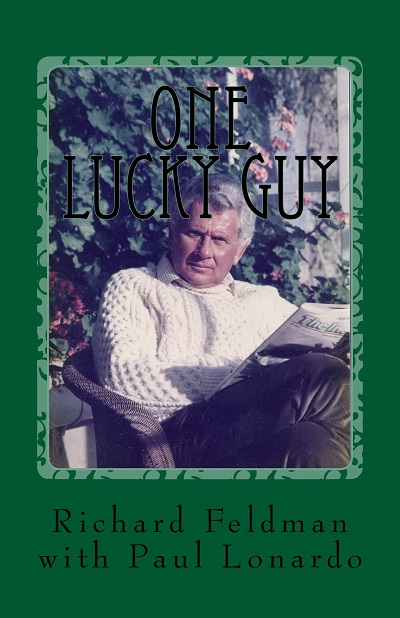
(Richard M. Feldman) Ever since I was a young boy, the only thing I wanted to be was a cowboy. I wanted to own and work on a real ranch, with cattle and horses. Especially horses.
While I never became a cowboy, considering everything I have done
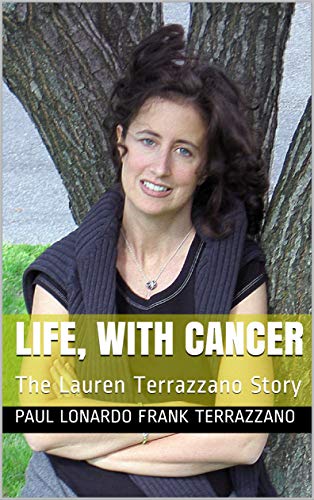
Through interviews with Lauren's doctors, along with those of other physicians, researchers, and clinicians who specialize in lung cancer, readers will have a better understanding of the disease.
With the same passion and honesty Lauren exhibite